
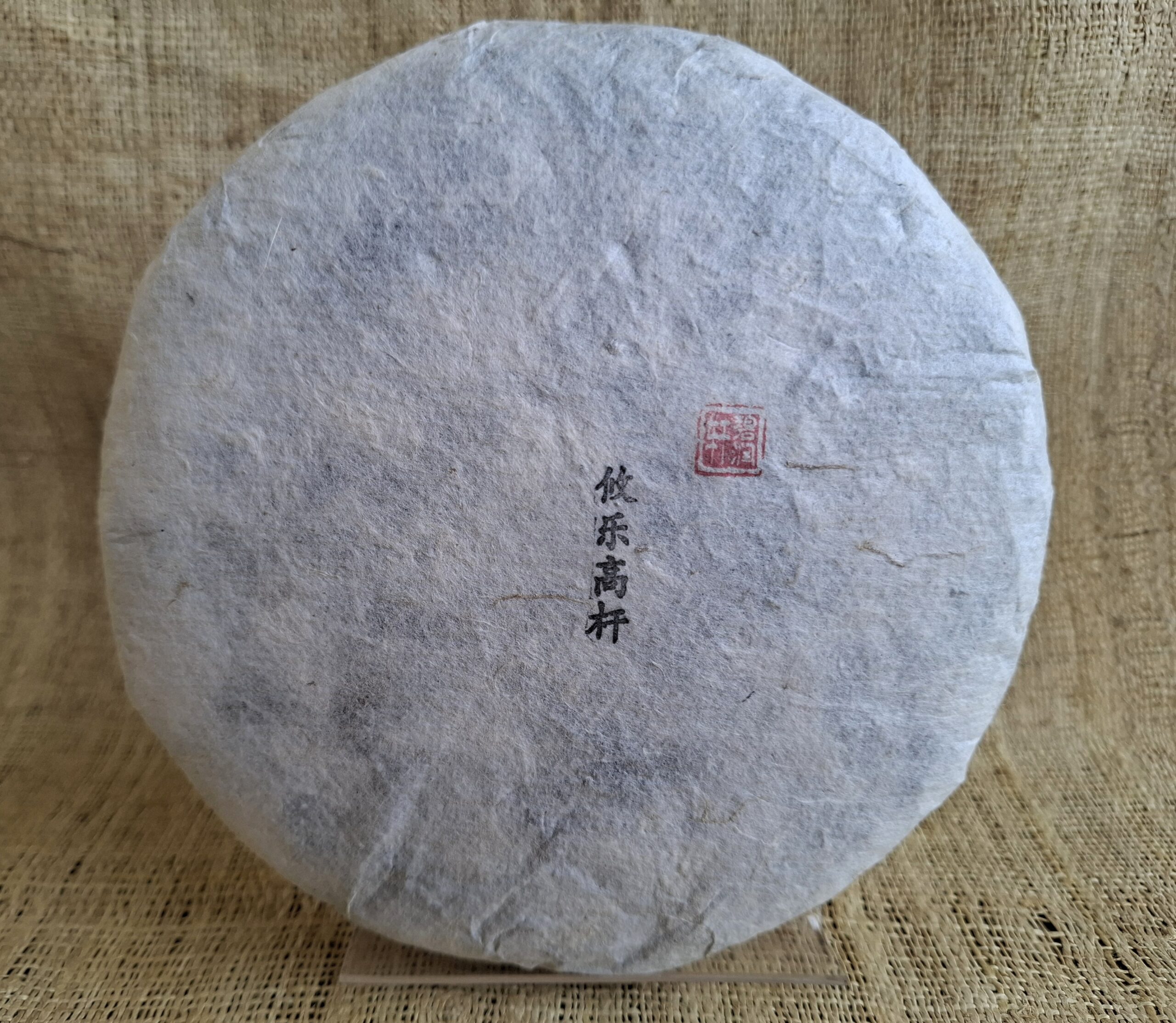
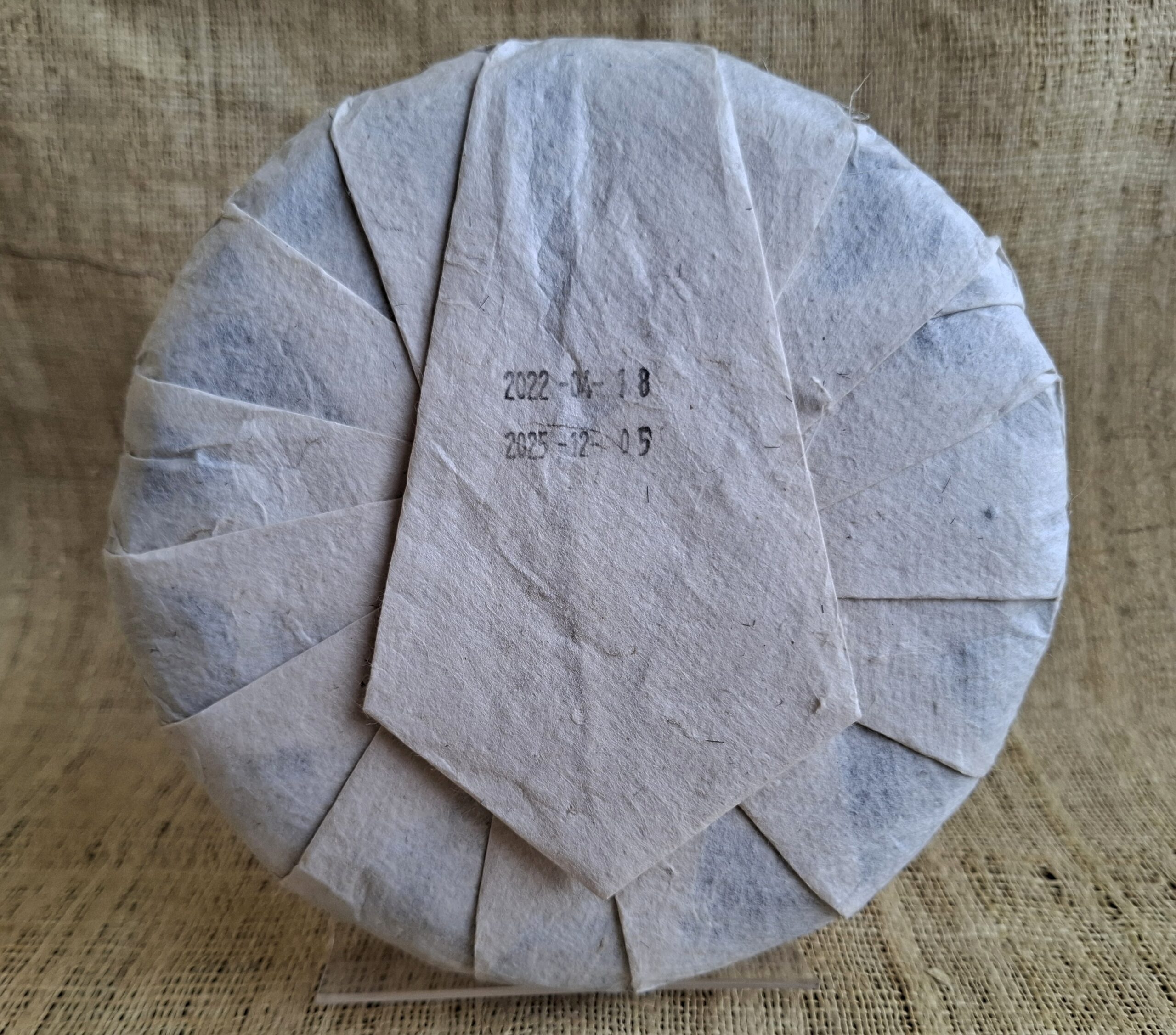
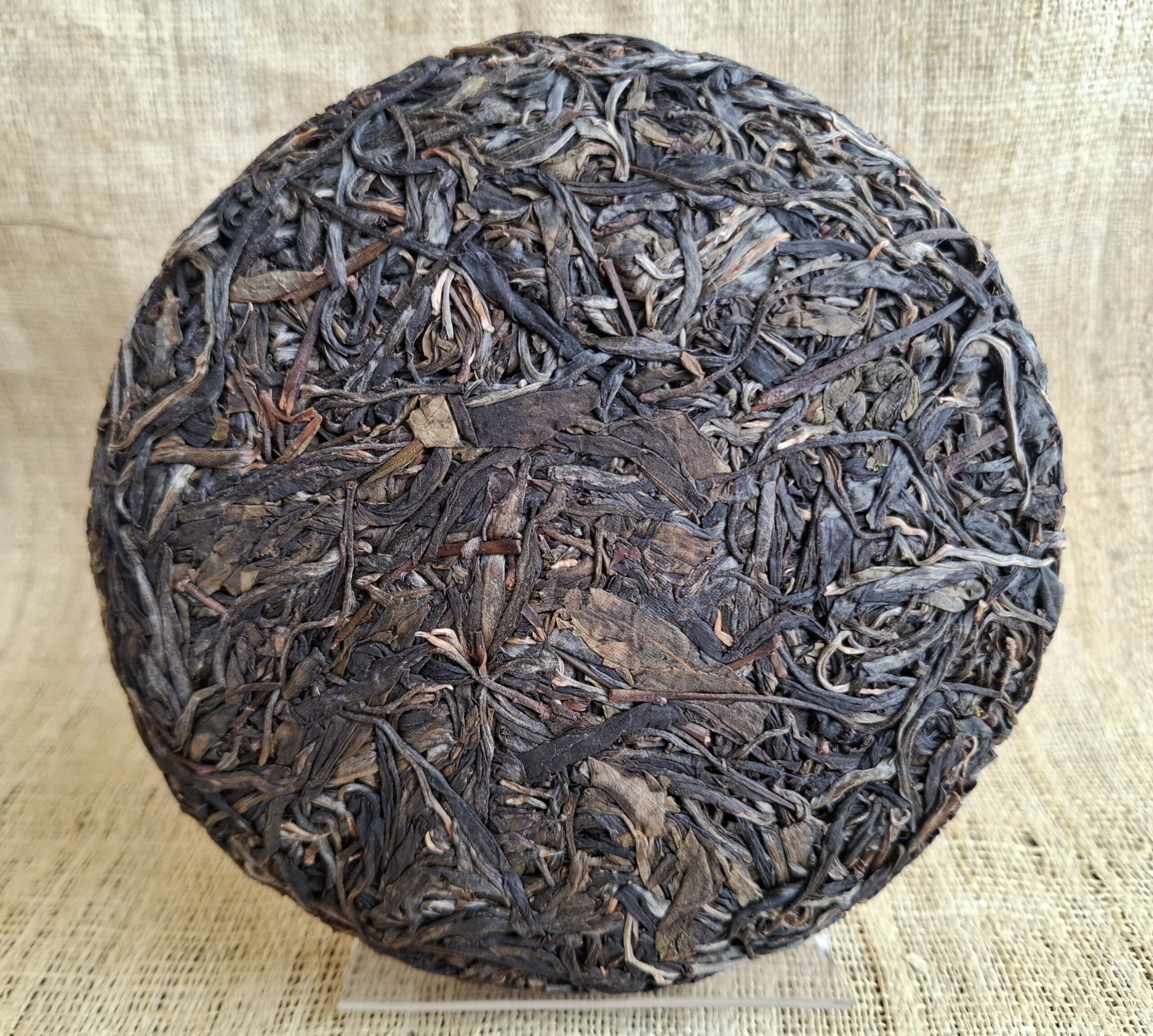
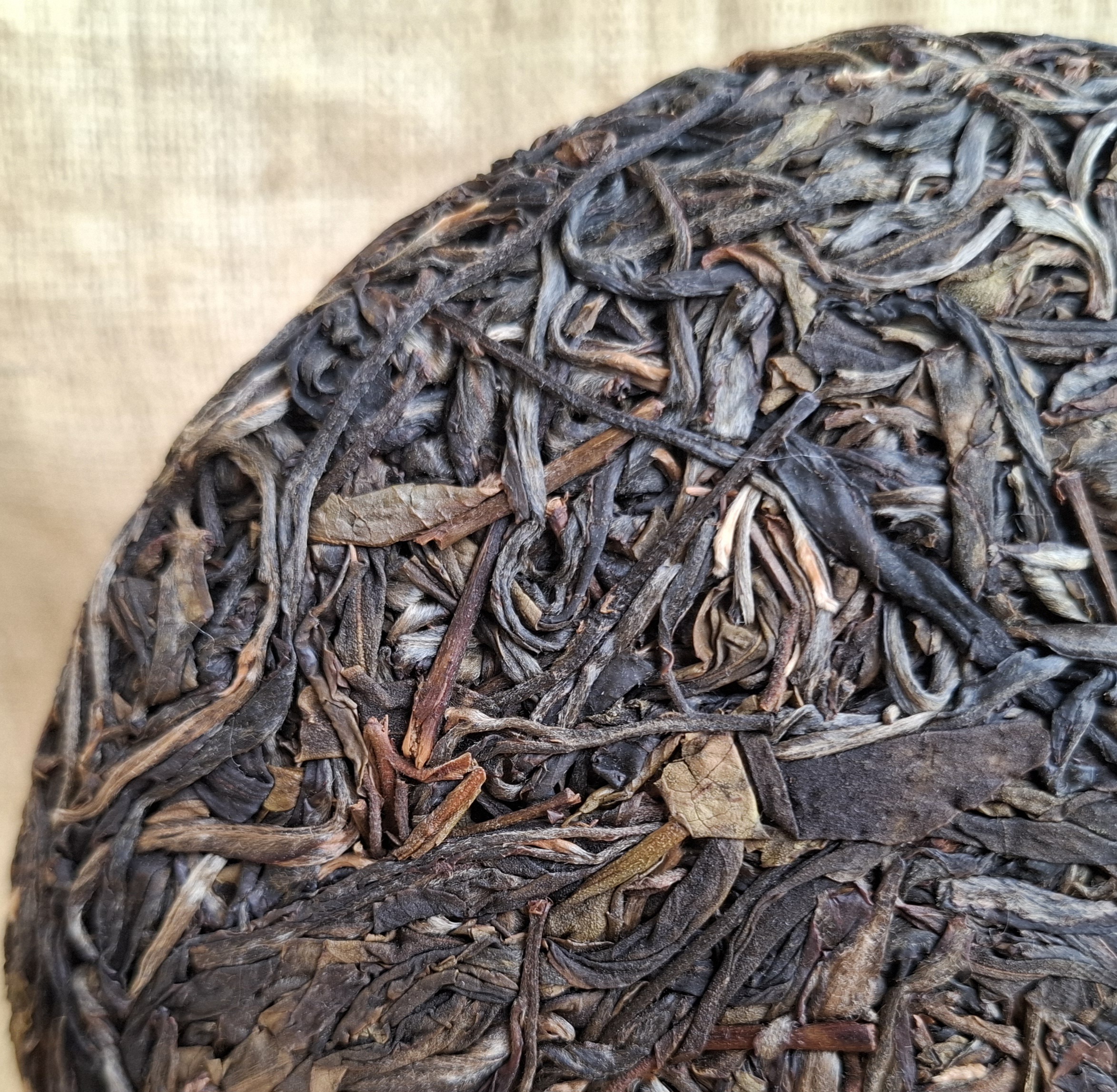
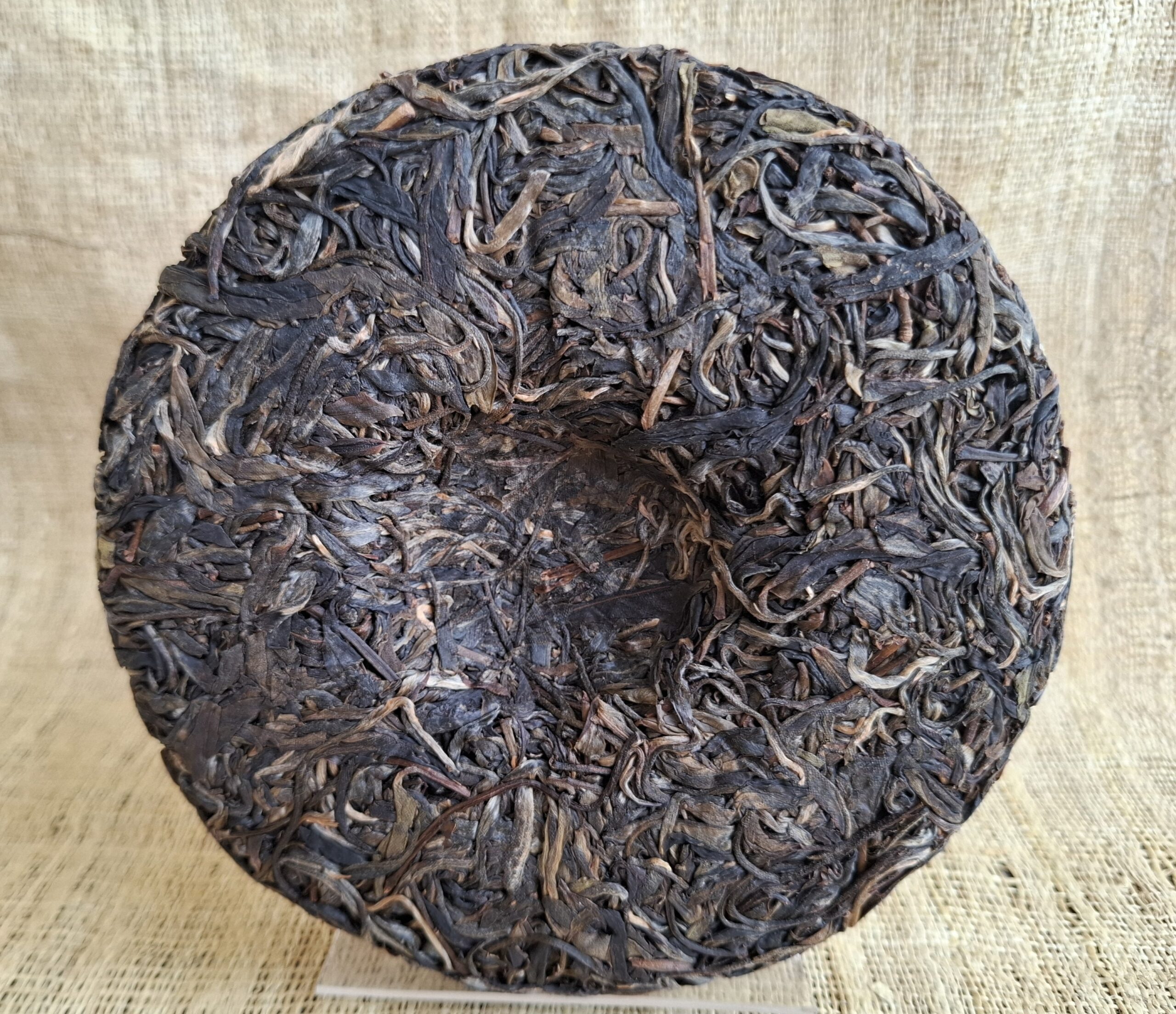
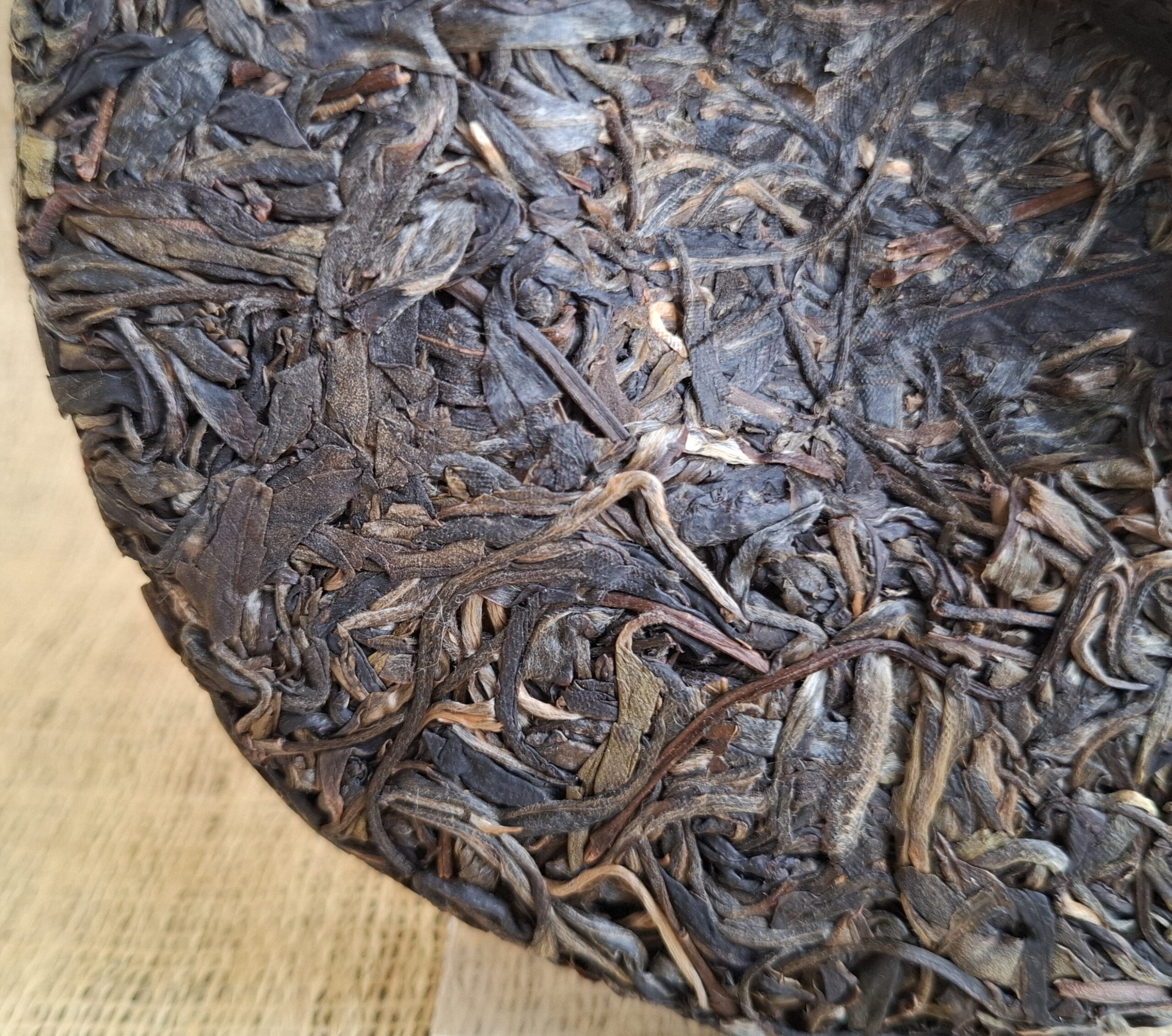
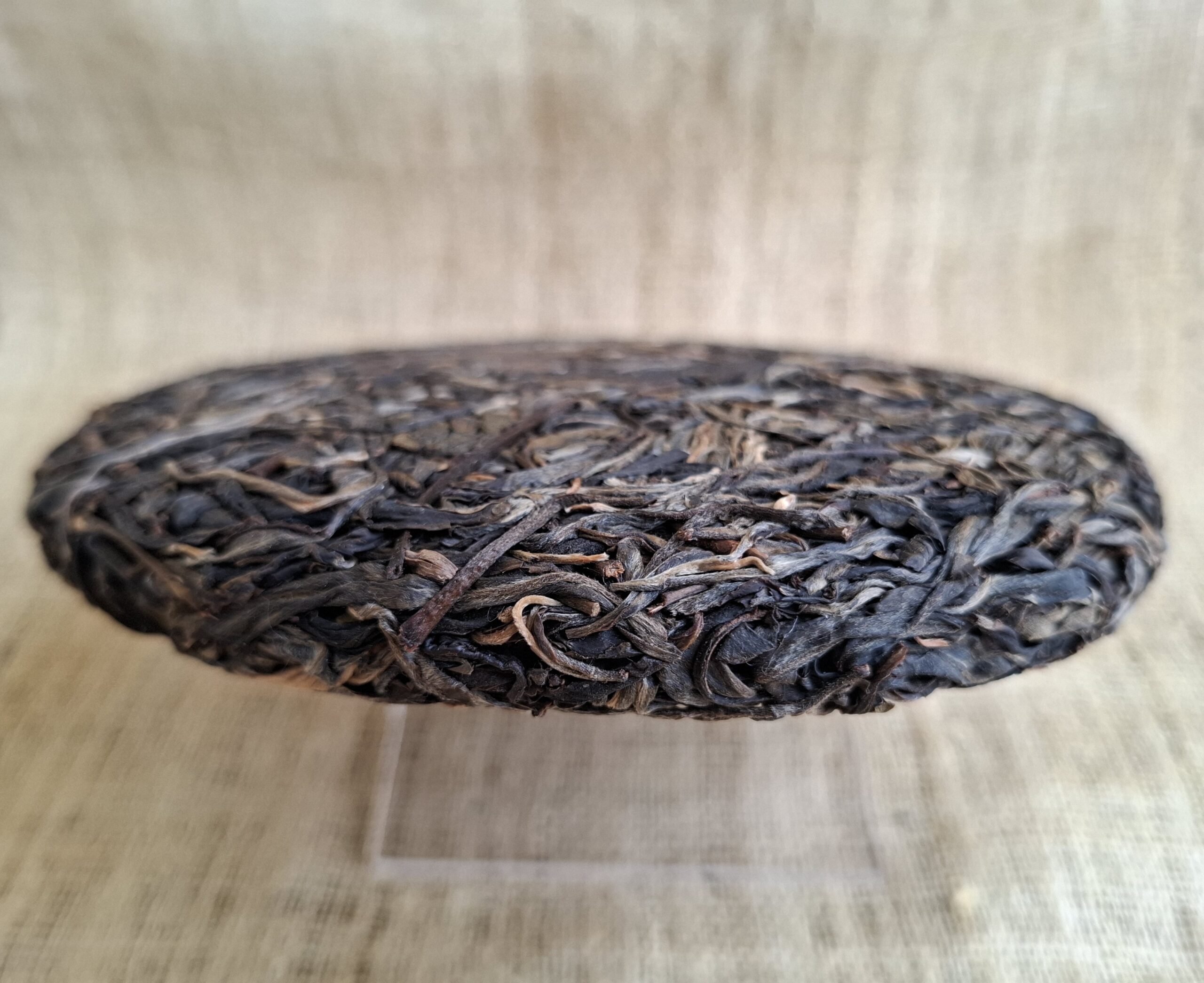
You Le Shan Spring 2022, Tall Tree ‘Gao Gan’ Forest Tea Tree Raw 200g Cake
Another tea from the same forest area of You Le/Jinuo Shan. Also from a mix of tall single trees growing naturally in the forest. There were only a few kilos of this tea.
These cakes pressed at the end of 2025.
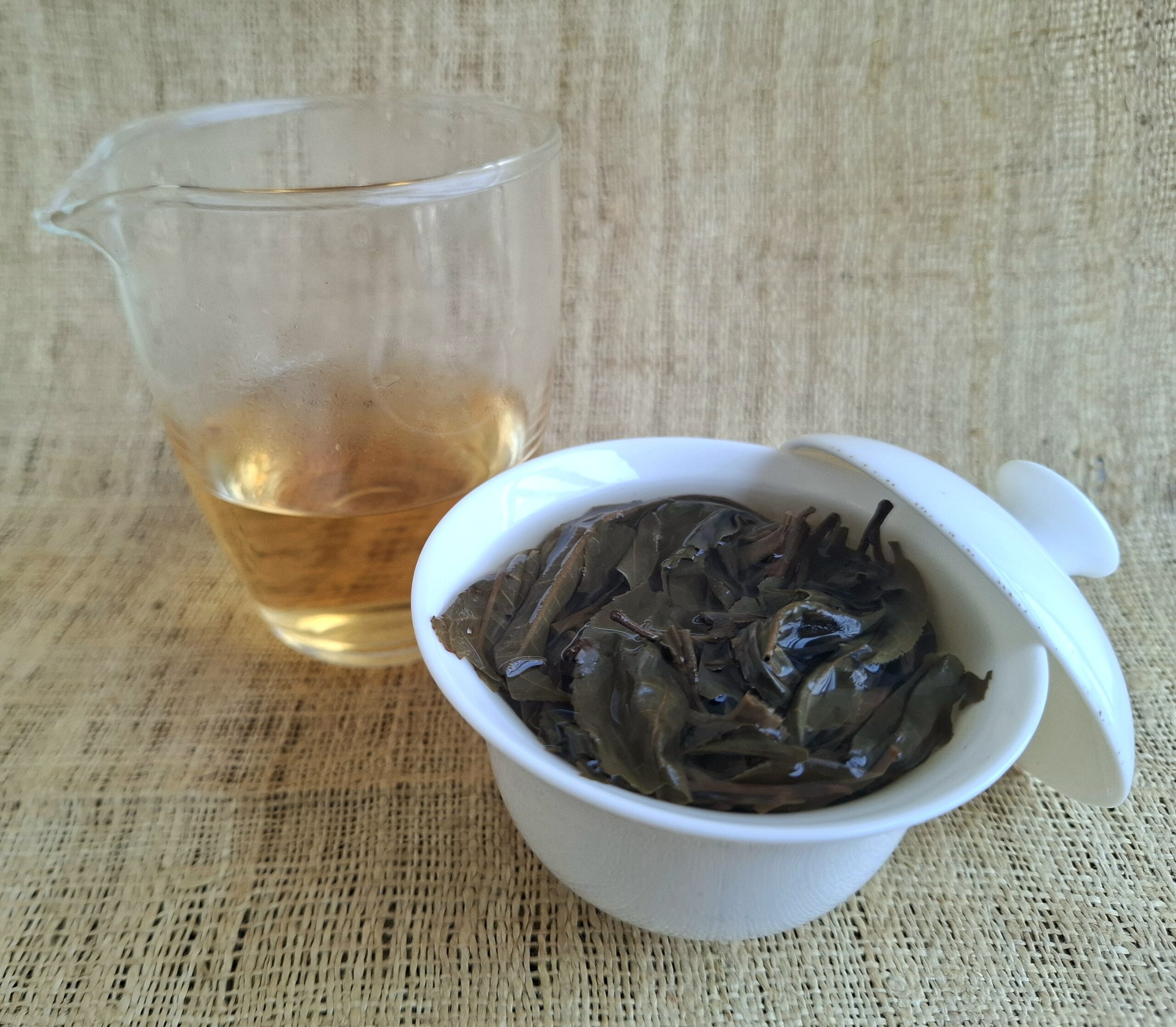
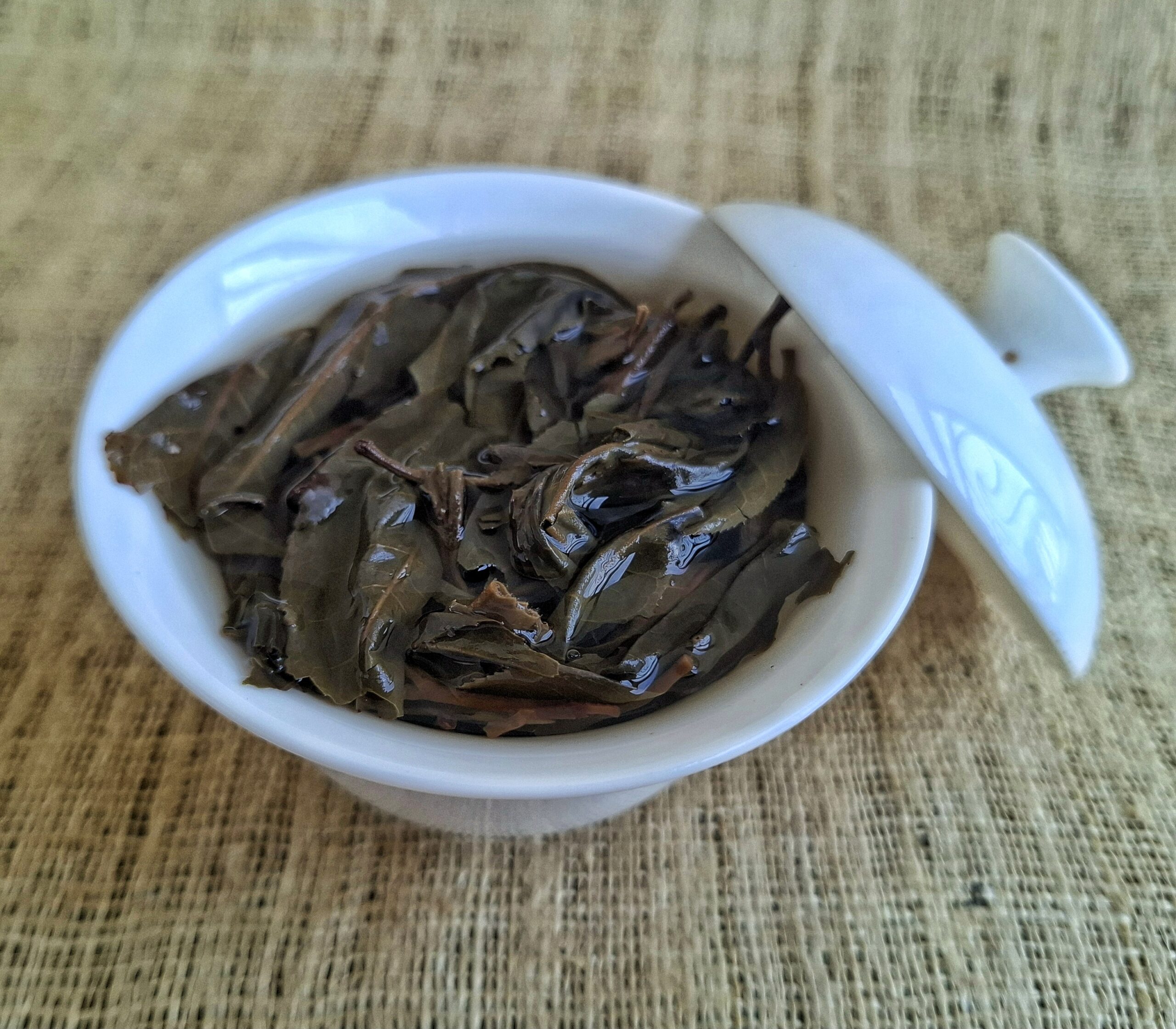
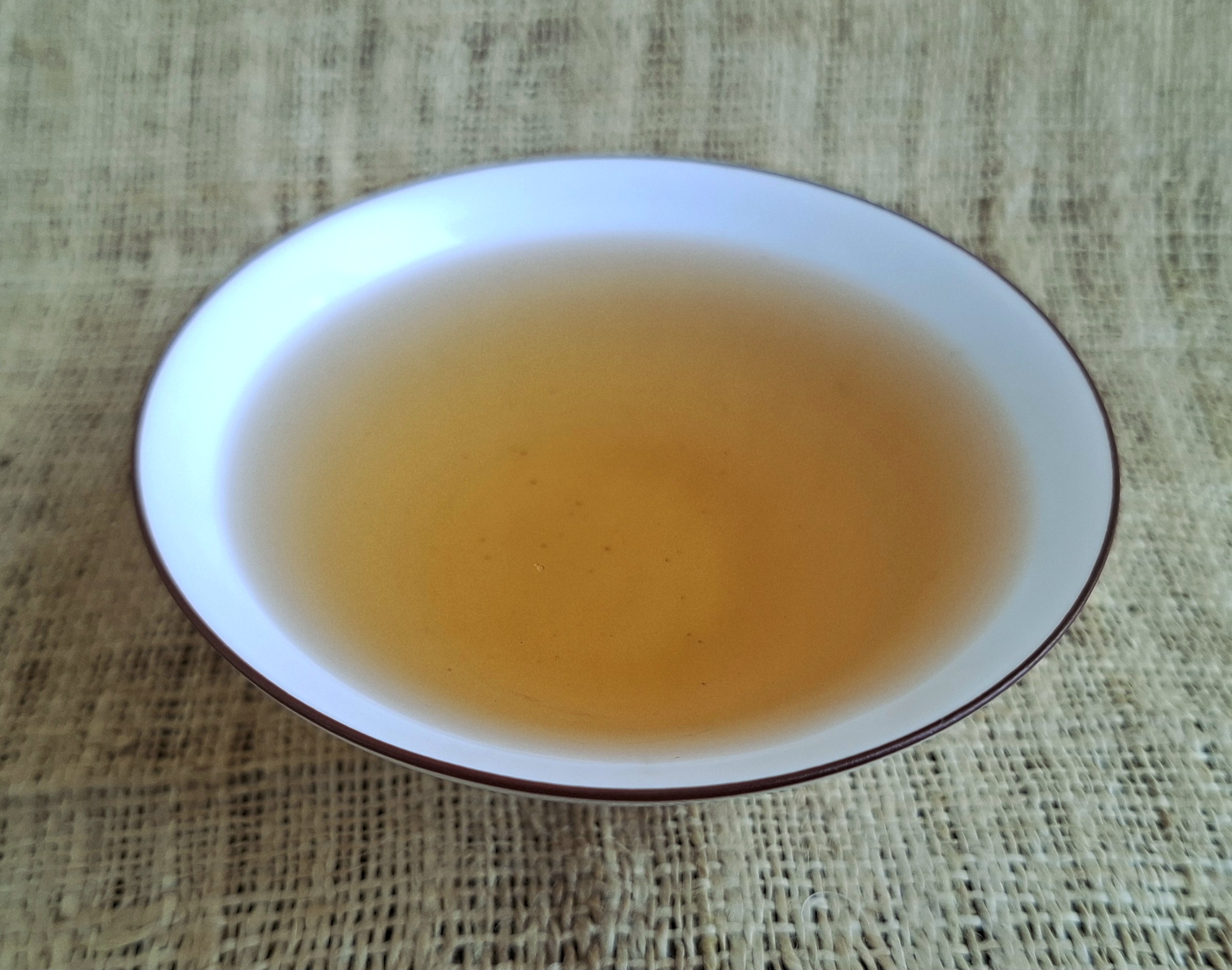
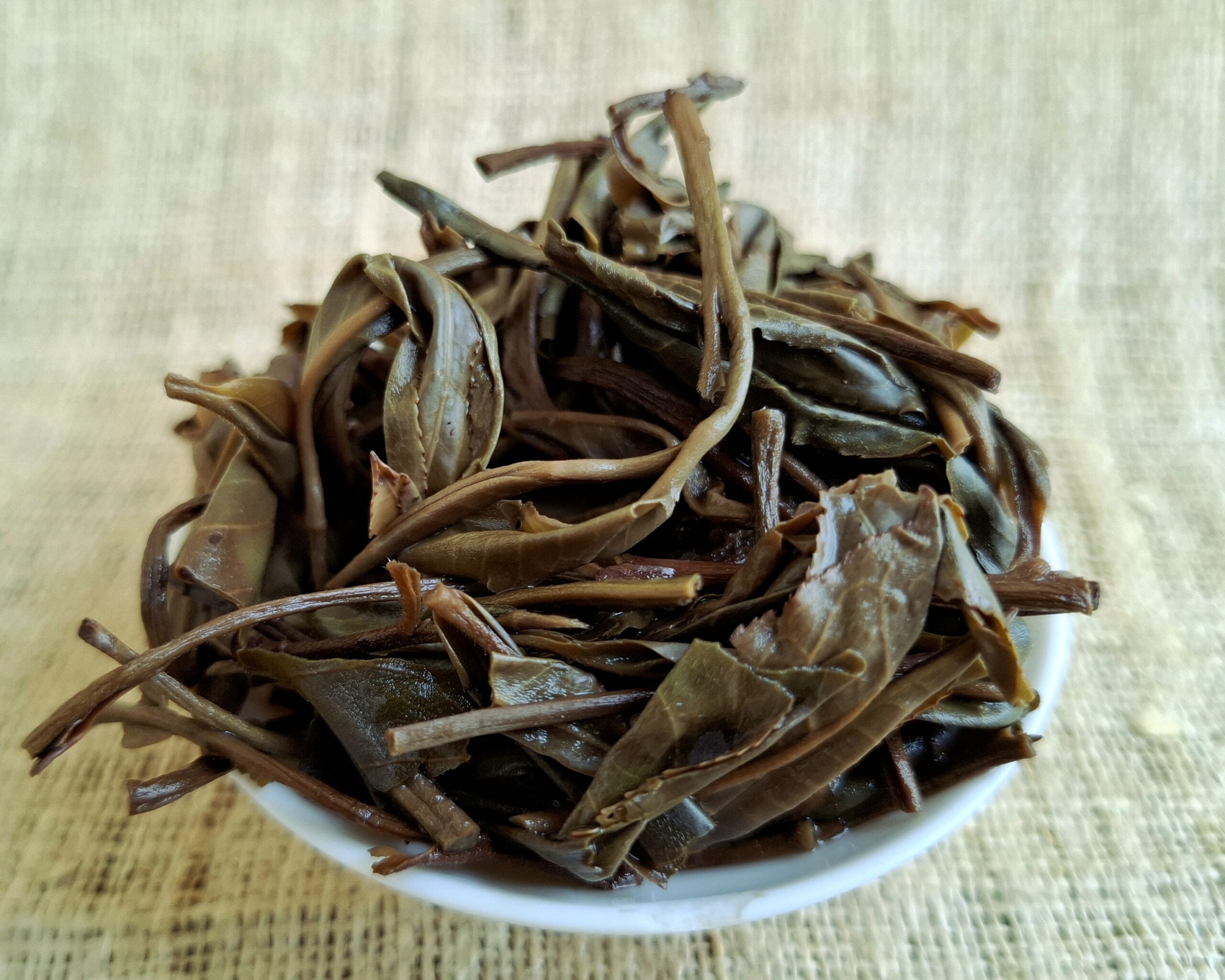
The wet leaves have a slightly fungal/fermented note along with a light hint of petrichor. The 'bei xiang' has light honey and ripe fruity notes. The broth is a nice, clear mid-yellow.
The 'ruo kou' is smooth with a slight petrichor note. The 'kou gan' is pleasant with a slightly granular feel in early steepings.
There's a very slight astringency with a hint of bitterness and a flavour which is lightly stoney-woody along with a little 'chen wei'.
It has decent thickness along with some sweetness and some light but persistent 'sheng jin'.
There are also some retro-olfactory woody-floral aromas and a pleasant, gentle cooling sensation in the mouth. Teas from this forest area of You Le change significantly in the first few years - from new teas that is certainly not empty, but not particularly remarkable, to teas with some decent 'hou du' that are nicely rounded, balanced and have some staying power.
Tasting Date: 2026/8/7
The tea trees are scattered across quite a wide area of forest. The average altitude is about 1300 metres. Picking the tea involves moving over considerable distances as the trees are typically quite some distance apart and the picker has to move from one tree to the next. As a result the amount that is available and gets picked in a day is very small. This batch was just over 5kg of dry 'mao cha'. The tea was pressed at the end of 2025.
Unless stated otherwise, all my Puer teas are hand picked, fired and rolled. They are then sun dried. Cakes are stone pressed.
Please be aware that because raw Puer tea is a 'post-fermented' tea it is continually in a process of change: as it ages, but also from season to season and even day to day, so the description here is a snapshot of the teas qualities and character on this particular occasion, which should not differ significantly, but which will change none-the-less over time.
$160.00
In stock
About Agrochemicals
I do not get all my teas routinely tested for agro-chemicals. I am extremely careful about which gardens I source from: tea gardens that are in a diverse, natural environment where there is no need for the use of agro-chemicals and which I am confident are all free of herbicide and pesticide traces.
In recent years anthraquinone in tea has become a talking point. I do not generally test tea for anthraquinone and, whilst I try my best to minimise the potential for it, I do not prioritise that over other factors. You can read more here.
Related products
-
Yi Bang, Man Gong, Autumn 2015 Ancient Tree Raw Puer Tea, 200g cake
$62.00 -
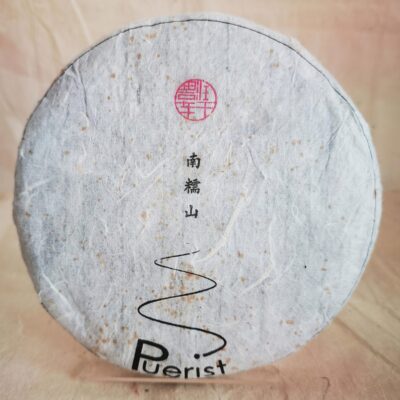
Nan Nuo Shan Spring 2020 Selected ‘qiao mu’, Raw Puer Tea, 200g Cake
$40.00 -
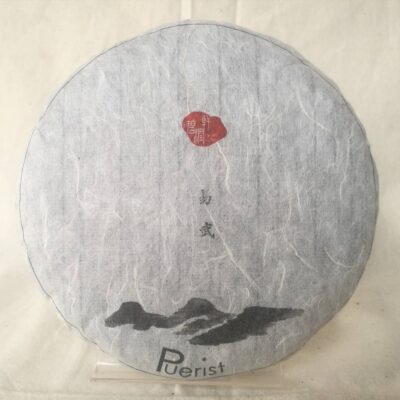
Yiwu No 1 Raw Puer Tea, Spring 2019, Old Tea Tree, 200g cake
$96.00 -
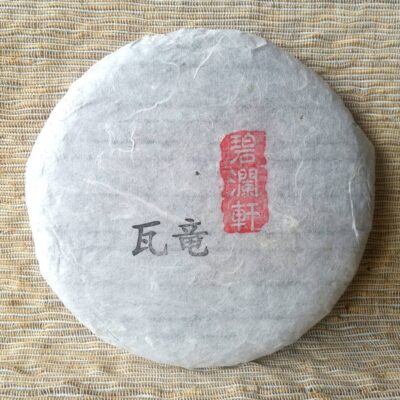
Wa Long ‘Guo You Lin’, Early Spring 2018 Old and Ancient Tree Raw Puer 200g cake
$178.00