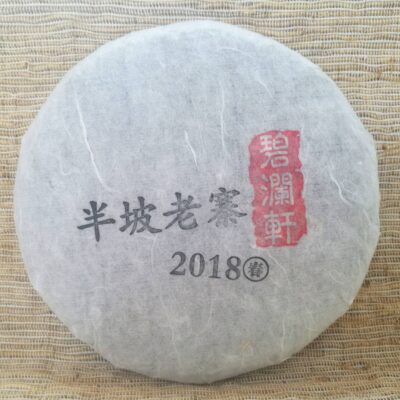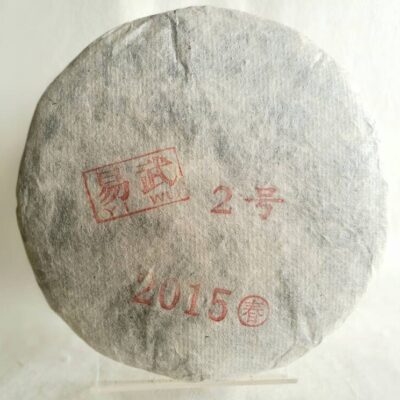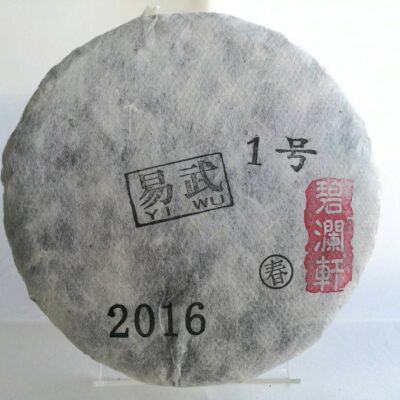
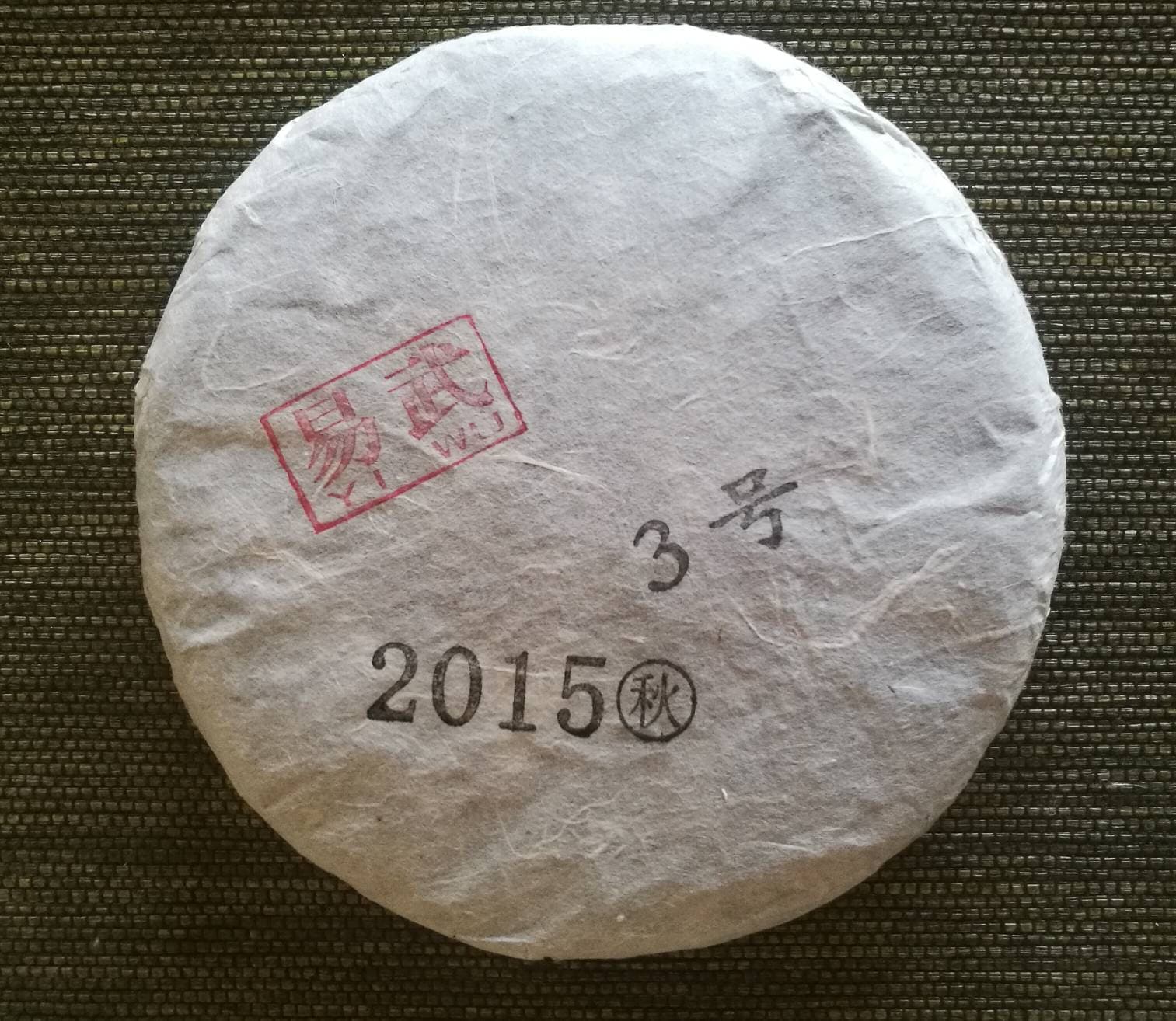
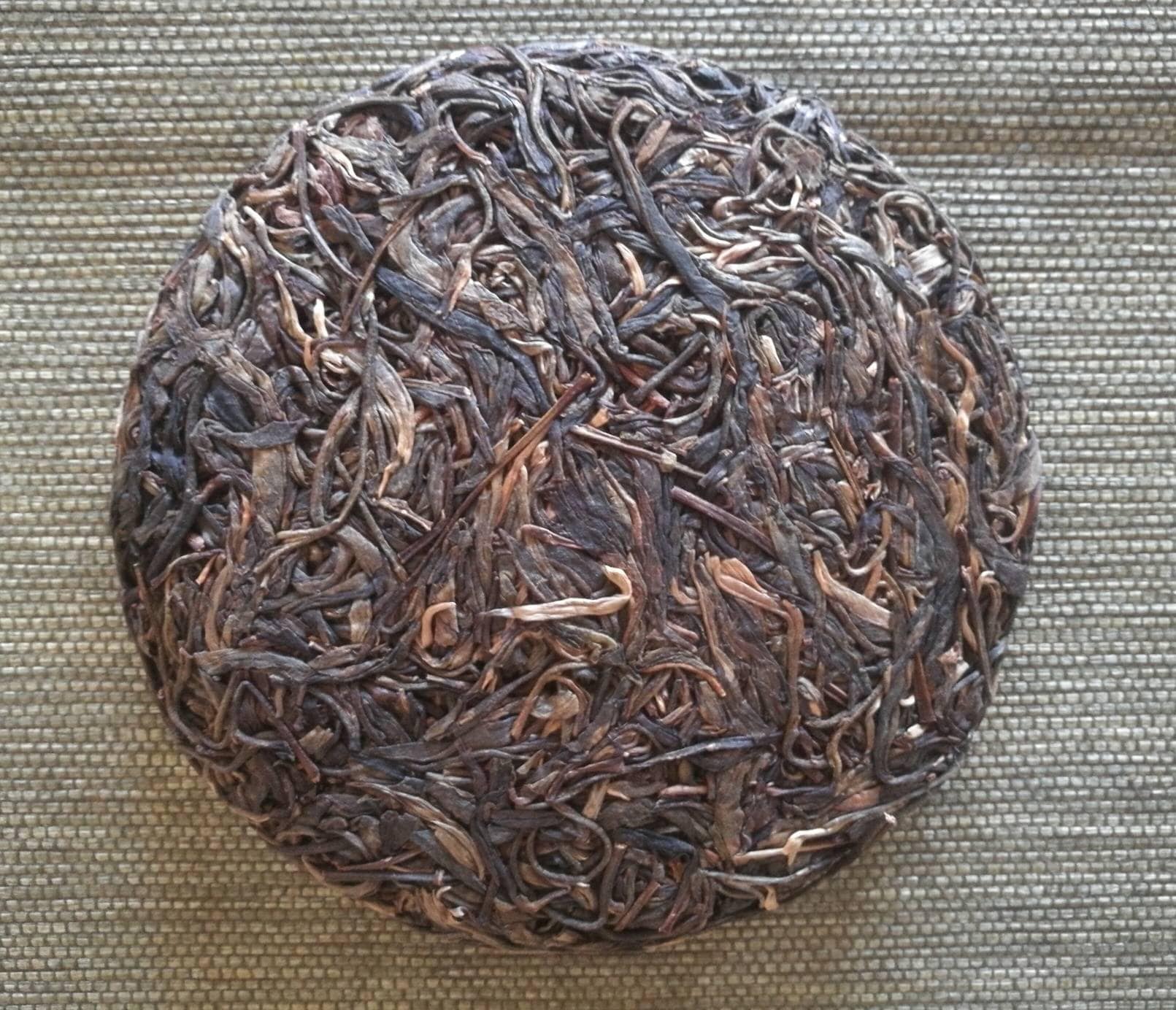
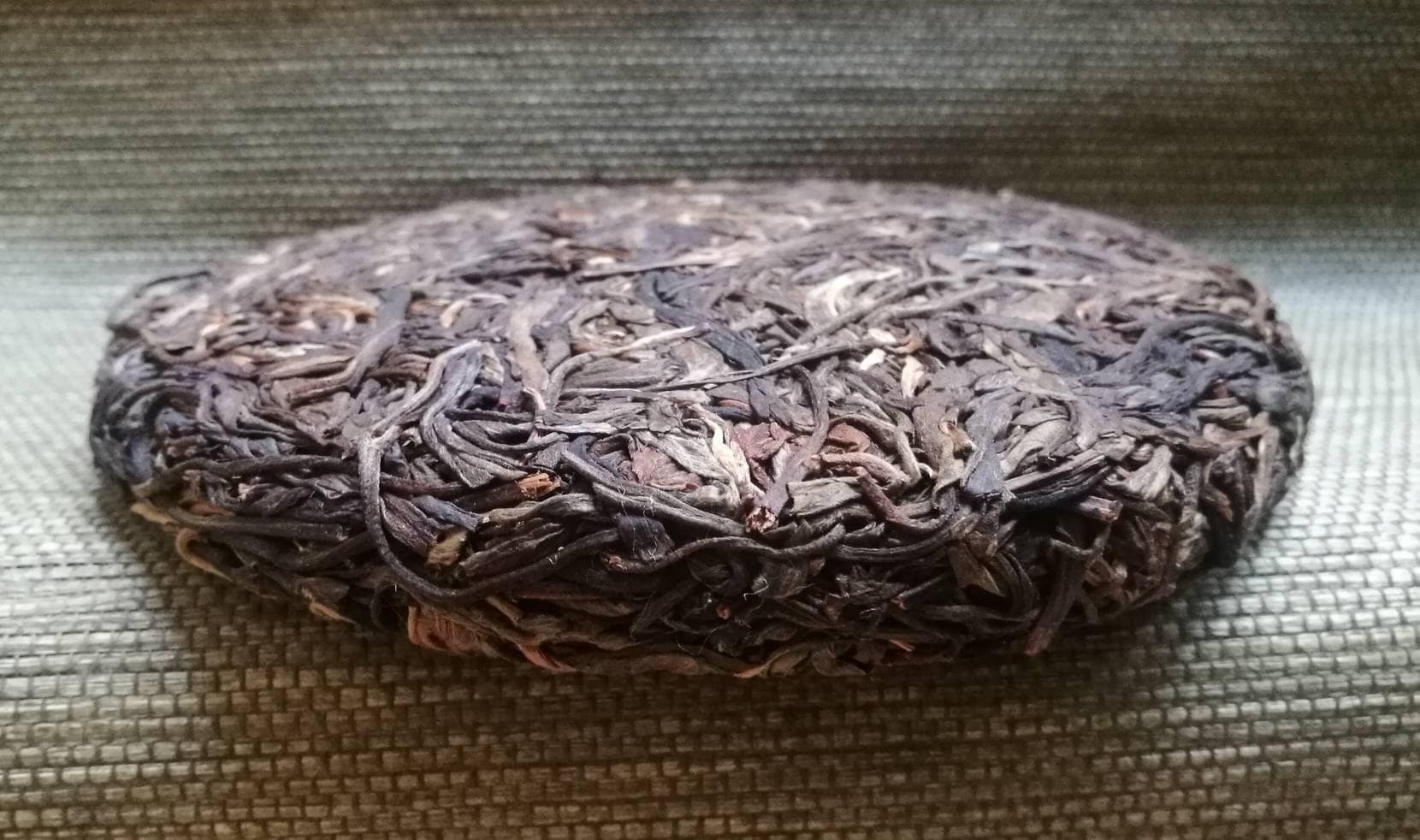
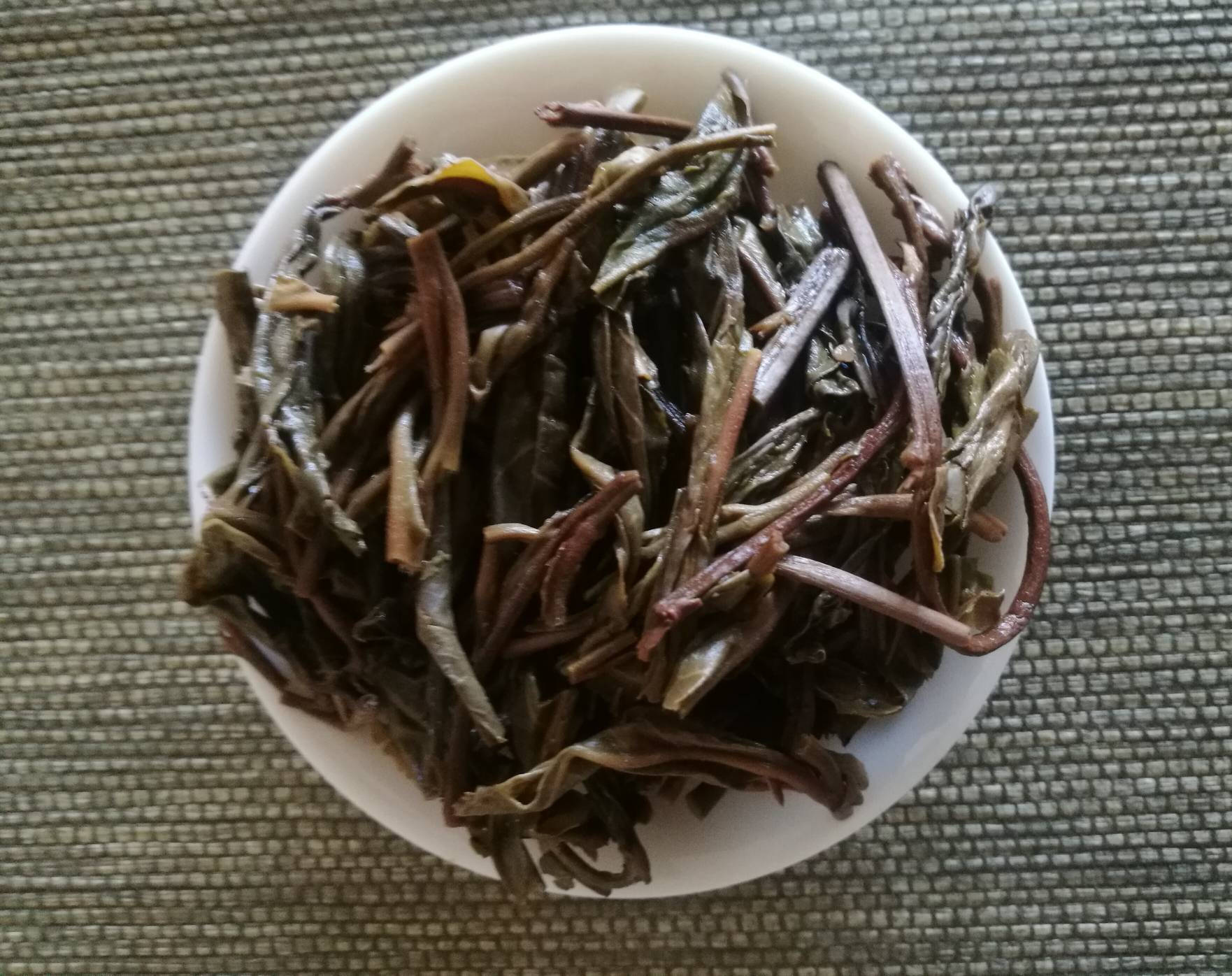
Another Yiwu tea I have been storing for a few years. This one from a tea garden of trees that have not been pollarded which is not common for Yiwu. In recent years other tea gardens like this have come to prominence and command very high prices. This tea garden is still quite unknown and the tea is more moderately priced.
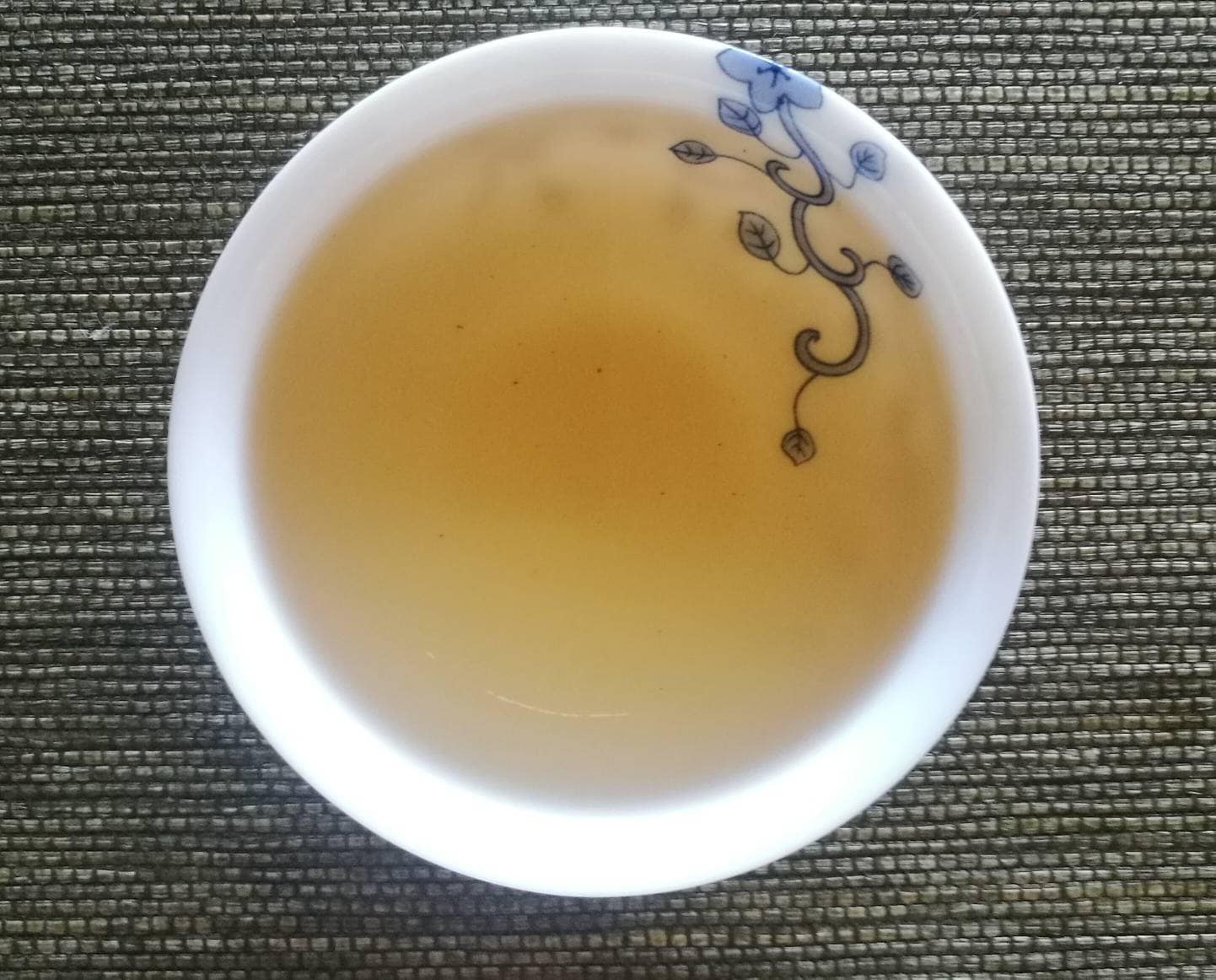
The tea is beginning to show a little 'chen wei'. The tea is clean an smooth in the mouth. It has a light honey-floral fragrance and sweetness in the mouth with good thickness, a little astringency and good 'hui gan'.
2026 Update:
As of early 2026, the tea has thickened up significantly. It doesn't show much astringency but has a distinct but quick bitterness. It's also pretty smooth with a clean mouthfeel and bit of an oily texture. The fragrance has developed more woody, camphor-like notes with some hints of mushrooms/fungi whilst still showing some of the earlier honey notes. Initial steeps had a very slight sour note which disappeared after a couple of steepings. The tea has some decent hou yun with a slight cooling feeling in the mouth/throat and some woody aroma along with some sweetness that now seems to be less dominant as other, more savoury aspects have developed.
Unless stated otherwise, all my Puer teas are hand picked, fired and rolled. They are then sun dried. Cakes are stone pressed.
Please be aware that because raw Puer tea is a 'post-fermented' tea it is continually in a process of change: as it ages, but also from season to season and even day to day, so the description here is a snapshot of the teas quality and character, which should not differ significantly, but which none-the-less can change.
Additional information
| Weight | 200 g |
|---|
$86.00
In stock
About Agrochemicals
I do not get all my teas routinely tested for agro-chemicals. I am extremely careful about which gardens I source from: tea gardens that are in a diverse, natural environment where there is no need for the use of agro-chemicals and which I am confident are all free of herbicide and pesticide traces.
In recent years anthraquinone in tea has become a talking point. I do not generally test tea for anthraquinone and, whilst I try my best to minimise the potential for it, I do not prioritise that over other factors. You can read more here.