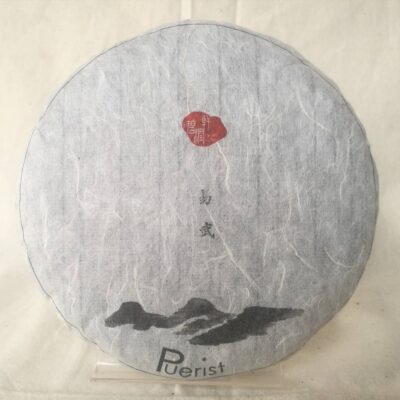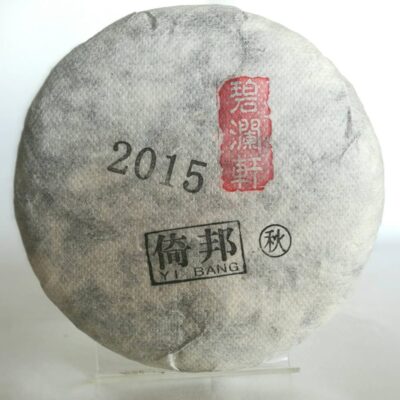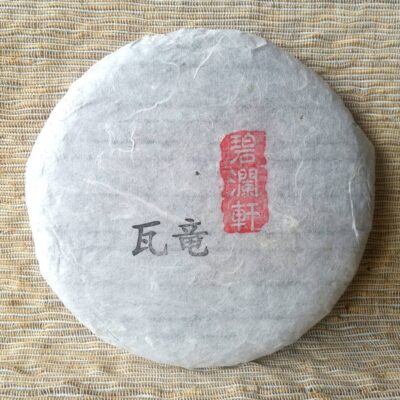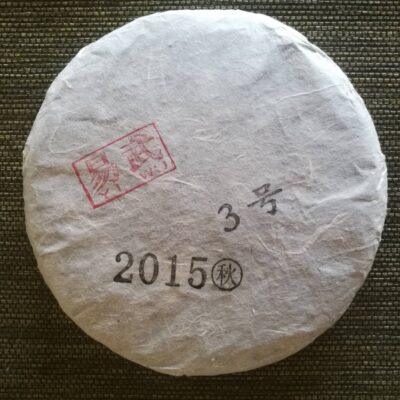
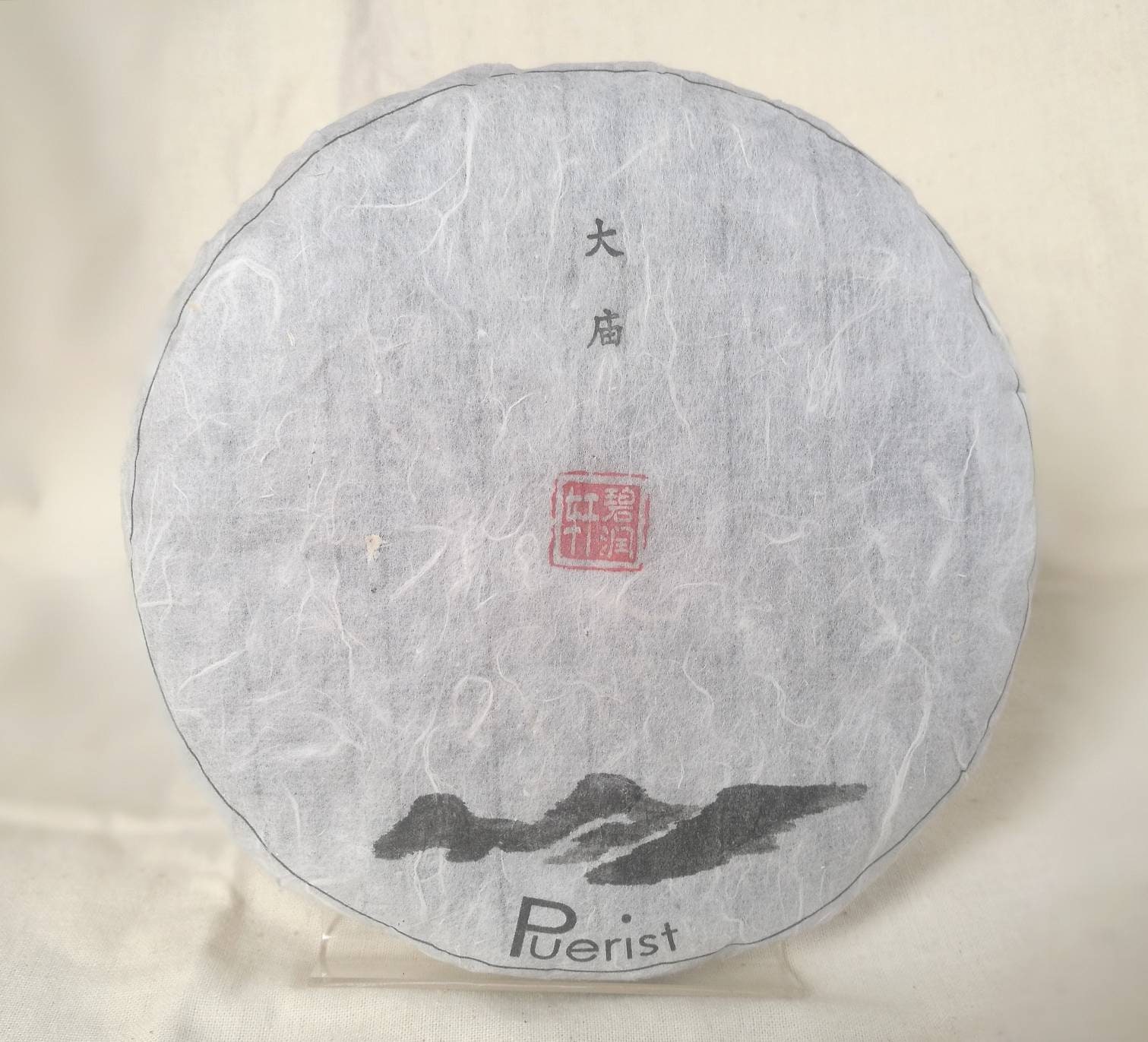
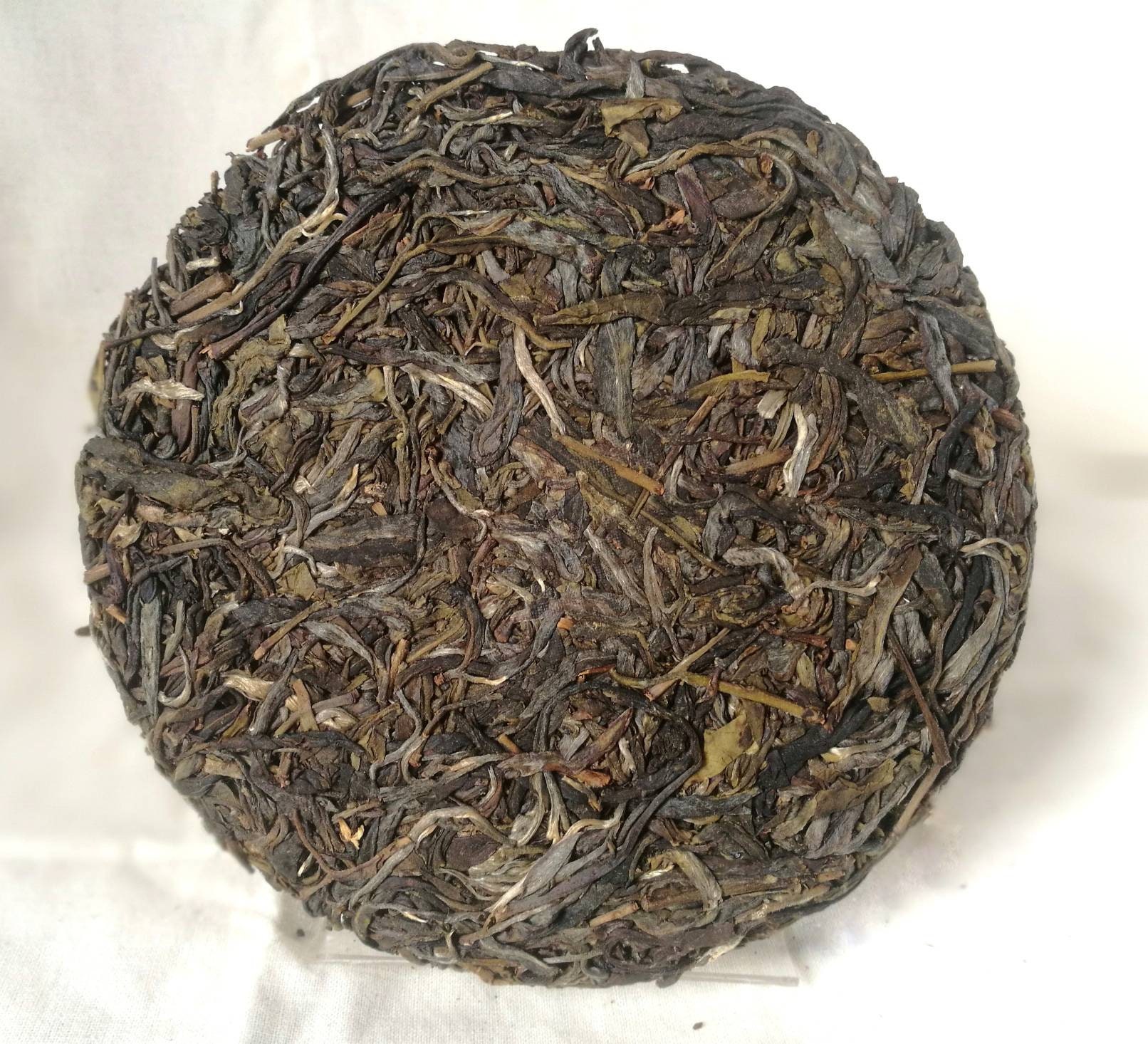
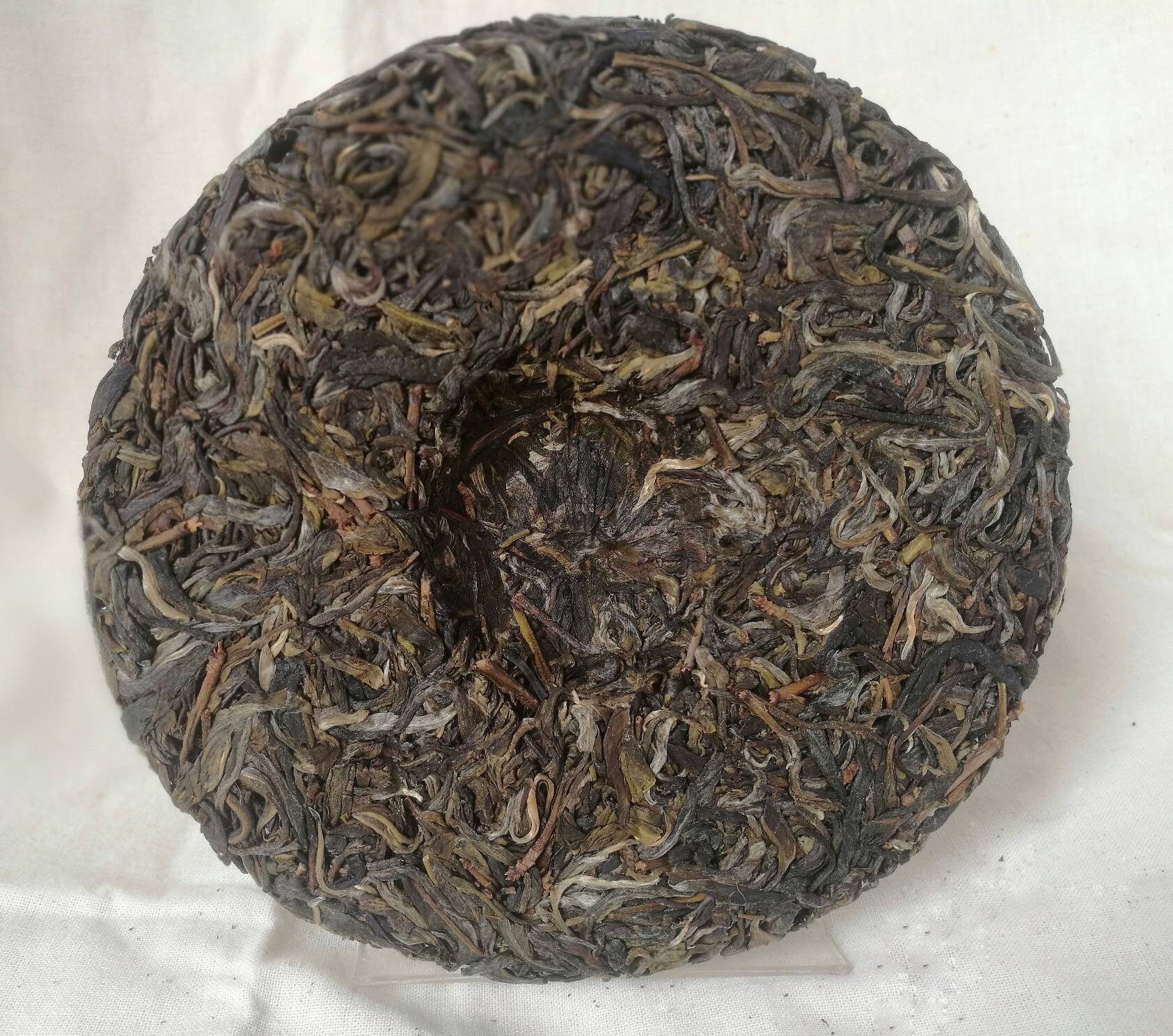
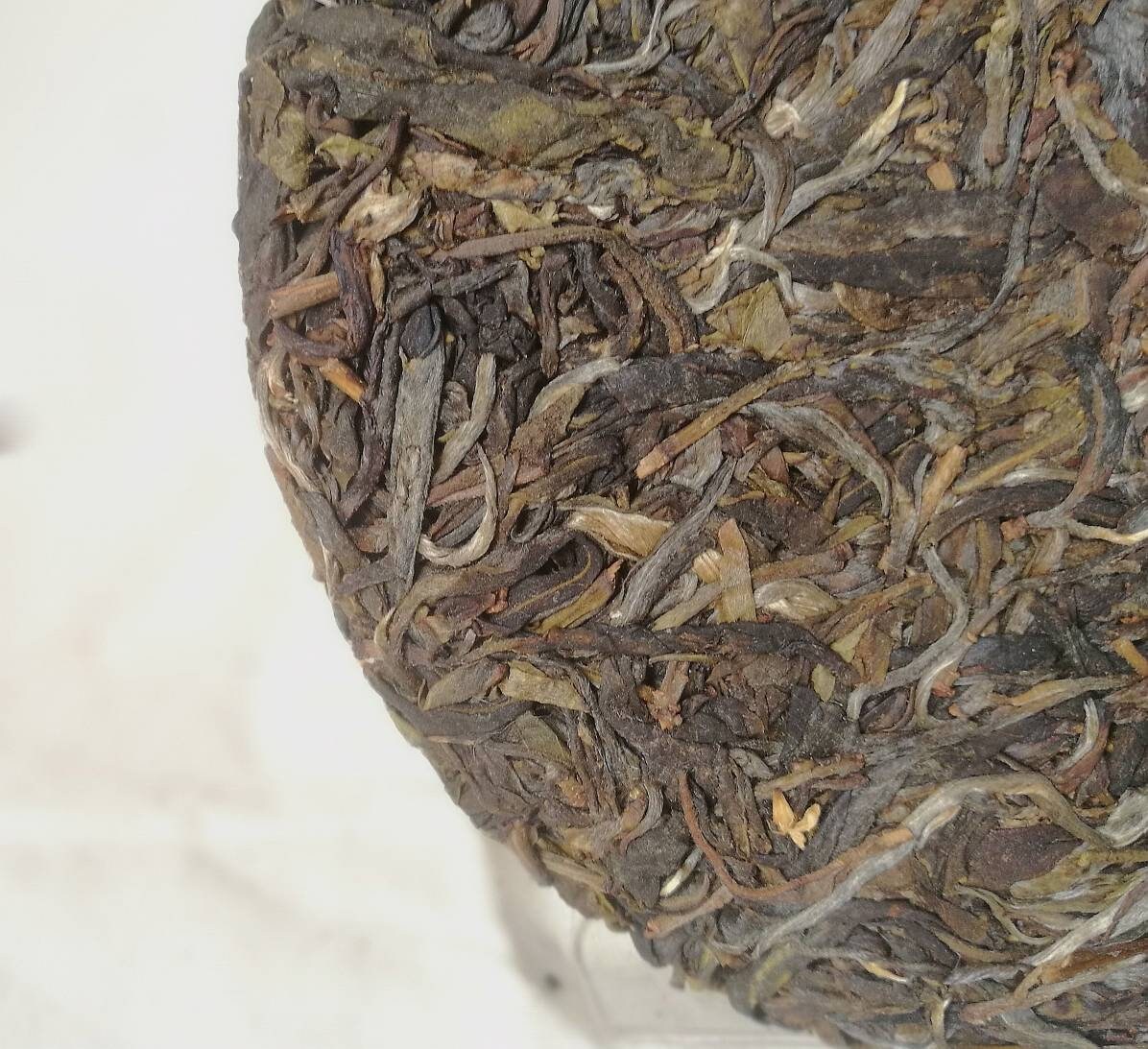
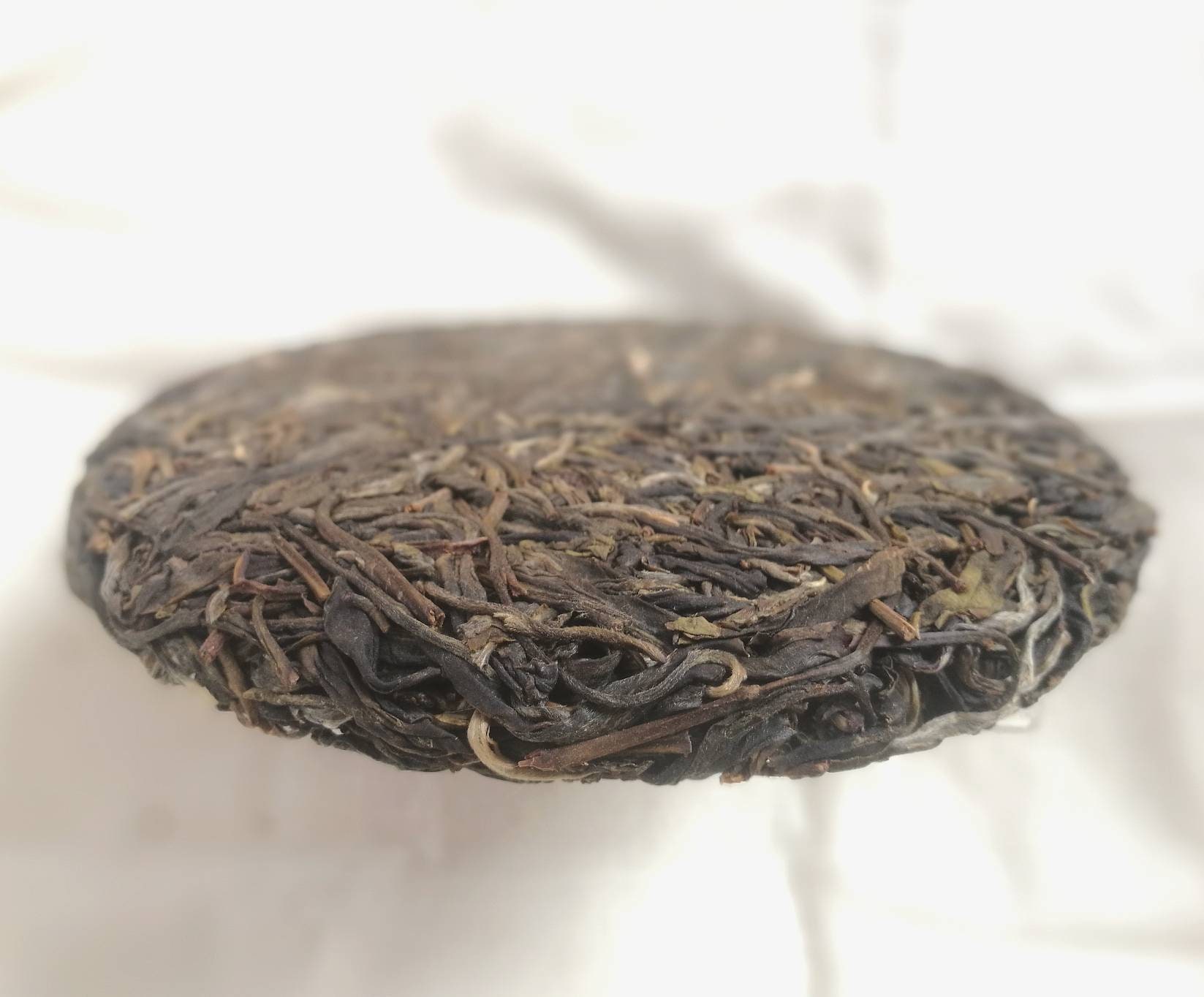
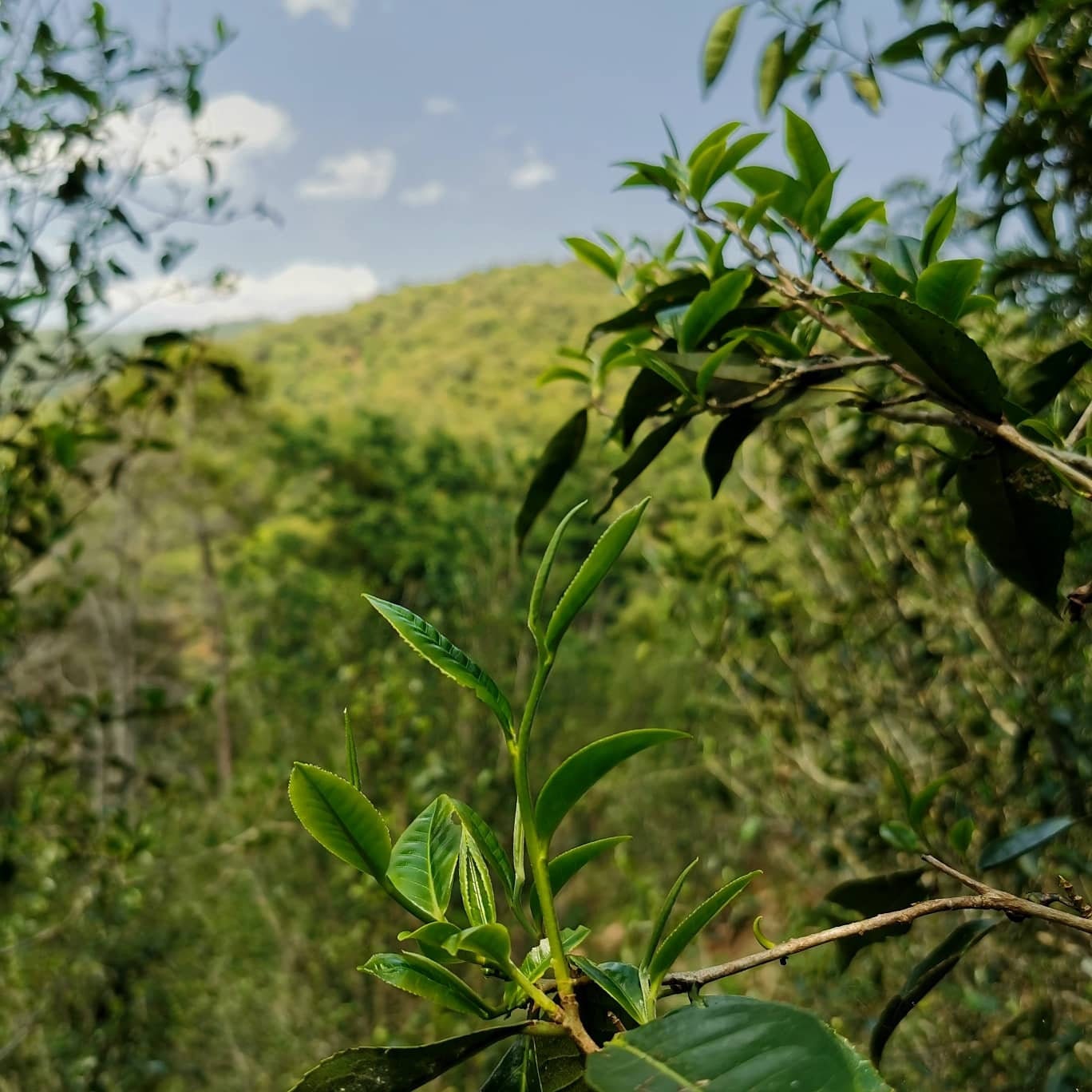
Yiwu, Da Miao, Early Spring 2019, Old Tree Raw Puer, 200g cake
From the same tea gardens as the 2018 'Da Miao'. There was even less mao cha than the previous year due to an extremely dry Spring.
As with many 2019 Spring teas, this tea had a more prominent 'ku-se' than last year but after keeping it till late Autumn to see how it shaped up, the result so far is pretty pleasing. These cakes were pressed in late October and have been stored since then.
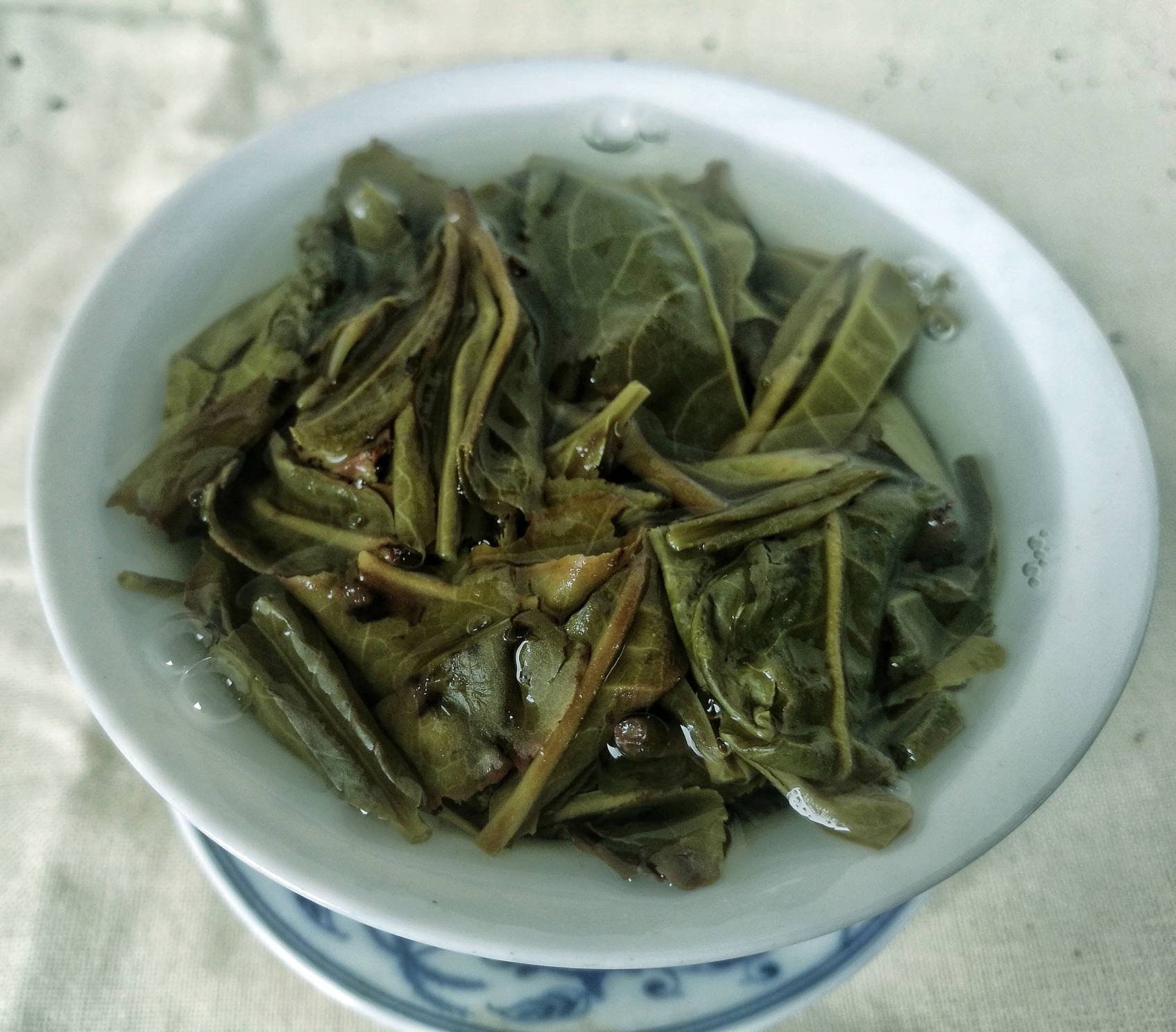
The dry leaves have a light leathery/grassy aroma.The wet leaves smell of tobacco, grasses with a little sour fruit and a hint of smokiness. For now, the fragrance in the 'gong dao bei' is lighter than last year, but has a similar honey-floral character that strengthens as it cools.
The 'ru kou' is smooth but with some punch, and has that same hint of smokey tobacco.
The broth is sweet with a light bitterness that transforms nicely, balanced with some puckeriness that 'tightens the teeth' as they say in Xishuangbanna. The flavour is a little more fulsome/robust than 2018 'Da Miao' and produces a fairly distinct cooling sensation in the mouth.
The 'hou yun' is pleasing, with some decent 'hui gan' and some fragrance in the back of the mouth and nose.
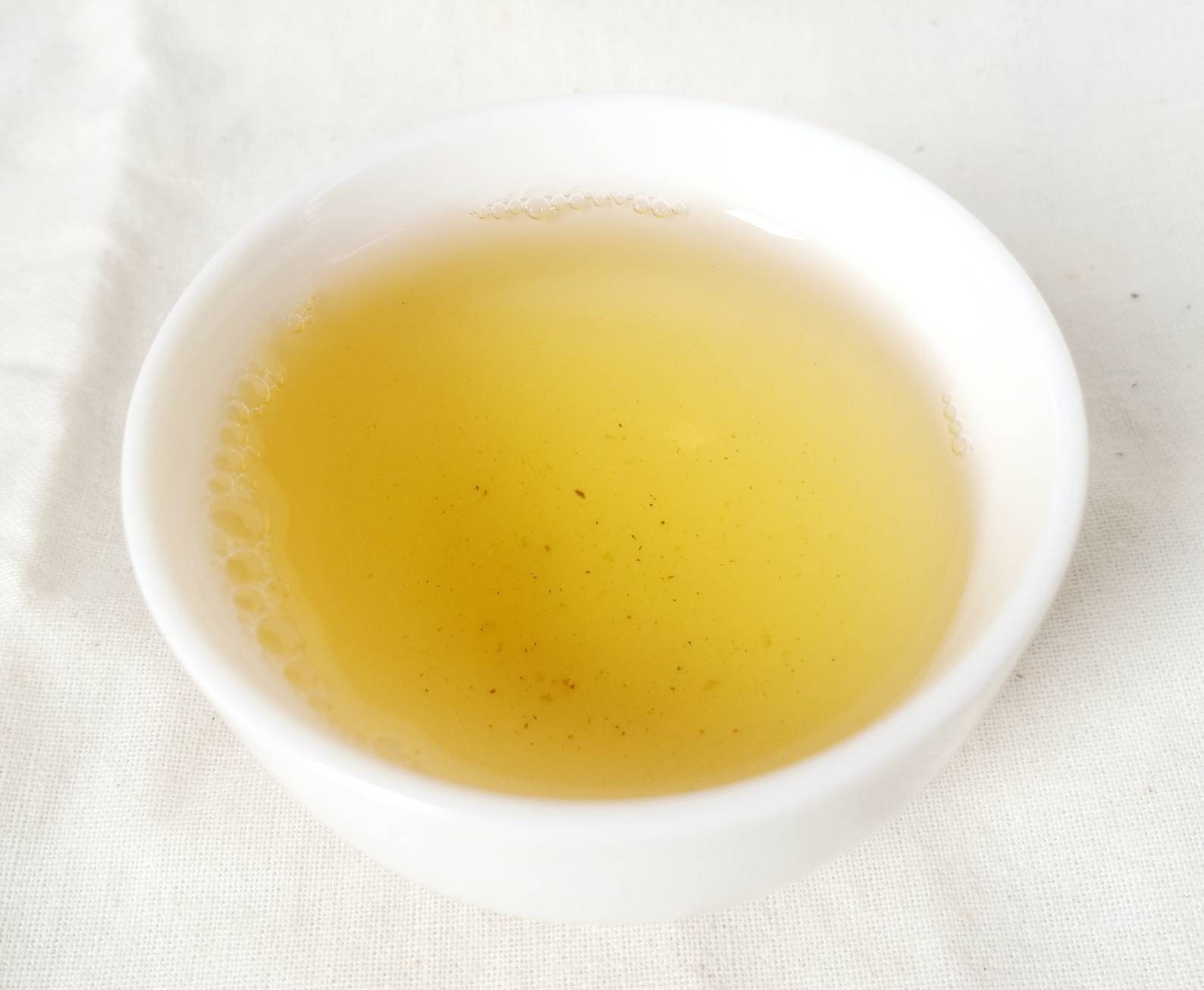
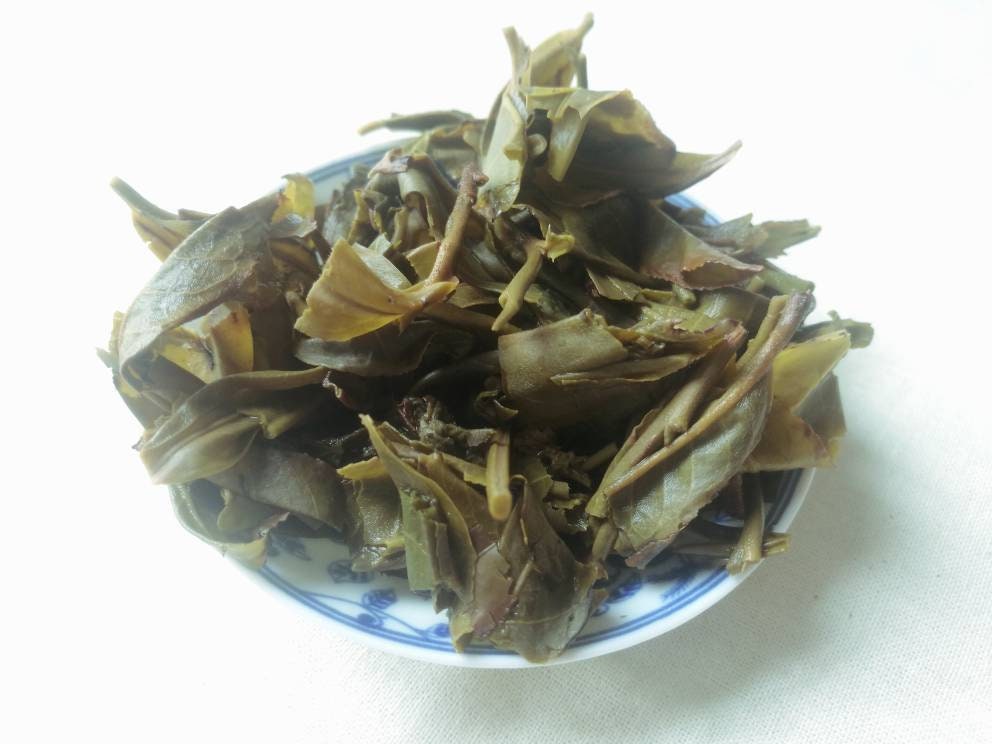
The broth is a clear, bright mid-yellow. The spent leaves look nice enough: a nice even colour and size.
All Puer teas are hand picked, fired and rolled, or sometimes machine rolled. They are sun dried. Cakes are stone pressed.
Please be aware that because raw Puer tea is a 'post-fermented' tea it is in a process of continual change: as it ages, but also from season to season and even day to day, so the description here is a snapshot of the tea's quality and character, which should not vary significantly, but which none-the-less can change.
I do not get all my teas routinely tested for agro-chemicals. I am extremely careful about which gardens I source from: tea gardens that are in a diverse, natural environment where there is no need for the use of agro-chemicals and which I am confident are all free of herbicide and pesticide traces.
In recent years anthraquinone in tea has become a talking point. I do not generally test tea for anthraquinone and, whilst I try my best to minimise the potential for it, I do not prioritise that over other factors. You can read more here.
$97.00
In stock
About Agrochemicals
I do not get all my teas routinely tested for agro-chemicals. I am extremely careful about which gardens I source from: tea gardens that are in a diverse, natural environment where there is no need for the use of agro-chemicals and which I am confident are all free of herbicide and pesticide traces.
In recent years anthraquinone in tea has become a talking point. I do not generally test tea for anthraquinone and, whilst I try my best to minimise the potential for it, I do not prioritise that over other factors. You can read more here.