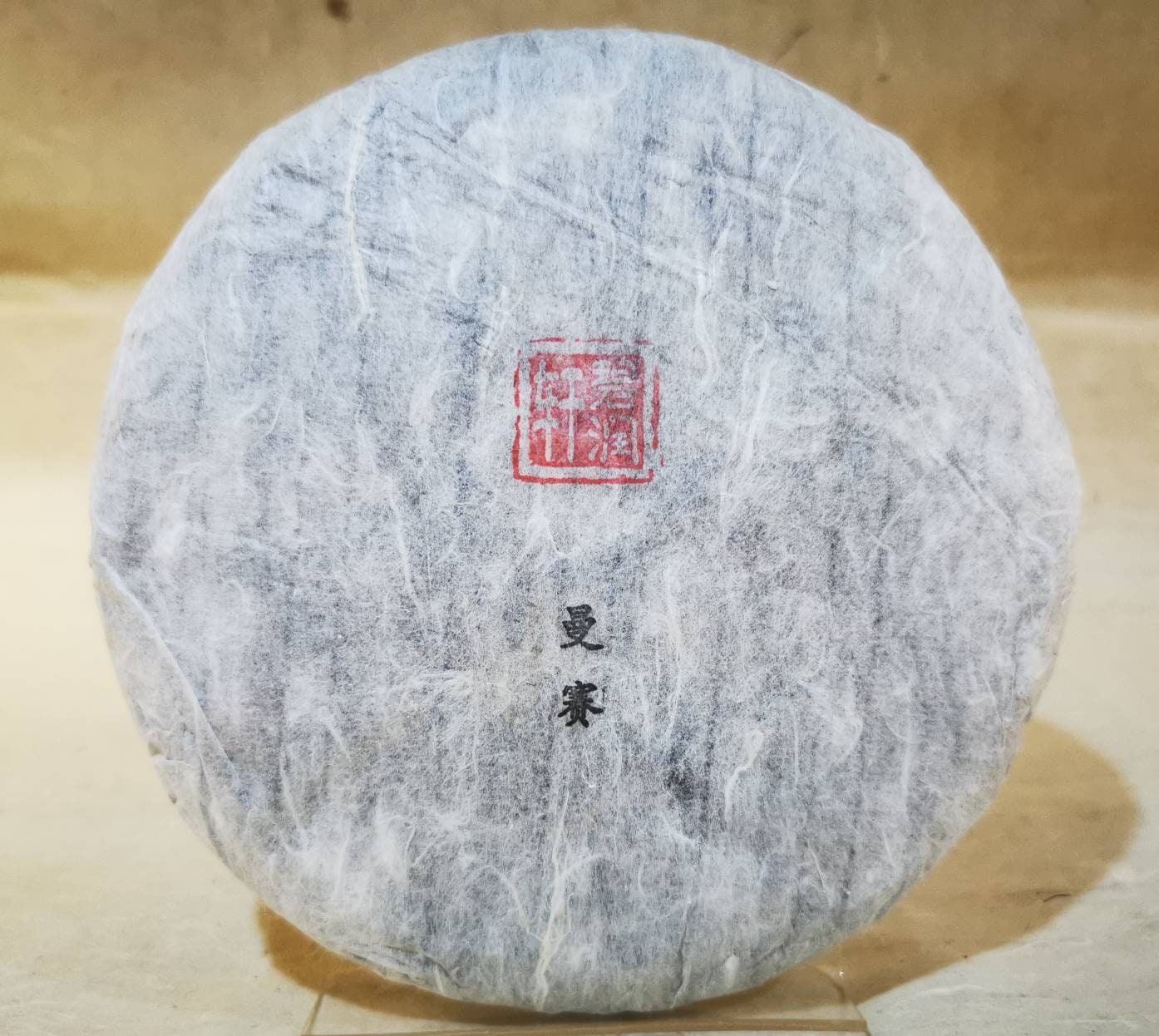
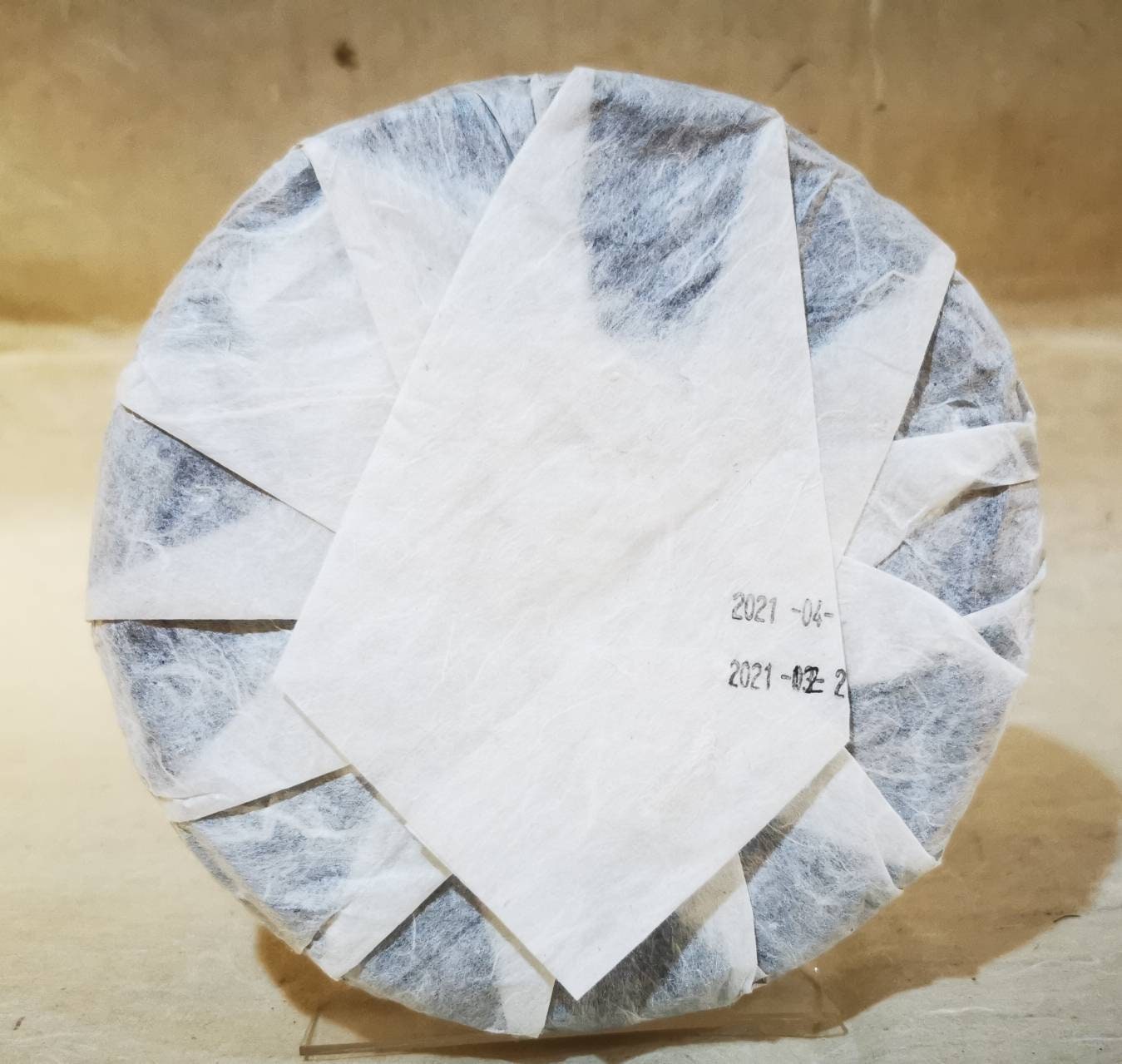
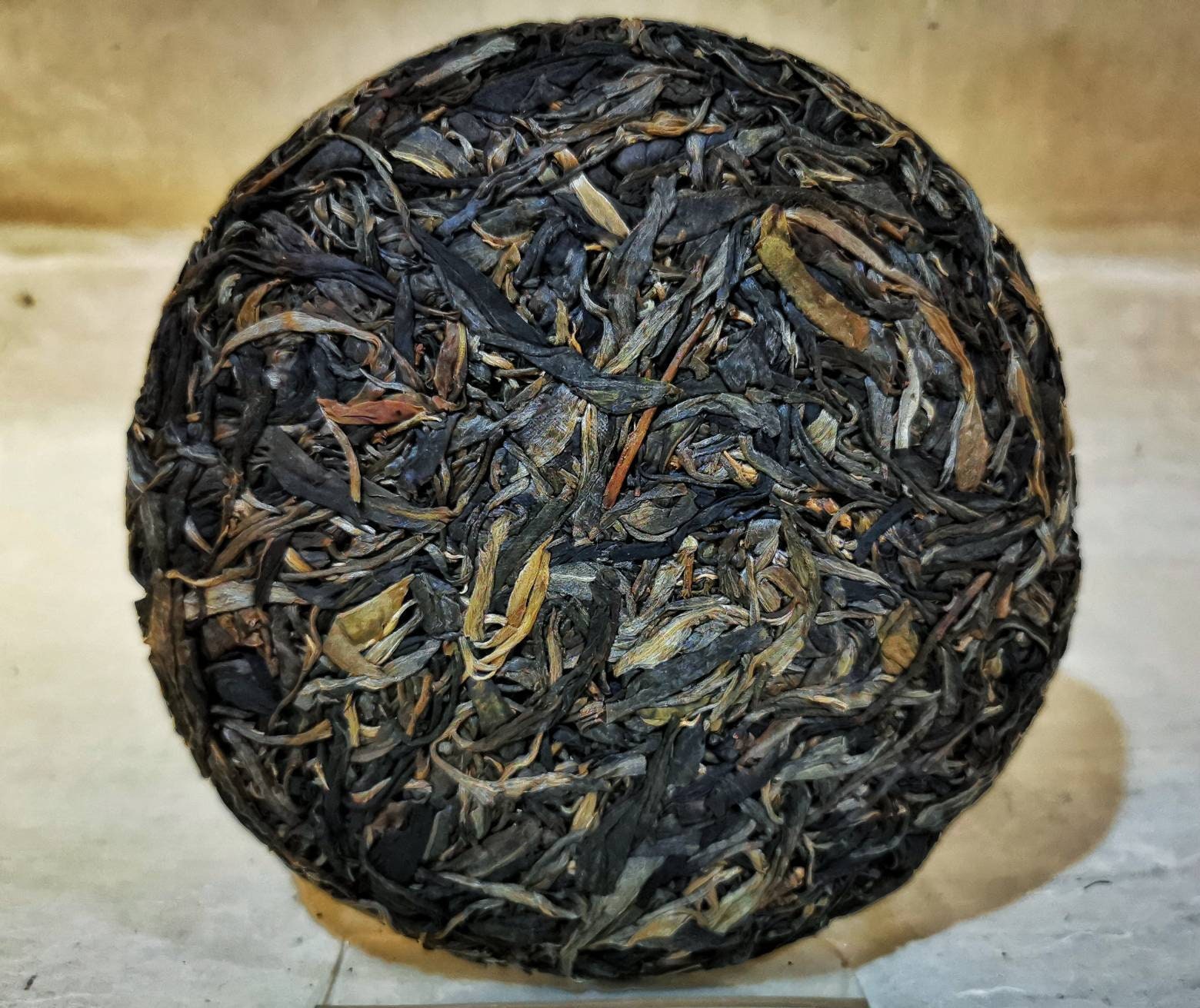
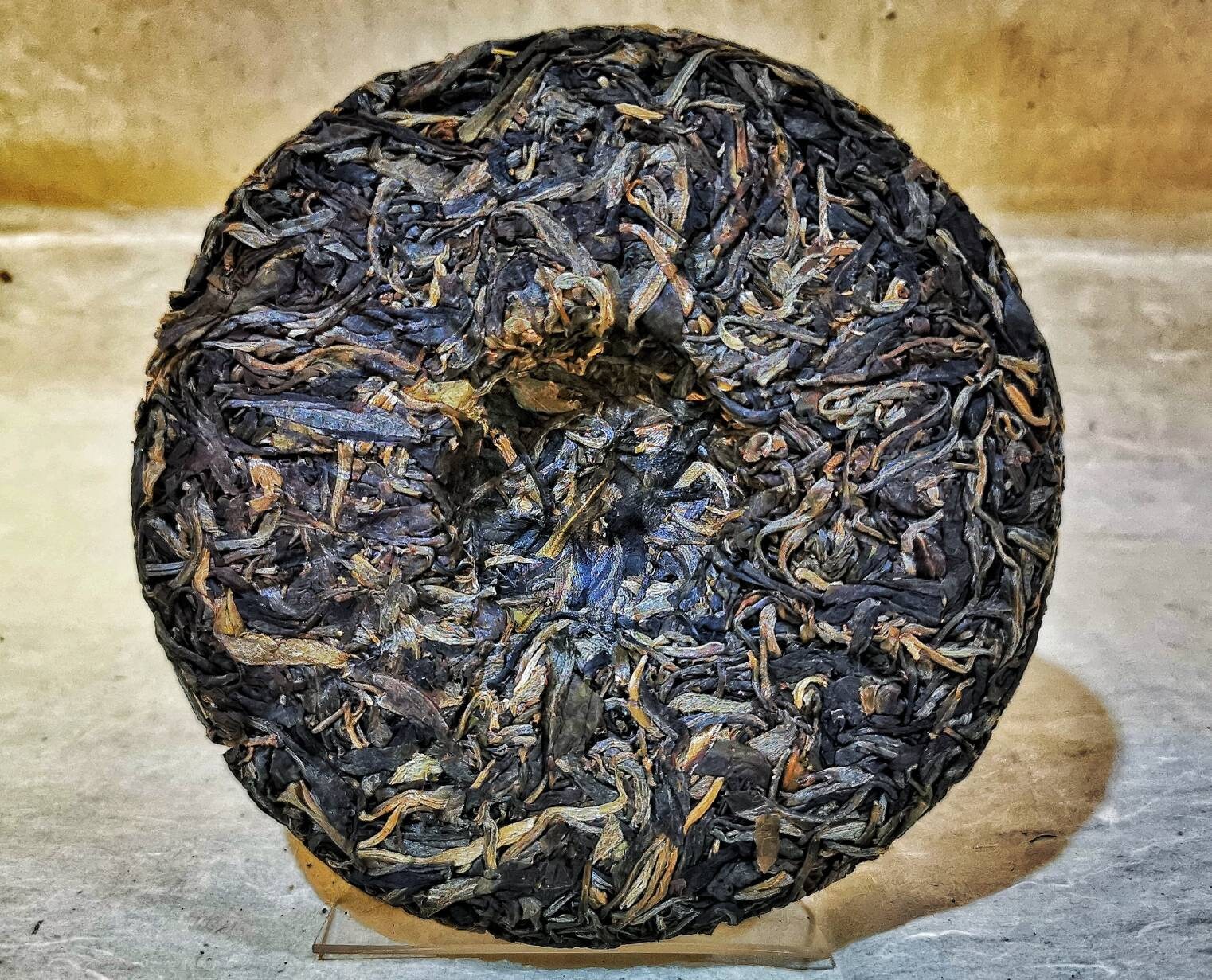
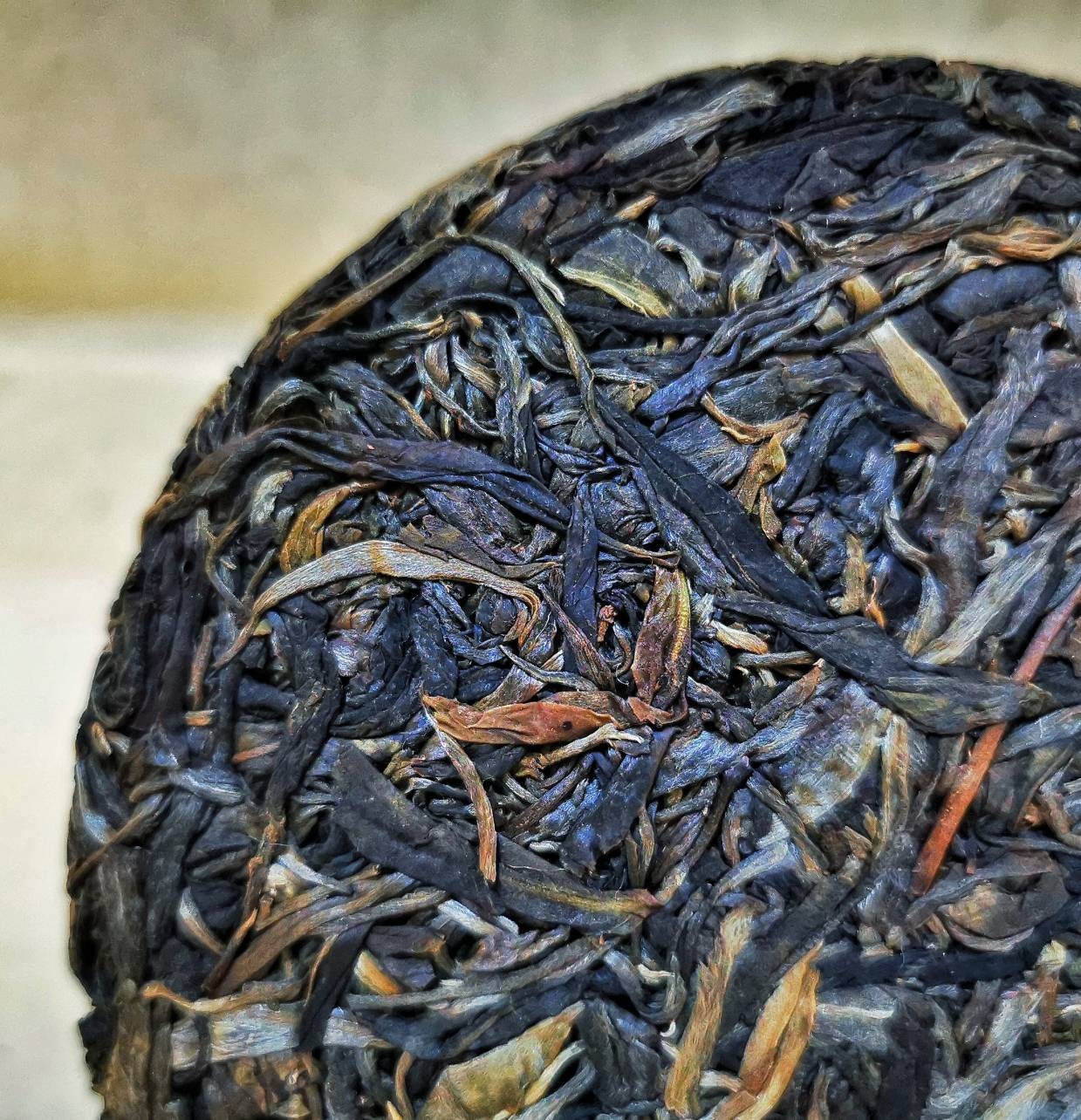
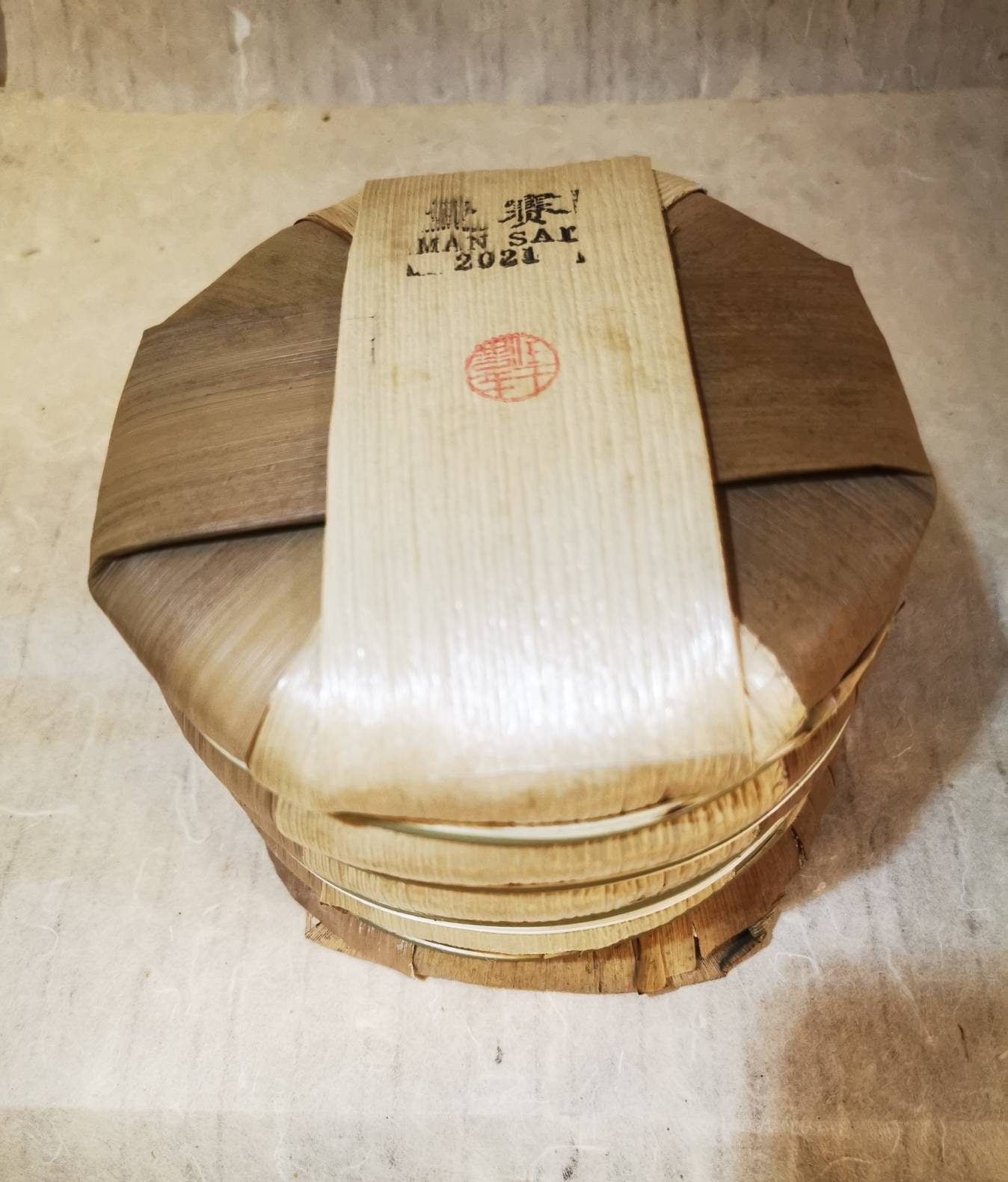
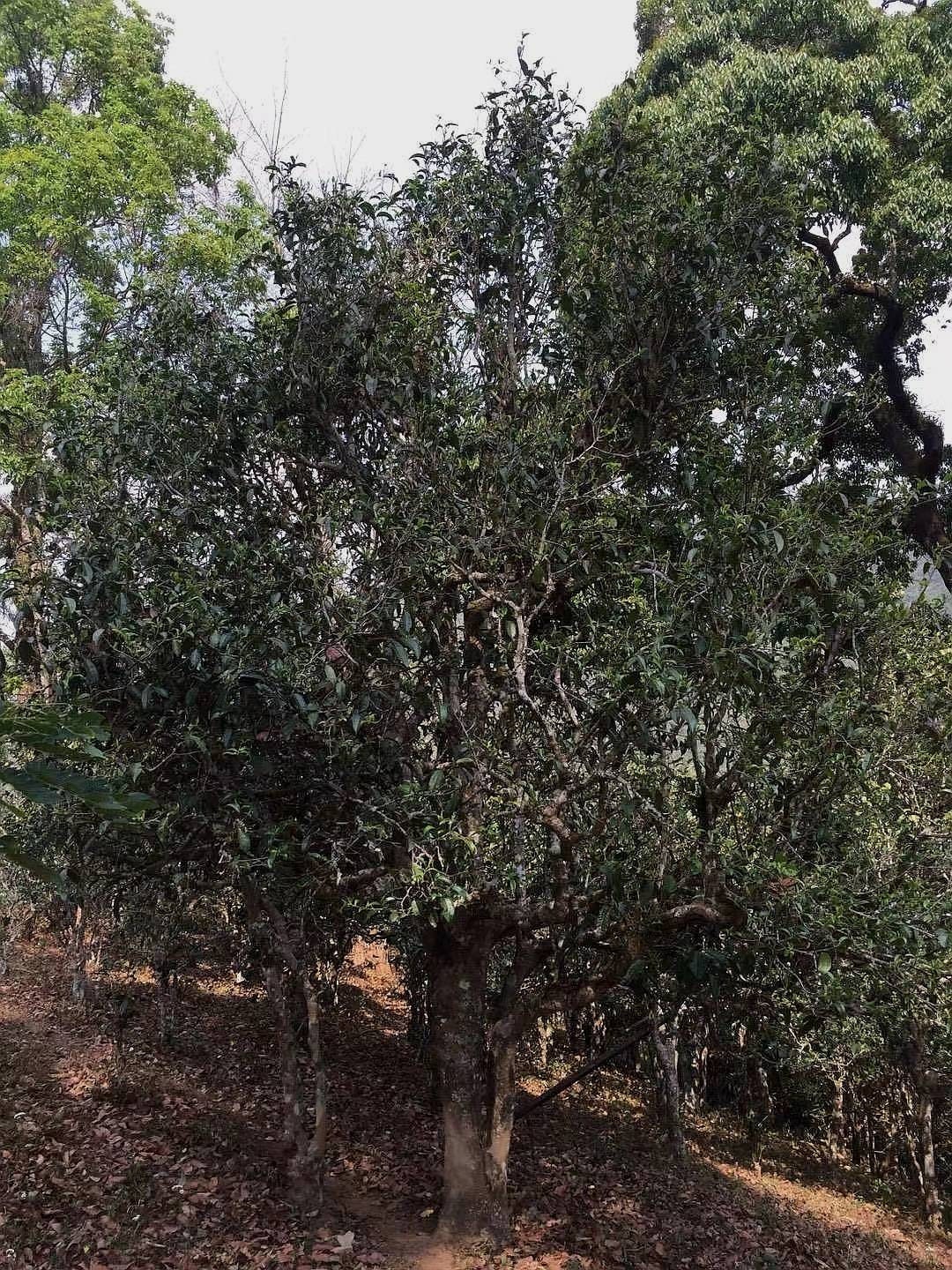
Man Sai, Spring 2021 Ancient Tree Puer Tea, 200g cake
A raw Puer tea from ancient tea trees in Man Sai near Keng Tung in Myanmar, not far from the China-Myanmar border. The tea.was presses towards the end of 2021 and now, a year and a half later it's looking fairly promising.
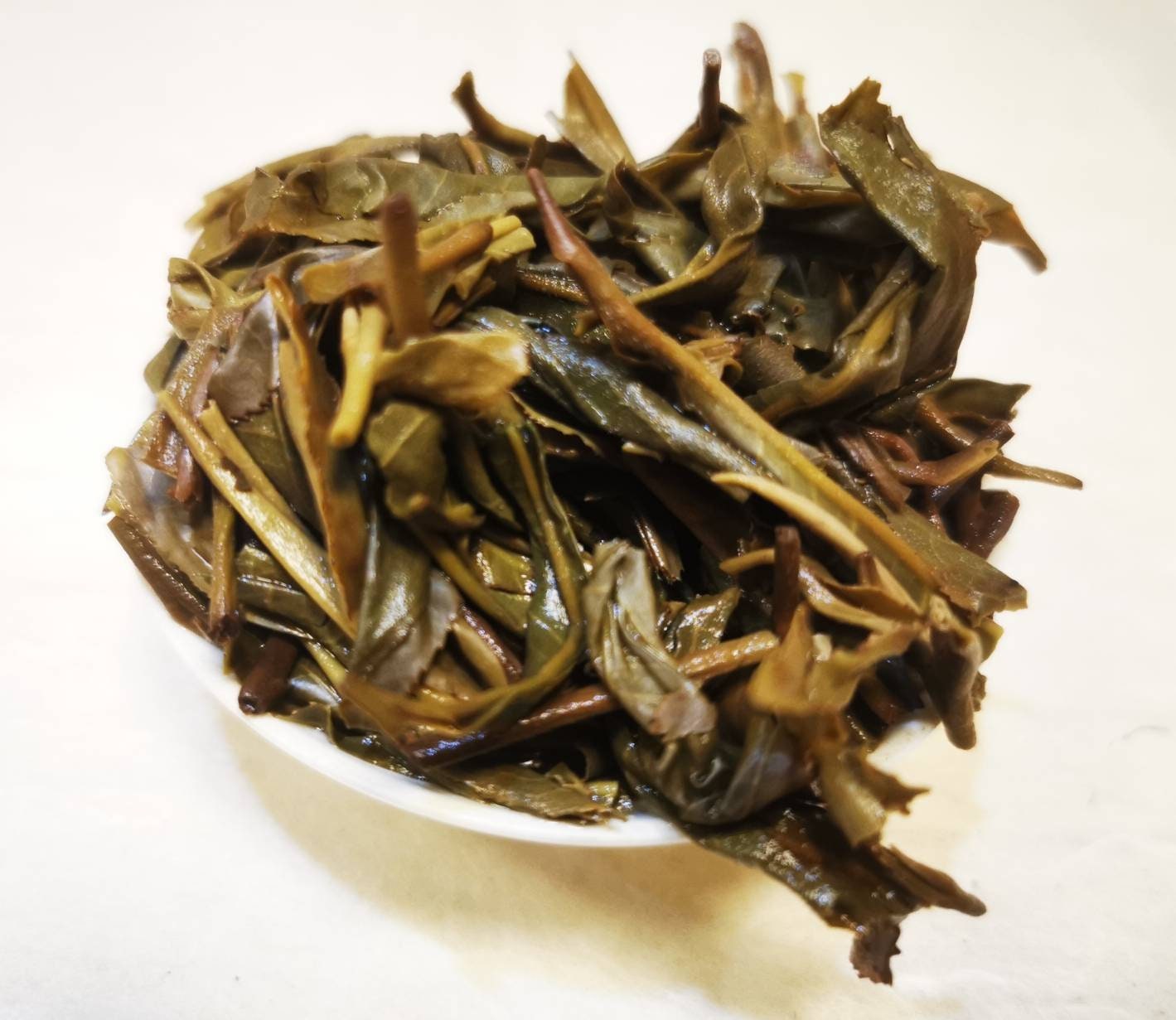
The dry leaves have a warm, slightly sour fragrance and the wet leaves I've off tobacco/dried seaweed/grassy notes with maybe a hint of smokiness
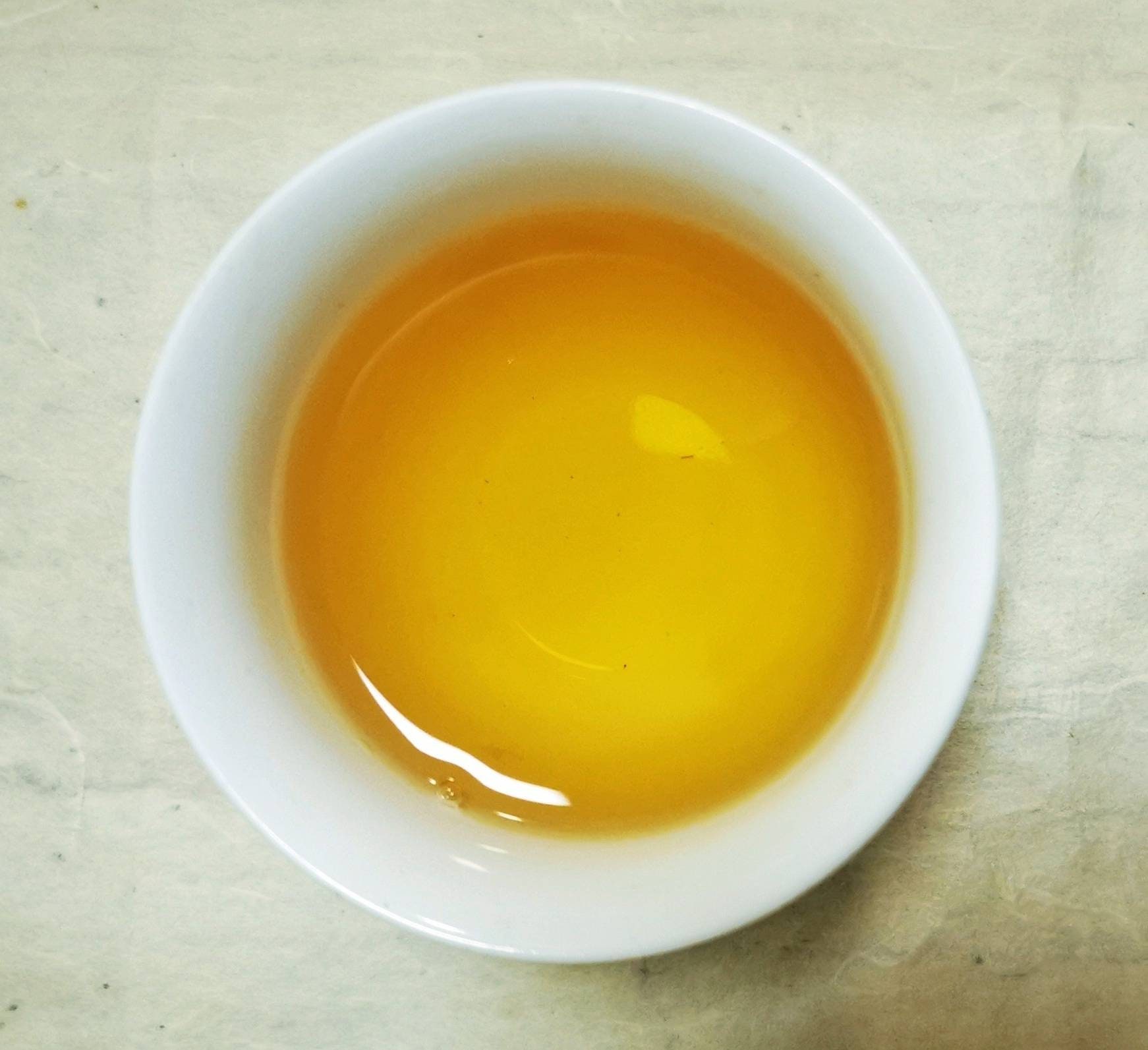
The 'bei xiang' has an initial petrichor note and then a heavy honey-like aroma. After cooling down more it becomes more heavy-floral. The gai wan lid continues to give off a faint floral-pine aroma.
The 'ru kou' also has a petrichor note. Quite punchy with clear bitterness and a woody aroma.
The fragrances tend toward herbal/slightly floral/pine forest, and are generally more 'savoury'.
The kou gan is smooth and the tea produces a good sheng jin which lasts for a number of sleeps.
There is no distinct astringency, but bitterness is clear. It transforms fairly quickly and lingers as the sweetness slowly builds.
The tea has a decent amount of thickness and the huigan is good though it takes time to show.
The 'hou yun' is OK. It has some floral and maybe a slightly sour note with a resinous-camphor/pine forest tinge. It's not very long right now, but is pleasant enough.
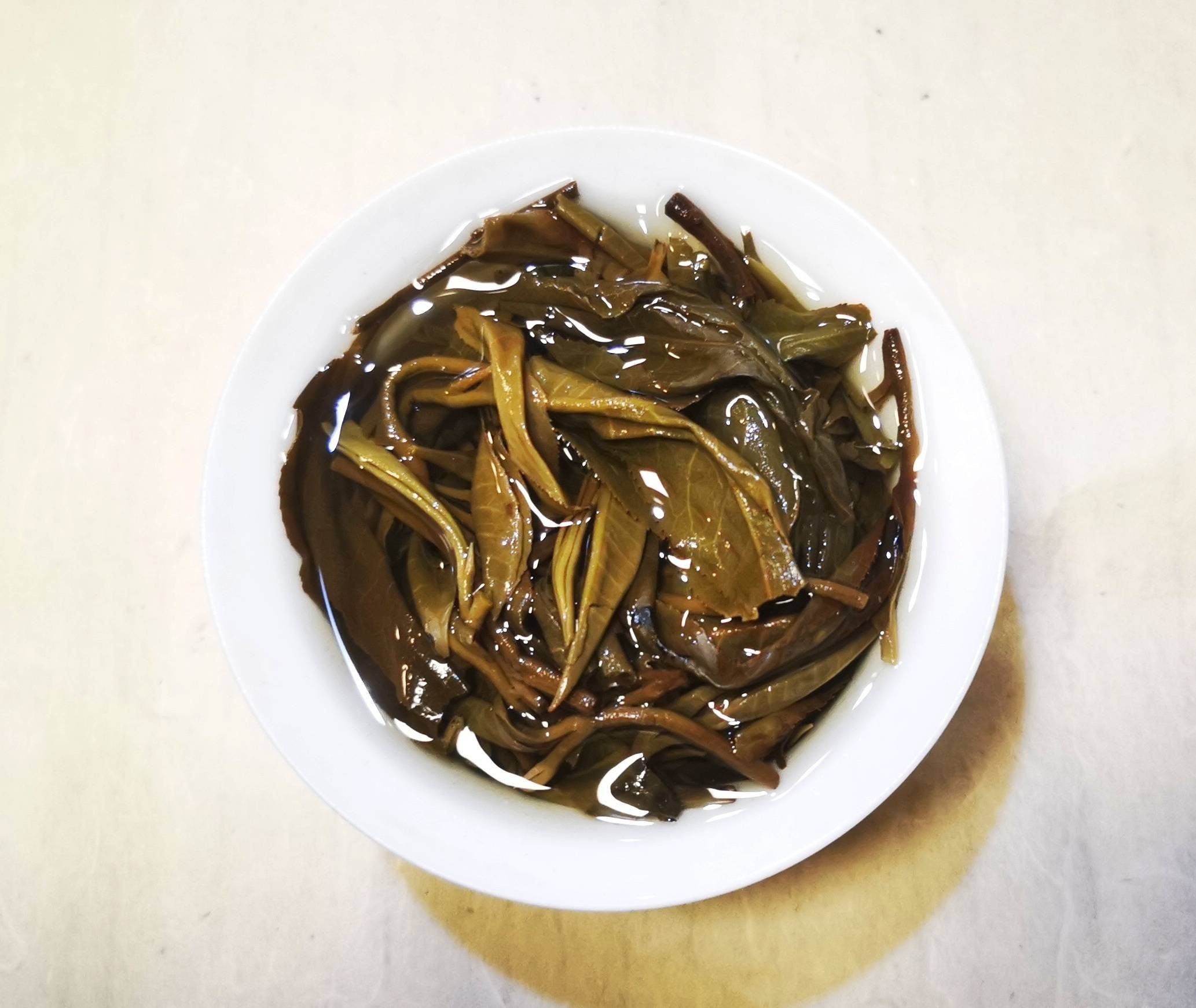
The spent leaves are decent looking. They are quite dark with little bruising and good uniform colour.
All Puer teas are hand picked, fired and rolled, or sometimes machine rolled. They are sun dried. Cakes are stone pressed.
Please be aware that because raw Puer tea is a 'post-fermented' tea it is in a process of continual change: as it ages, but also from season to season and even day to day, so the description here is a snapshot of the tea's quality and character, which should not differ significantly, but which none-the-less can change.
$86.00
In stock
About Agrochemicals
I do not get all my teas routinely tested for agro-chemicals. I am extremely careful about which gardens I source from: tea gardens that are in a diverse, natural environment where there is no need for the use of agro-chemicals and which I am confident are all free of herbicide and pesticide traces.
In recent years anthraquinone in tea has become a talking point. I do not generally test tea for anthraquinone and, whilst I try my best to minimise the potential for it, I do not prioritise that over other factors. You can read more here.