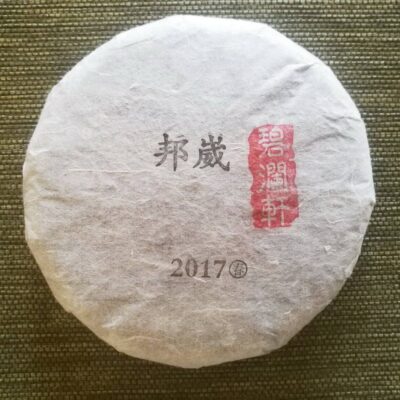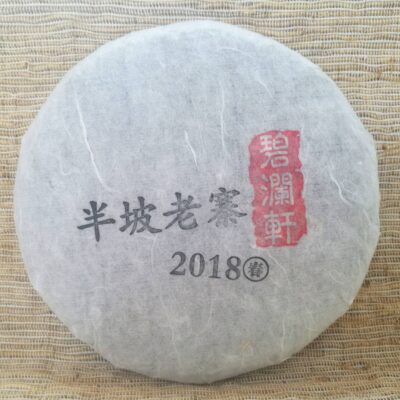
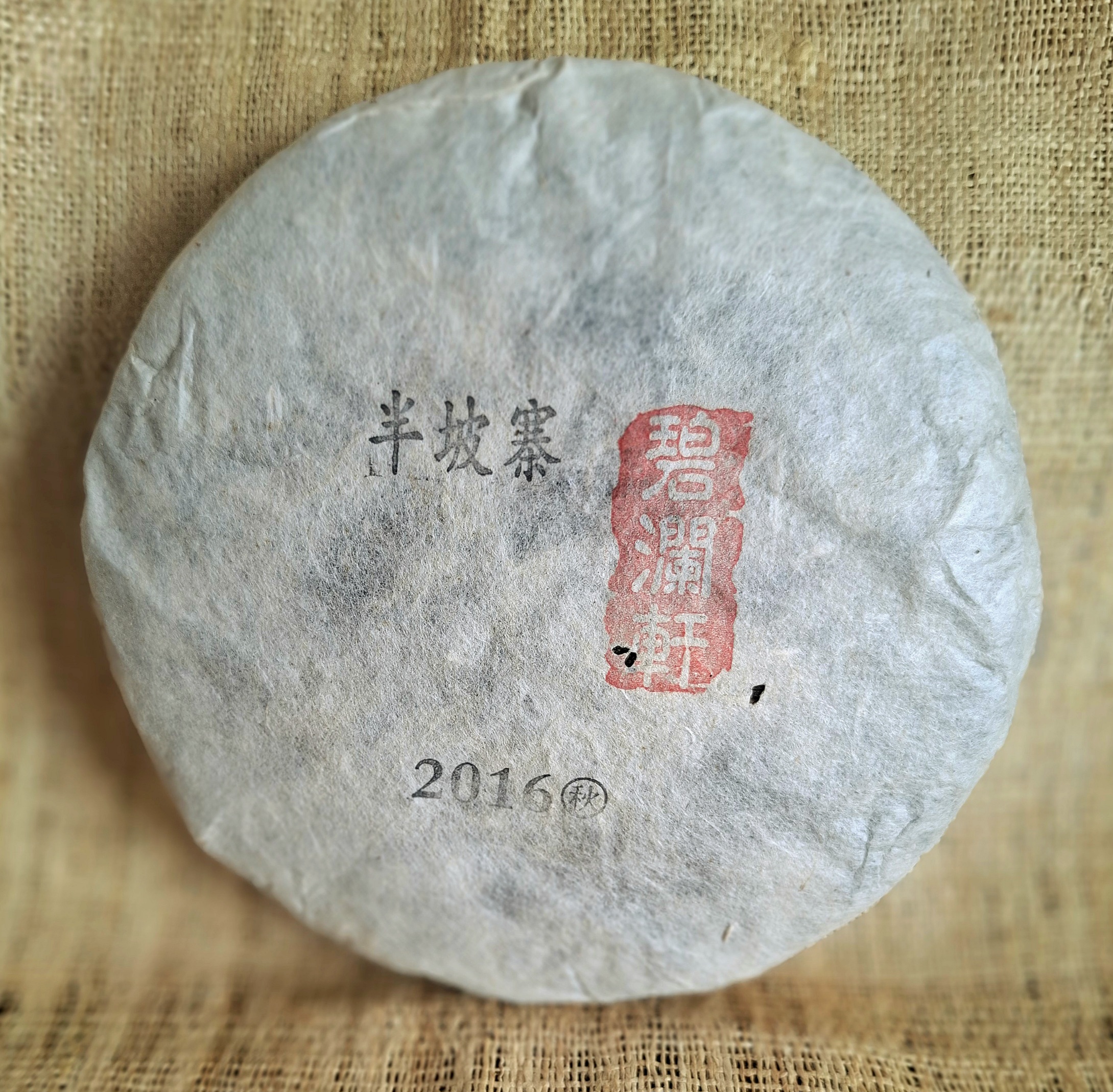
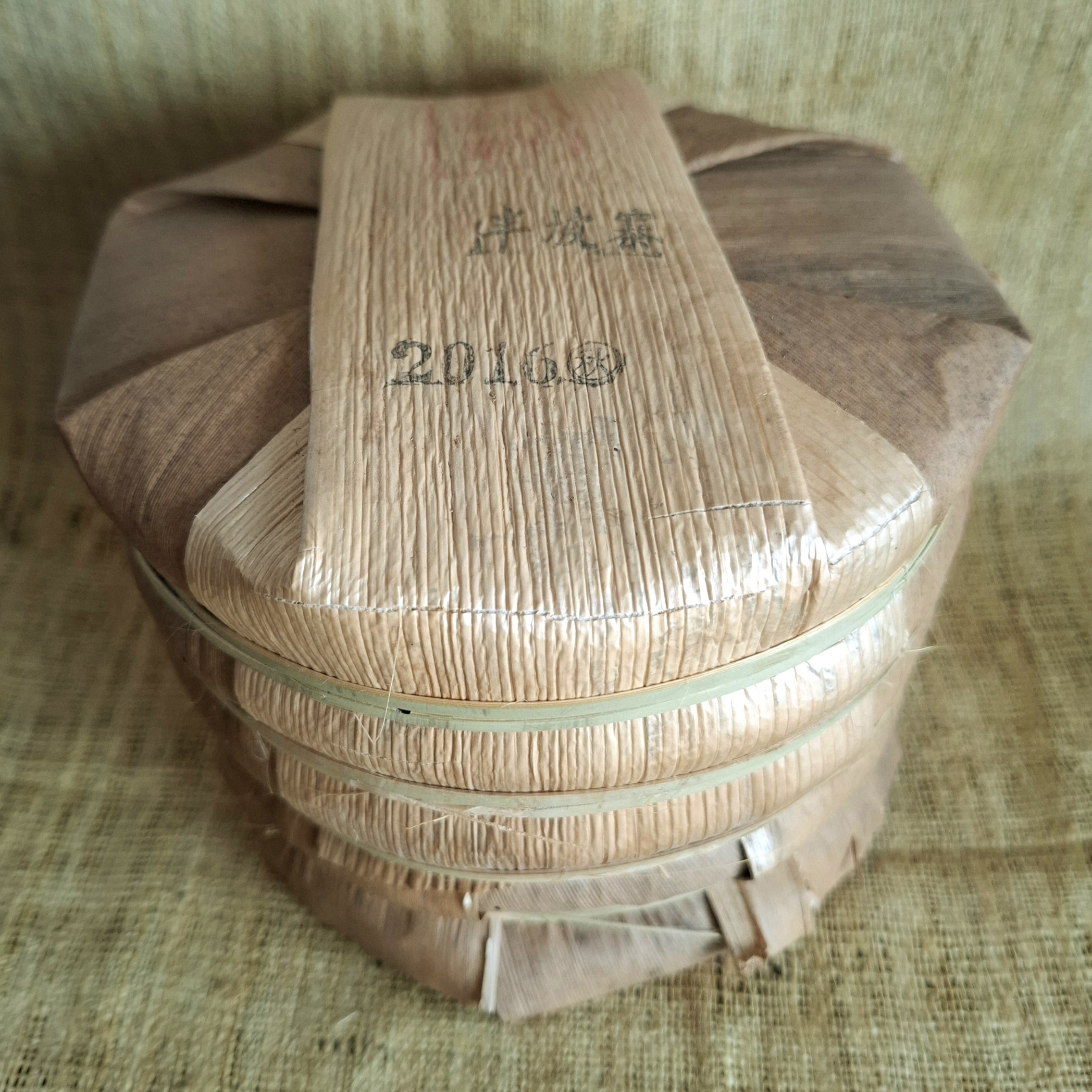
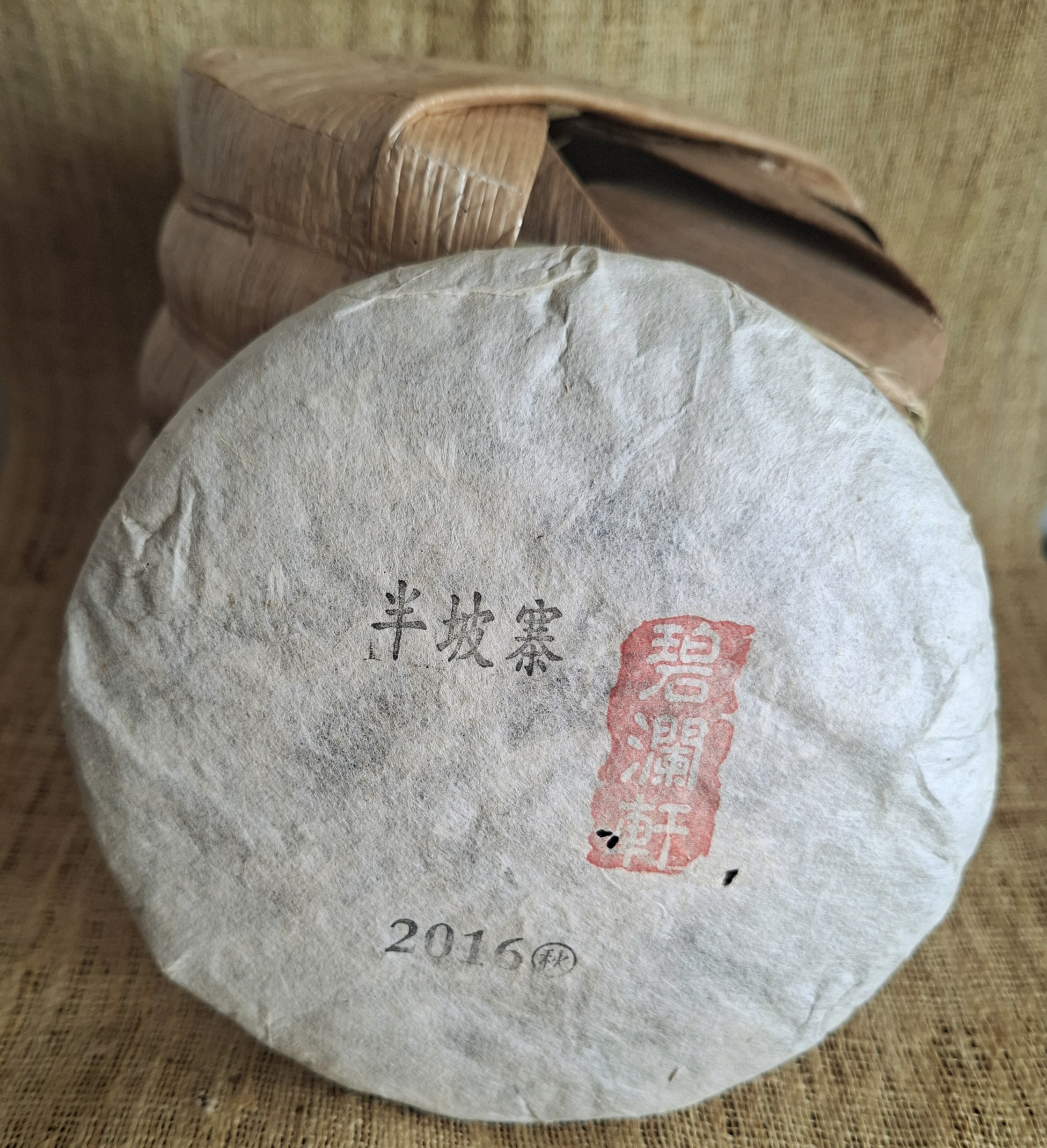
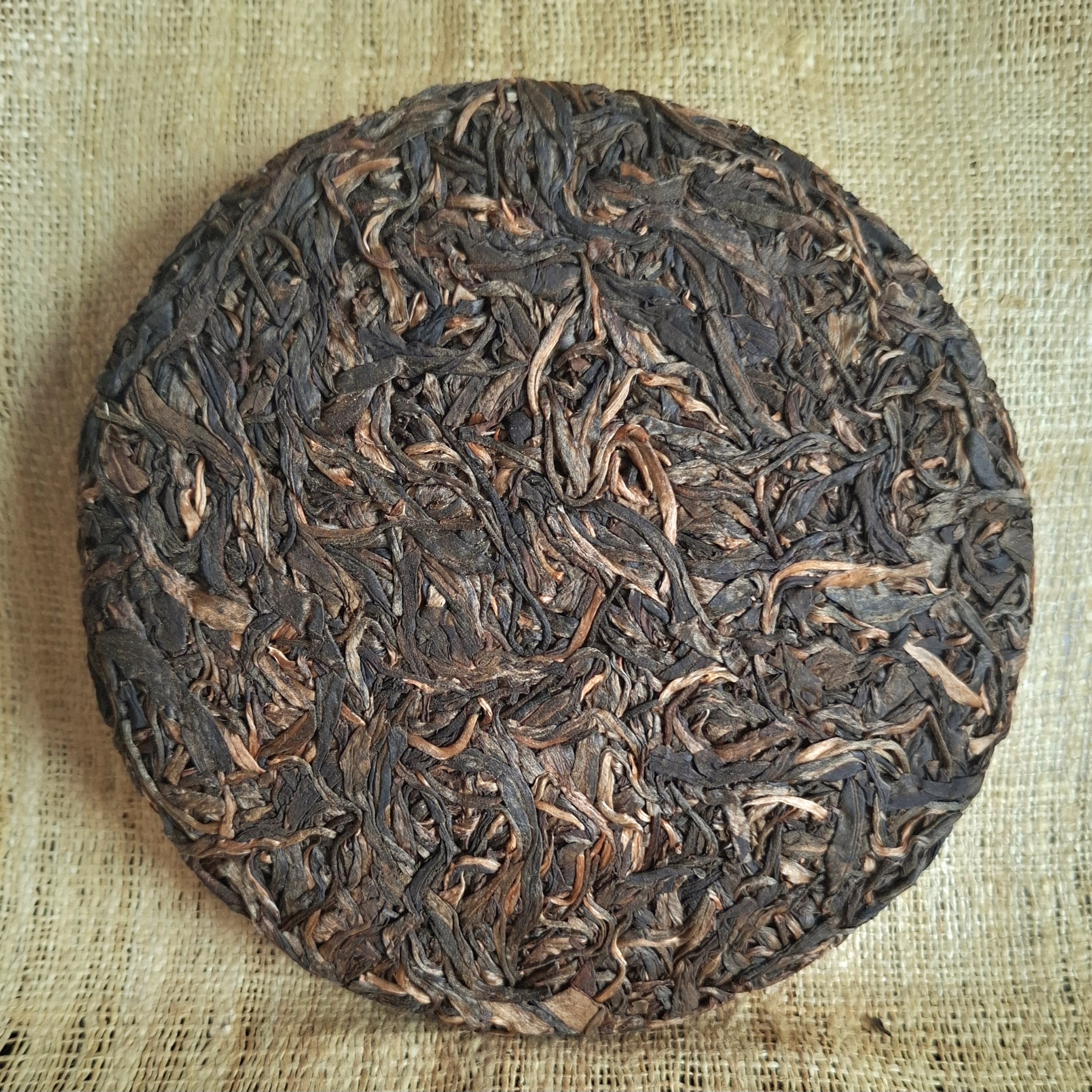
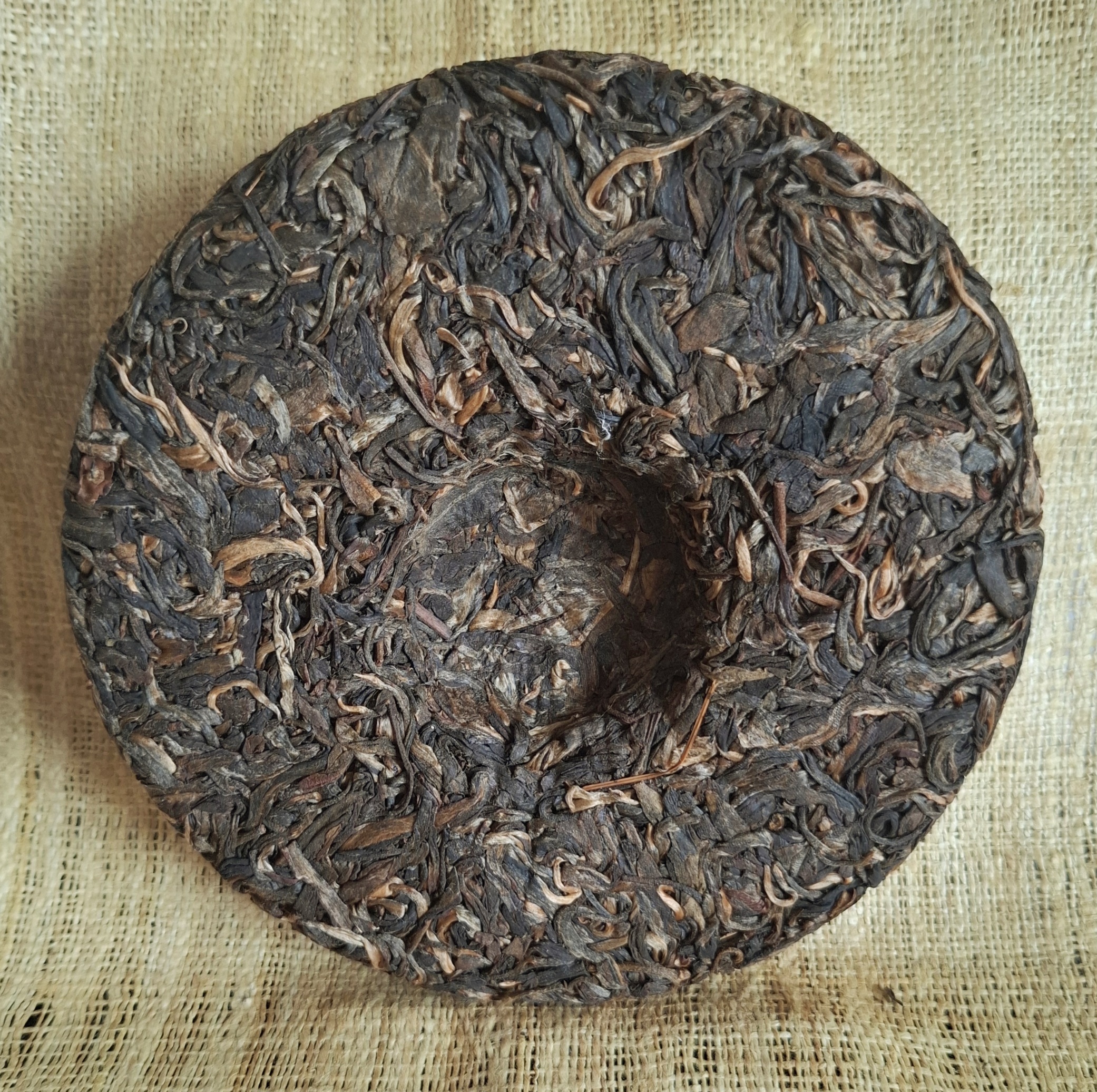
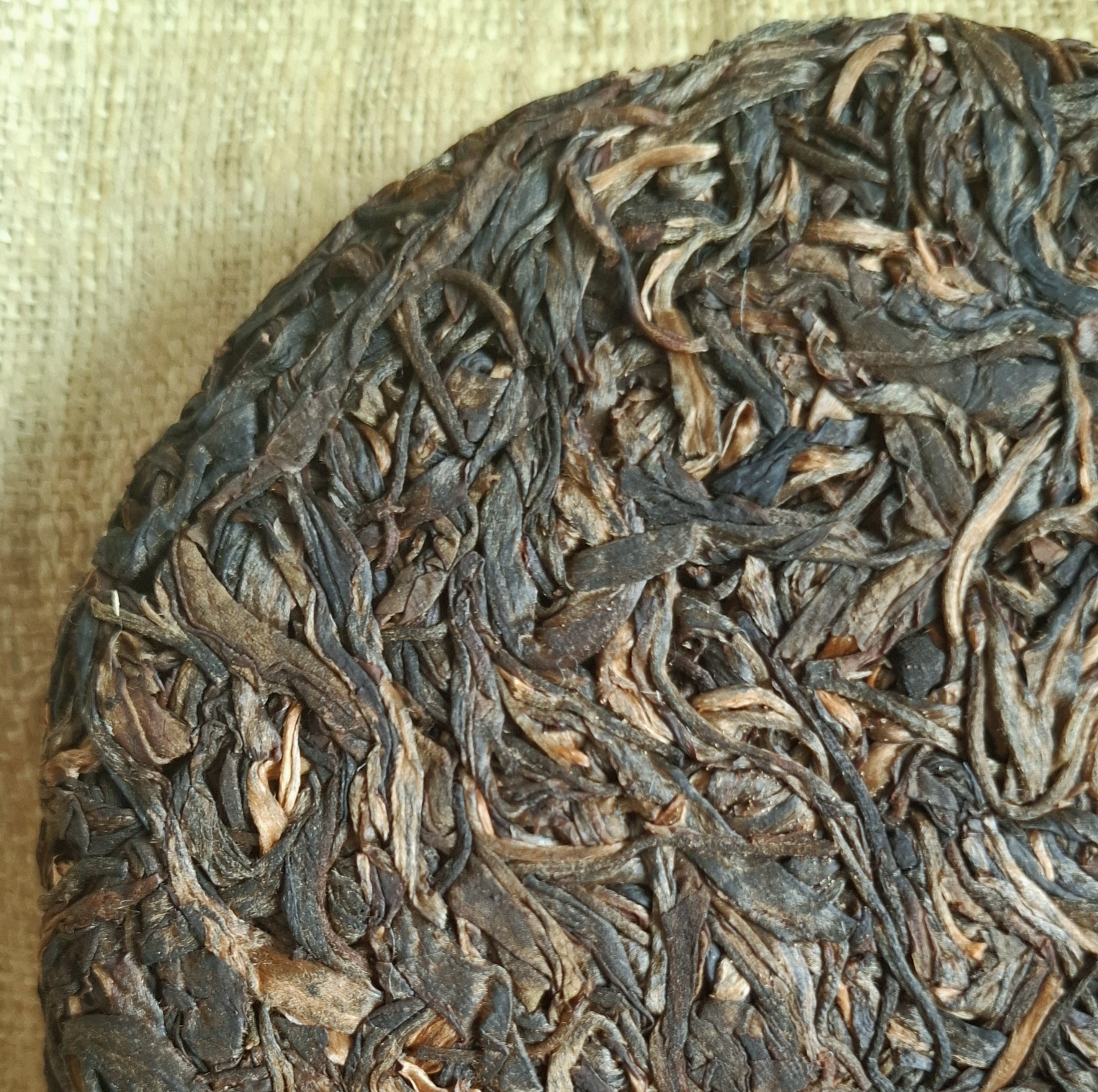
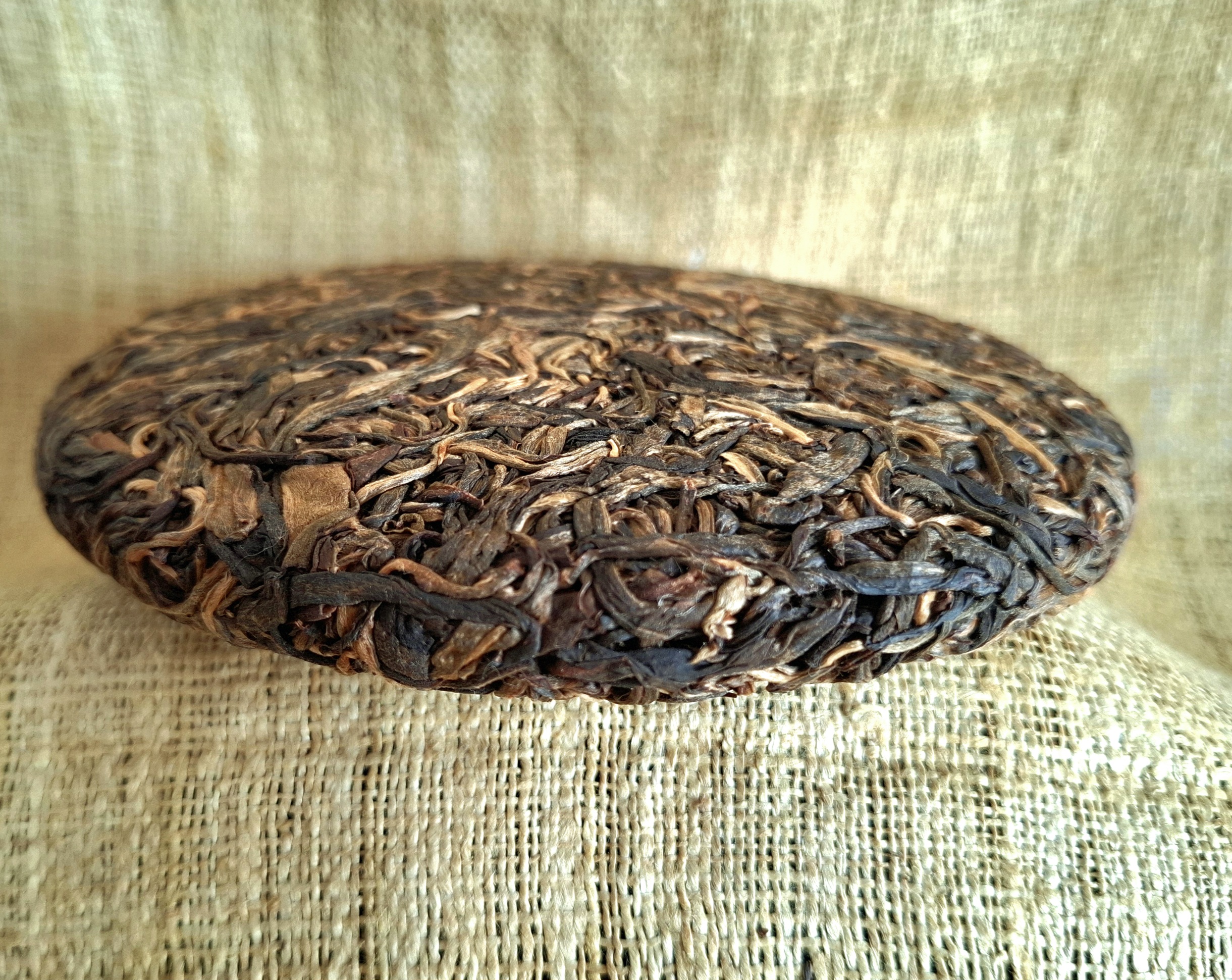
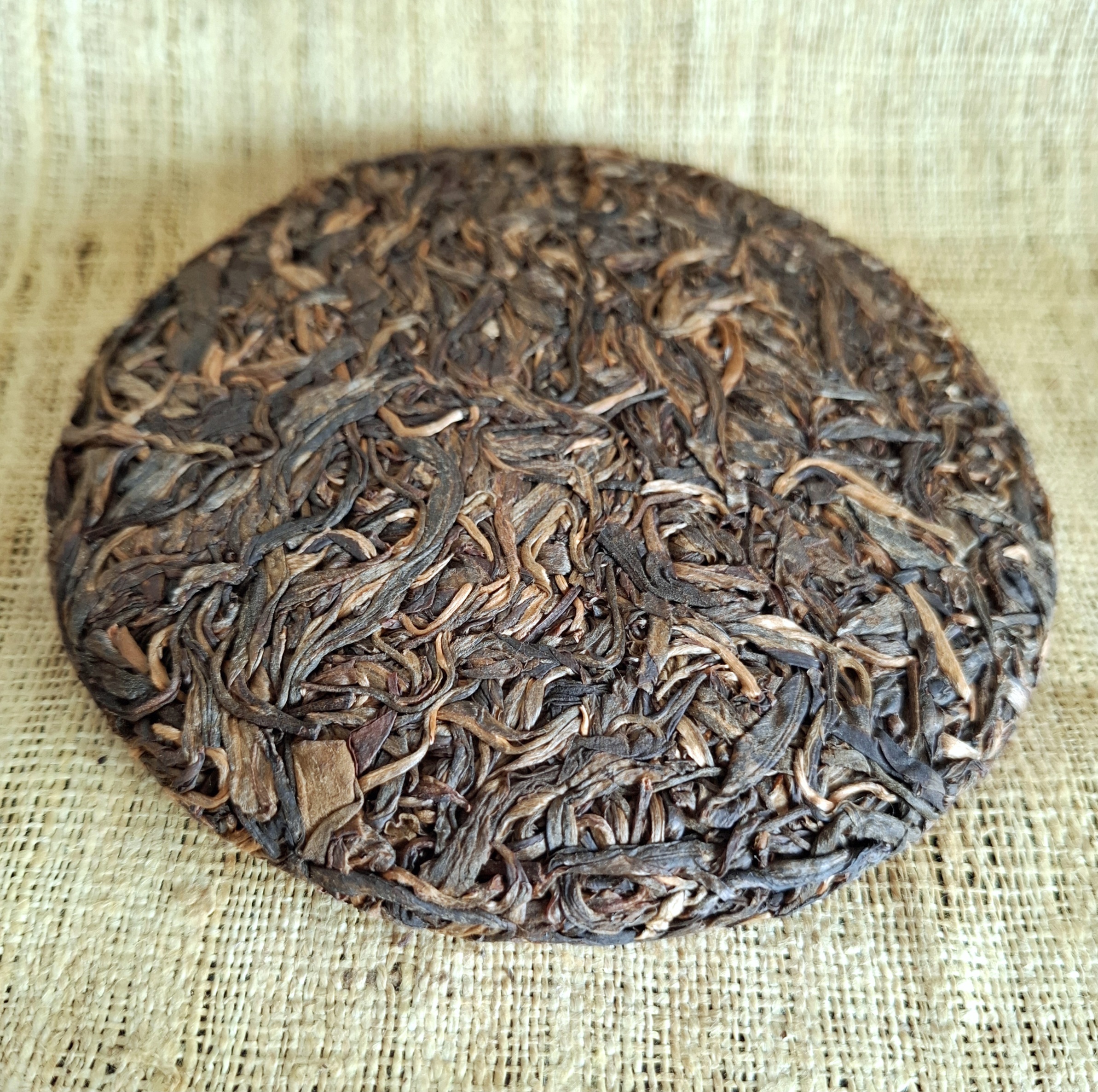
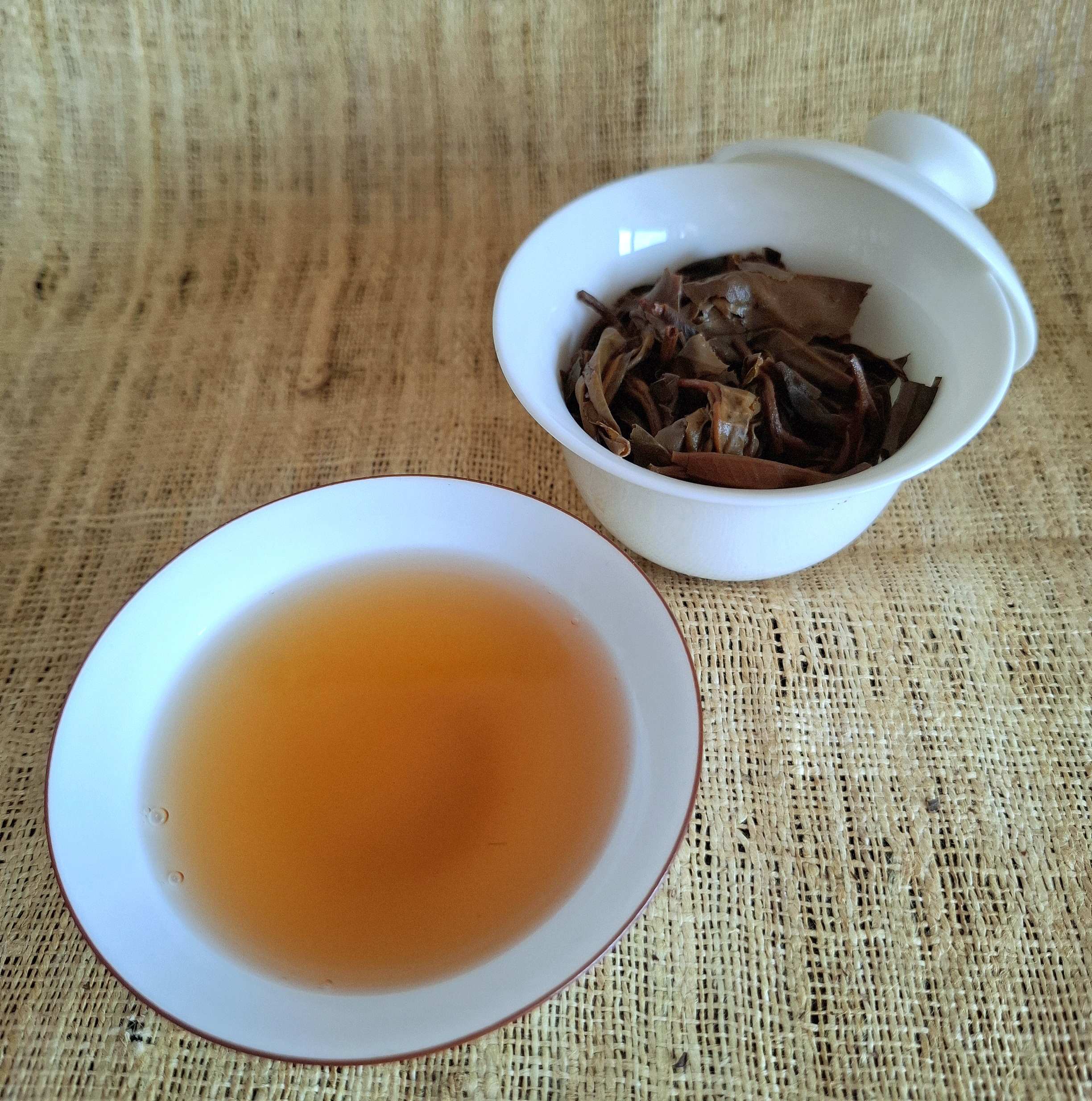
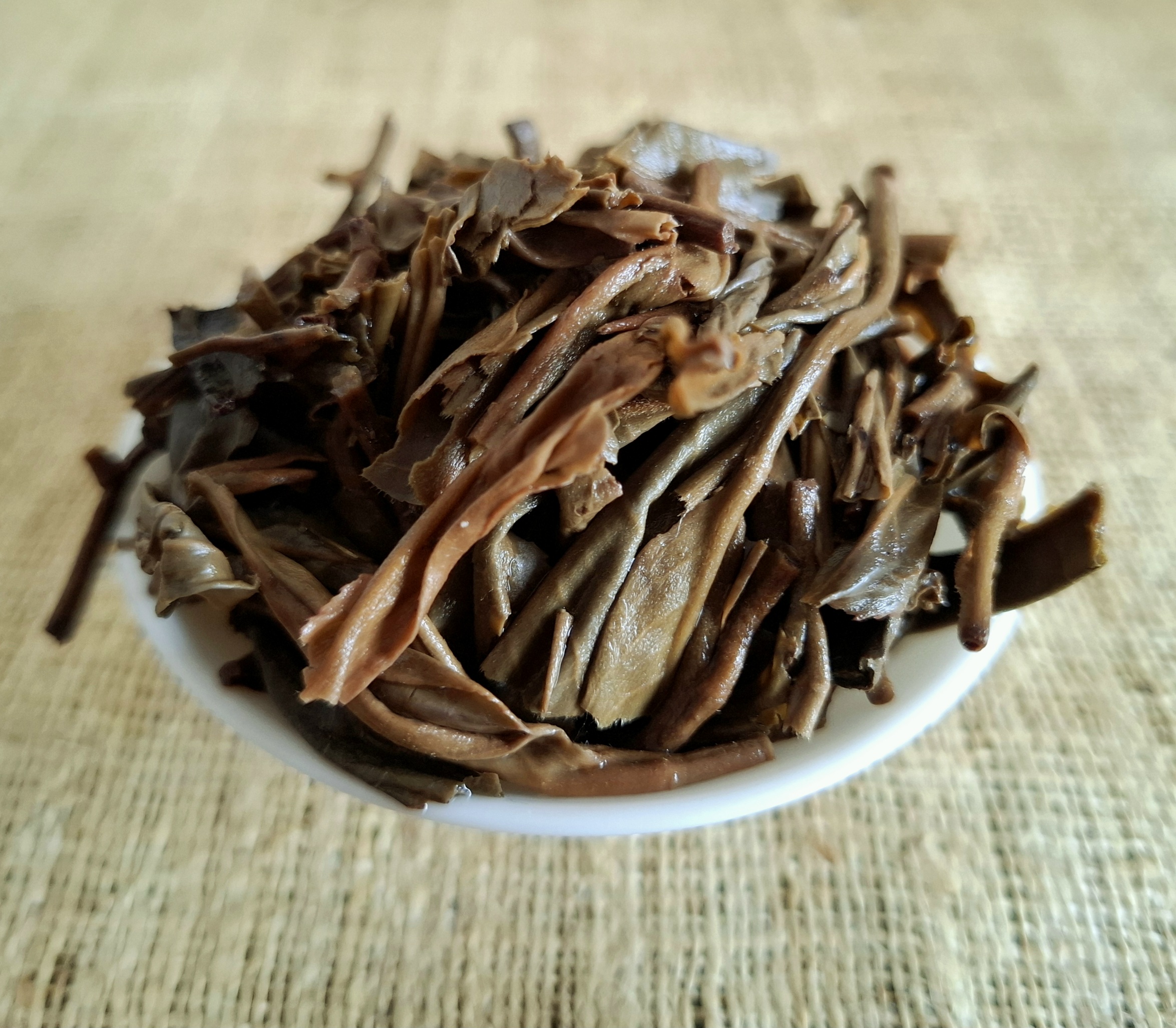
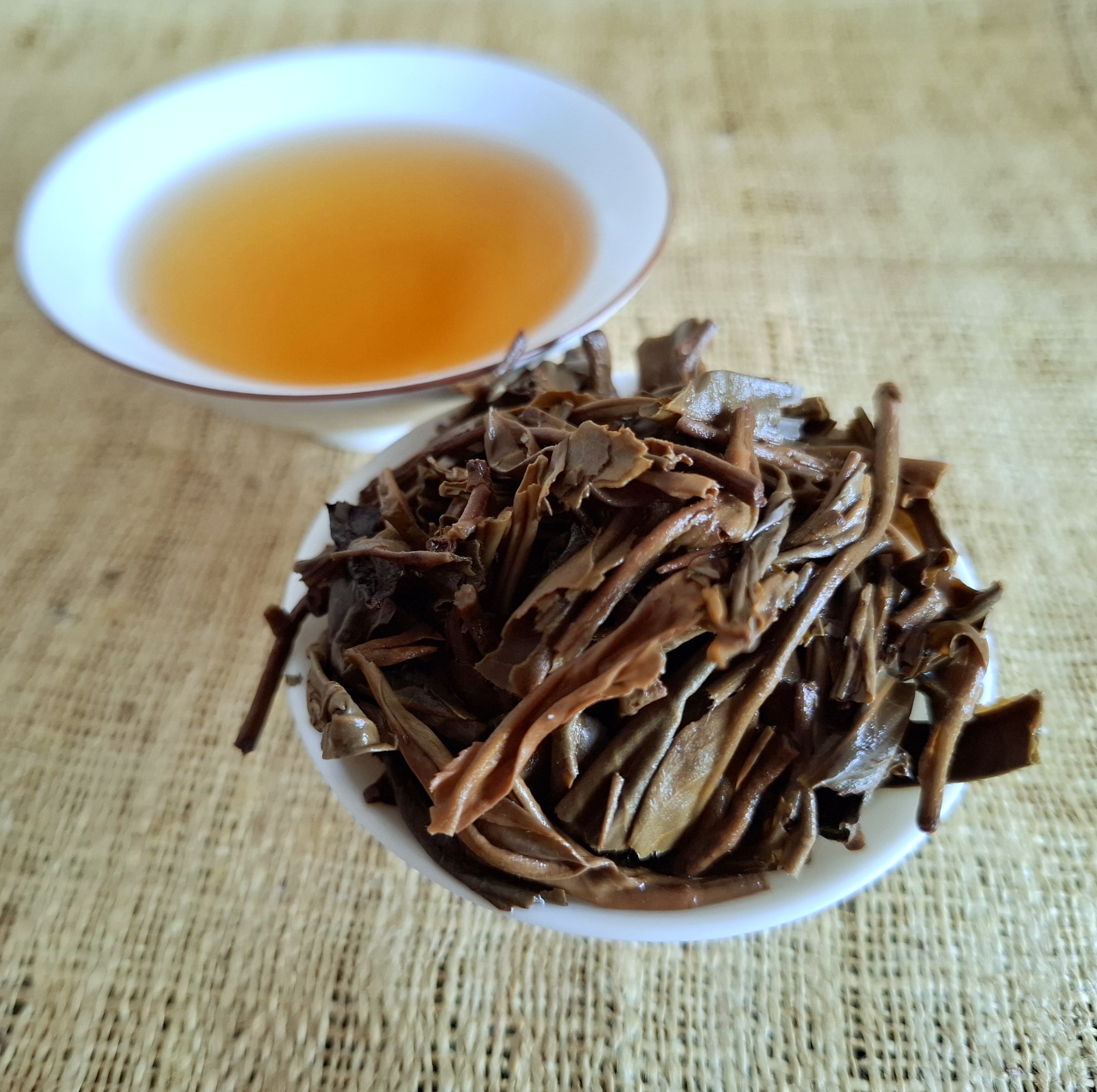
Ban Po Lao Zhai, Early Spring 2016 Ancient Tea Tree Raw Puer, 200g cake
I recently came across this in my store room. It's been rare for me to get autumn tea - I've maybe bought four or five in the last fifteen years - so this was an interesting re-discovery. The tea comes from the same tea garden and tea farmer as the other Ban Po teas. As you would expect, it tastes like it comes from the same tea garden, or at least, the same small area, but it's lighter, maybe a little less complex, less of a 'heavy hitter', but also with less bitterness or astringency.
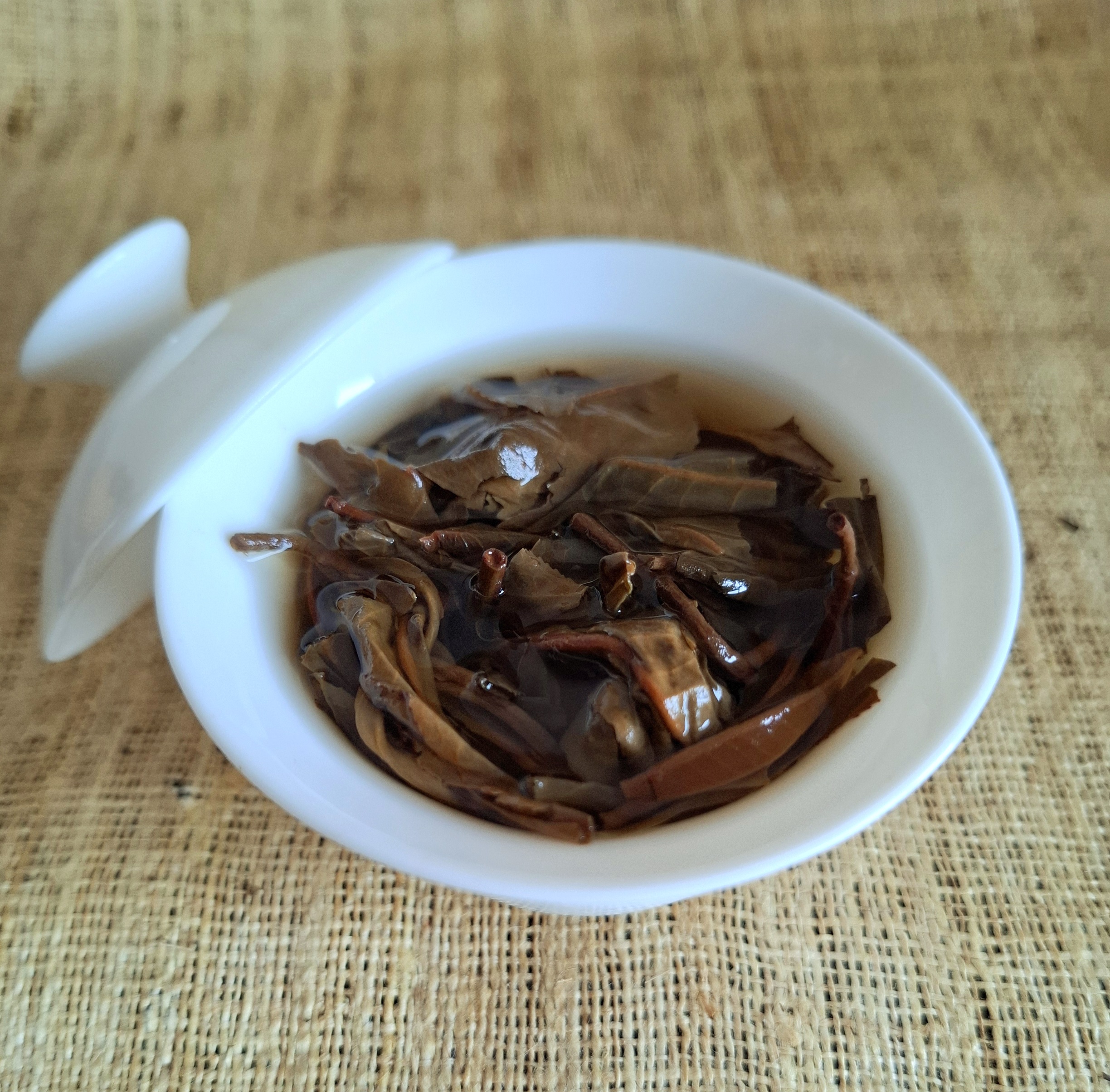
The tea now gives off hints of linseed, woody notes and leather. The initial steeps leave a note of seaside - maybe seashells or seaweed - some people call it 沙滩气味/sha tan qi wei/'beach smell' which can appear during the ageing/fermentation process due enzyme activity or microbial activity in the environment. The wet leaves also have notes of linseed going toward a camphor-ish note with mushroom-like overtones. The gong dao bei has notes of dried porcini and then honey-floral. The ru kou is distinct yet fairly rounded and not aggressive with a very slight bitterness and very little astringency. The tang gan is lighter than spring tea from the same trees but the tea still has some hou du and some decent qi.
Unless stated otherwise, all my Puer teas are hand picked, fired and rolled. They are then sun dried. Cakes are stone pressed.
Please be aware that because raw Puer tea is a 'post-fermented' tea it is continually in a process of change: as it ages, but also from season to season and even day to day, so the description here is a snapshot of the teas qualities and character on this particular occasion, which should not differ significantly, but which will change none-the-less over time.
$62.00
In stock
About Agrochemicals
I do not get all my teas routinely tested for agro-chemicals. I am extremely careful about which gardens I source from: tea gardens that are in a diverse, natural environment where there is no need for the use of agro-chemicals and which I am confident are all free of herbicide and pesticide traces.
In recent years anthraquinone in tea has become a talking point. I do not generally test tea for anthraquinone and, whilst I try my best to minimise the potential for it, I do not prioritise that over other factors. You can read more here.