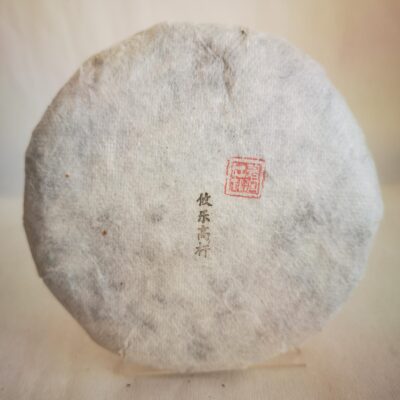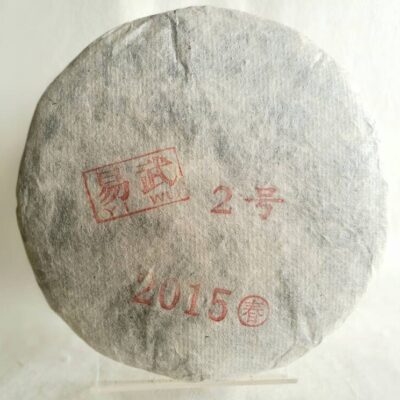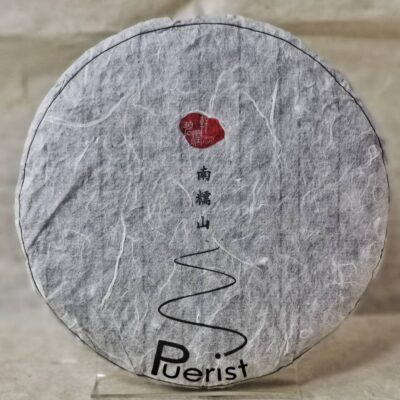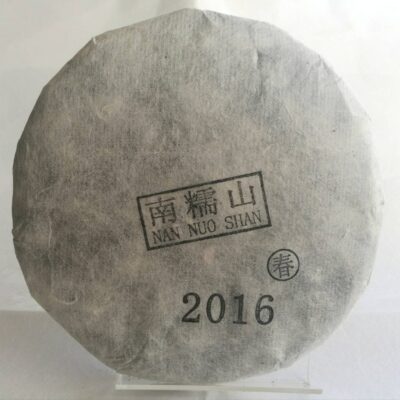
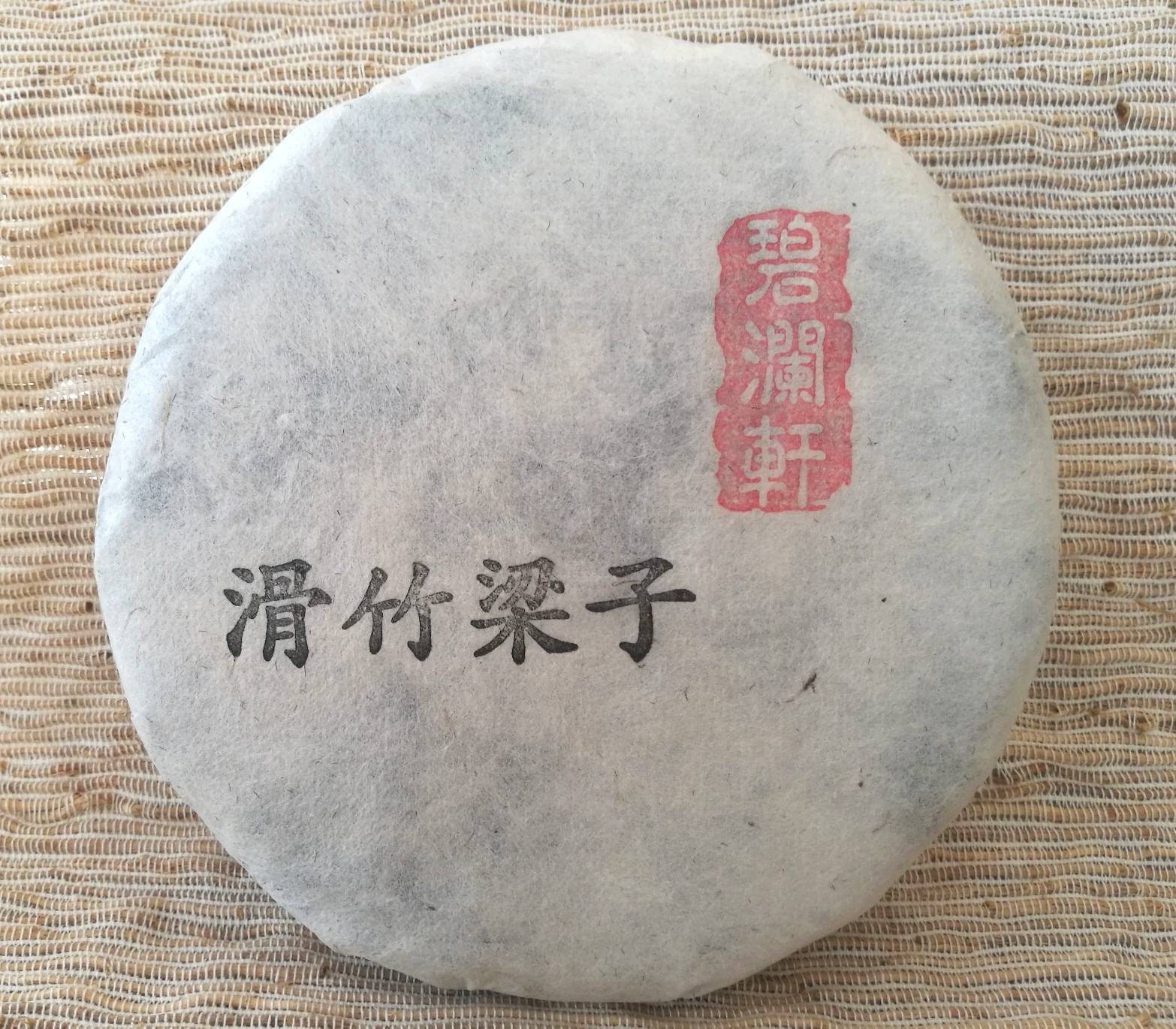
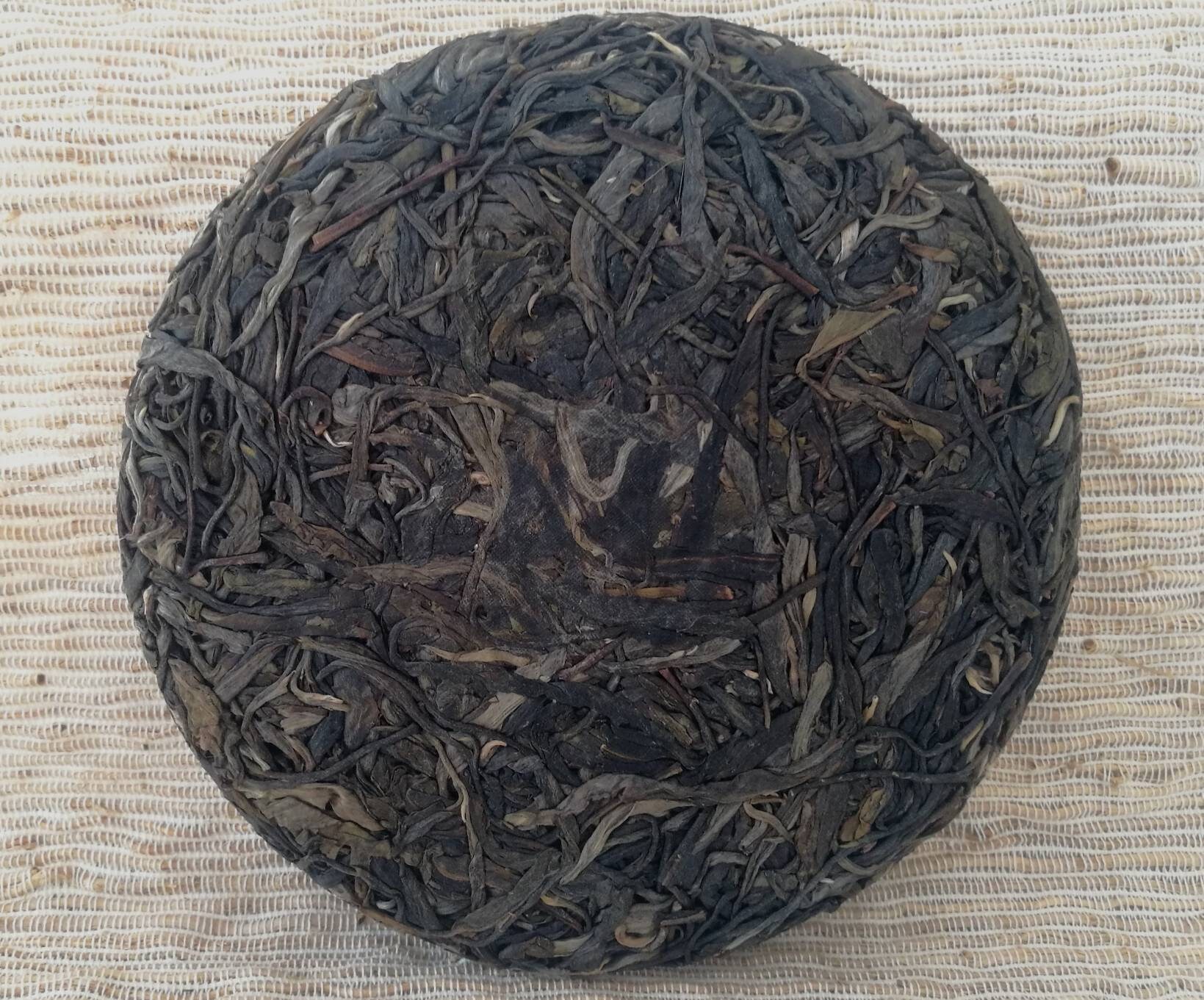
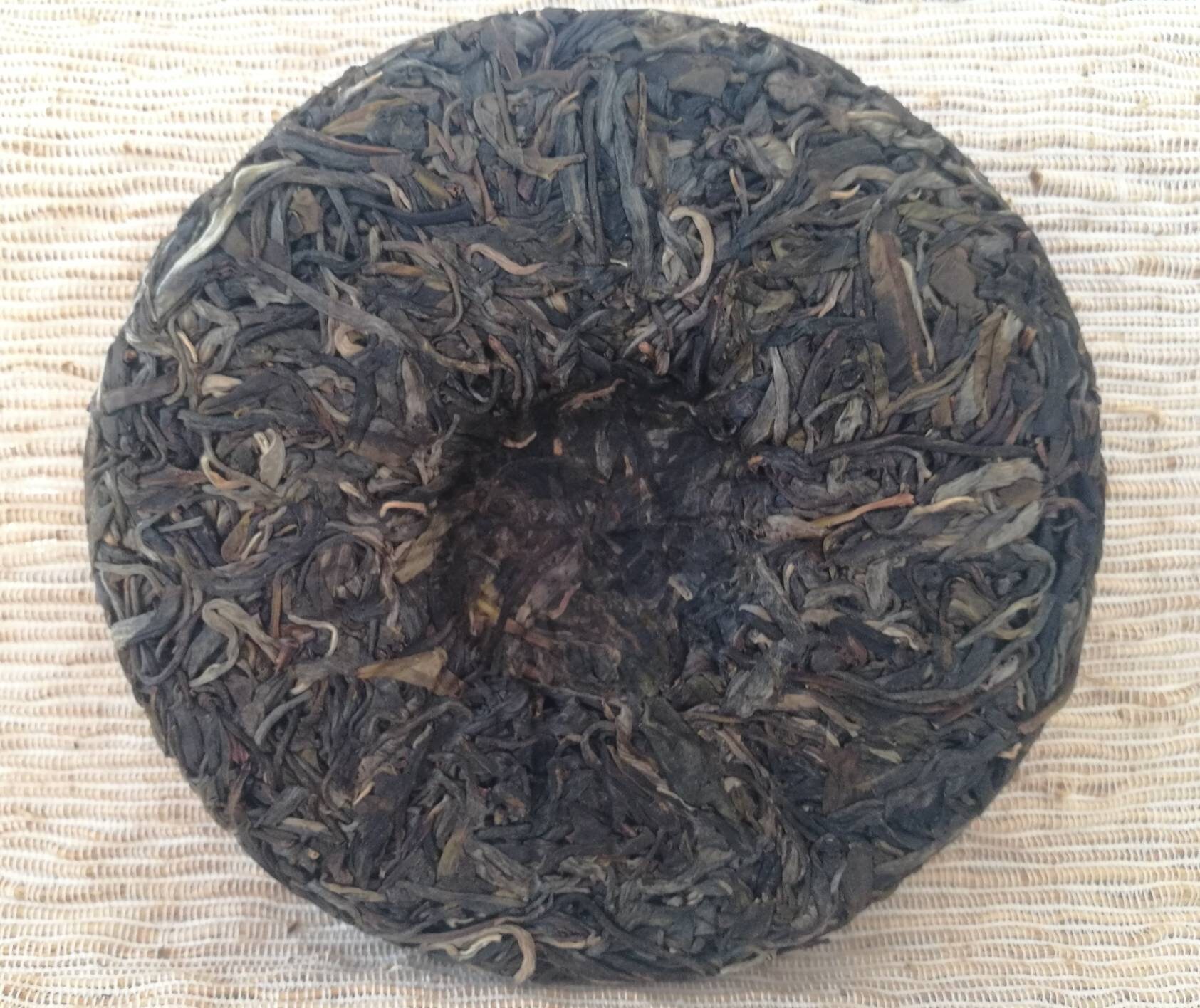
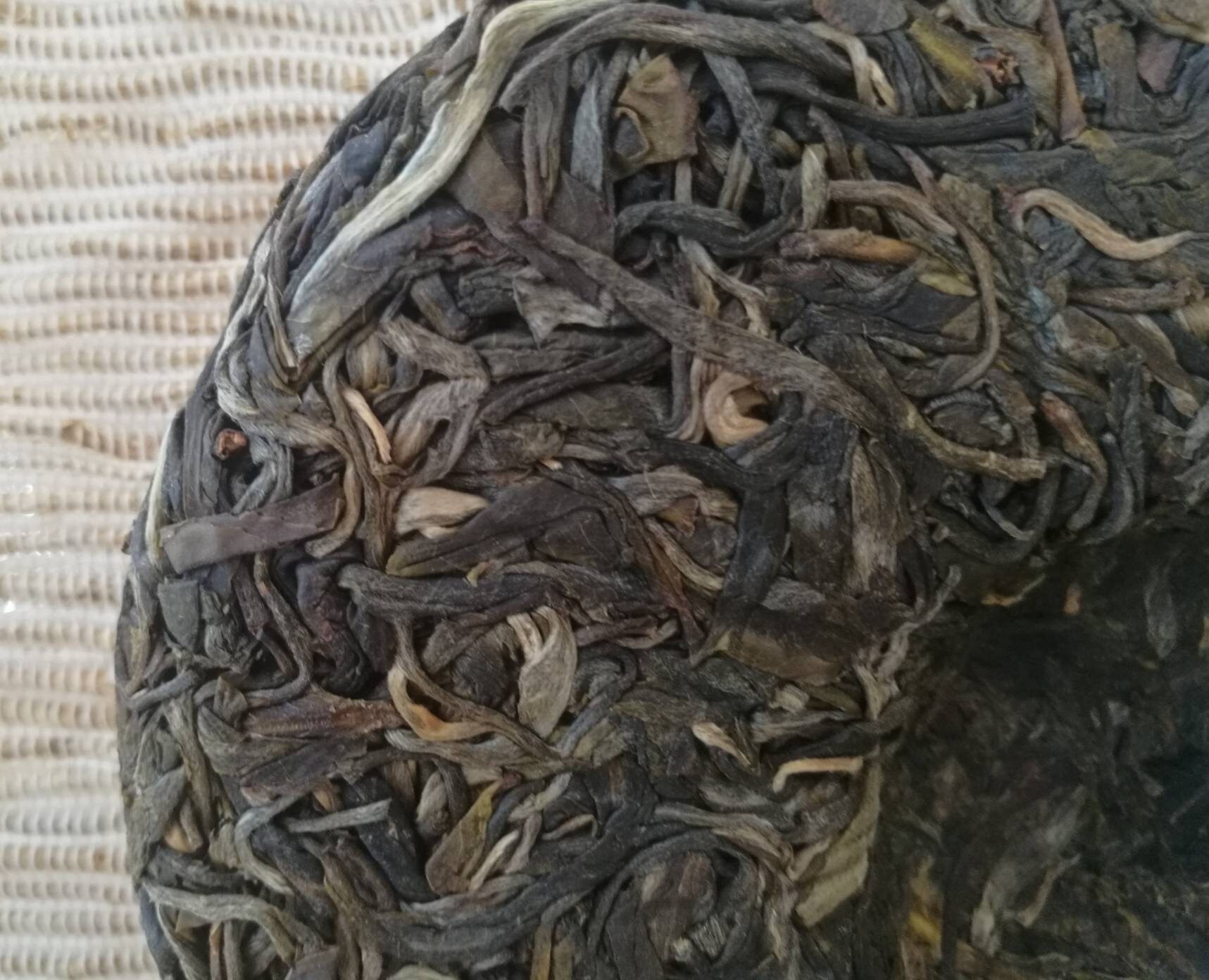
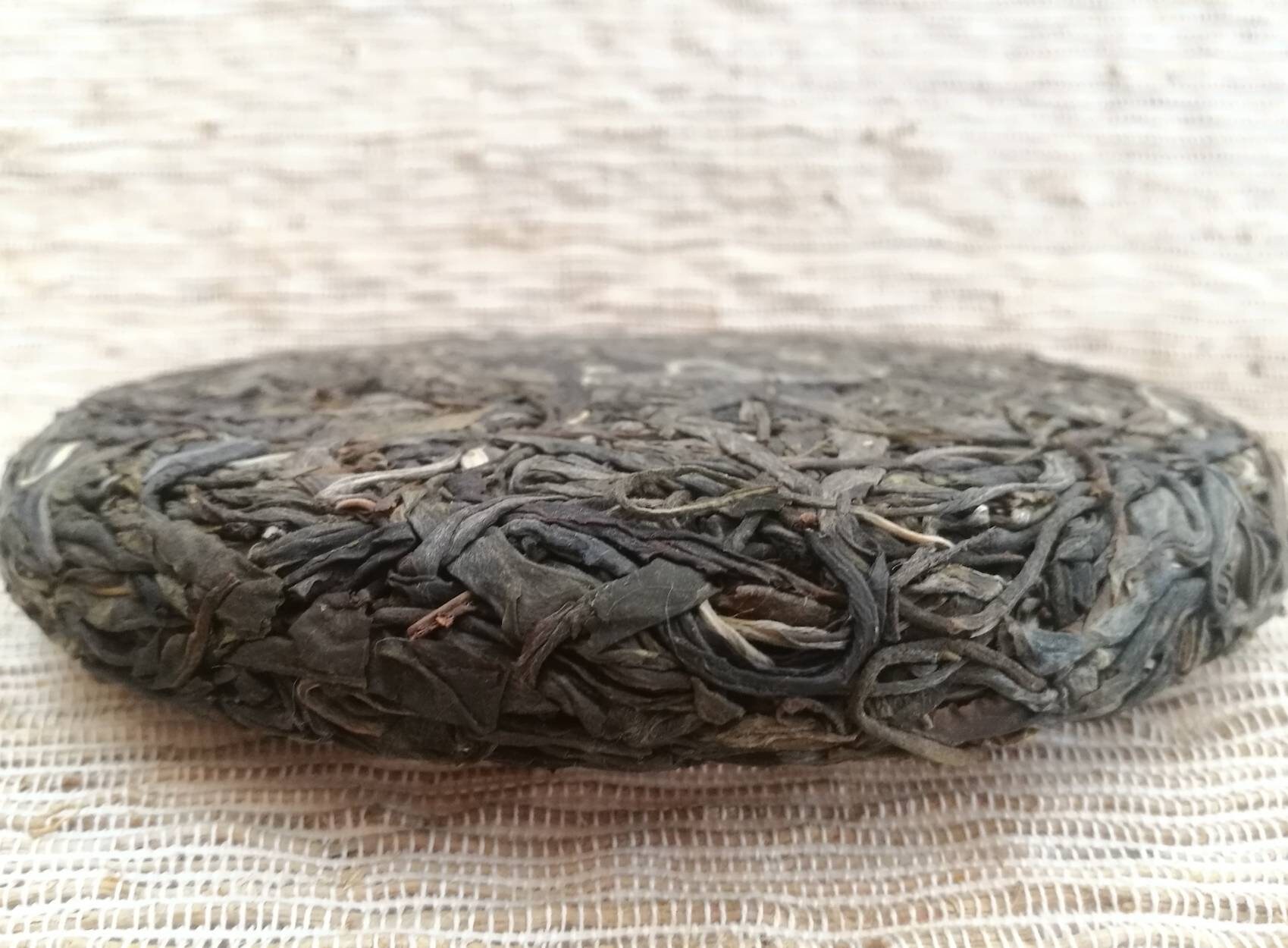
Hua Zhu Liang Zi, Early Spring 2018 Ancient Tea Tree Raw Puer, 200g cake
Some friends of mine make tea every year from Hua Zhu Liang Zi, and I was thinking to get some tea from them this year, but then a young tea farmer I must have known for eight or nine years gave me a sample of tea that he had made. It was rather good, so I bought some. Despite having known him for so long this was the first time I bought tea from him.
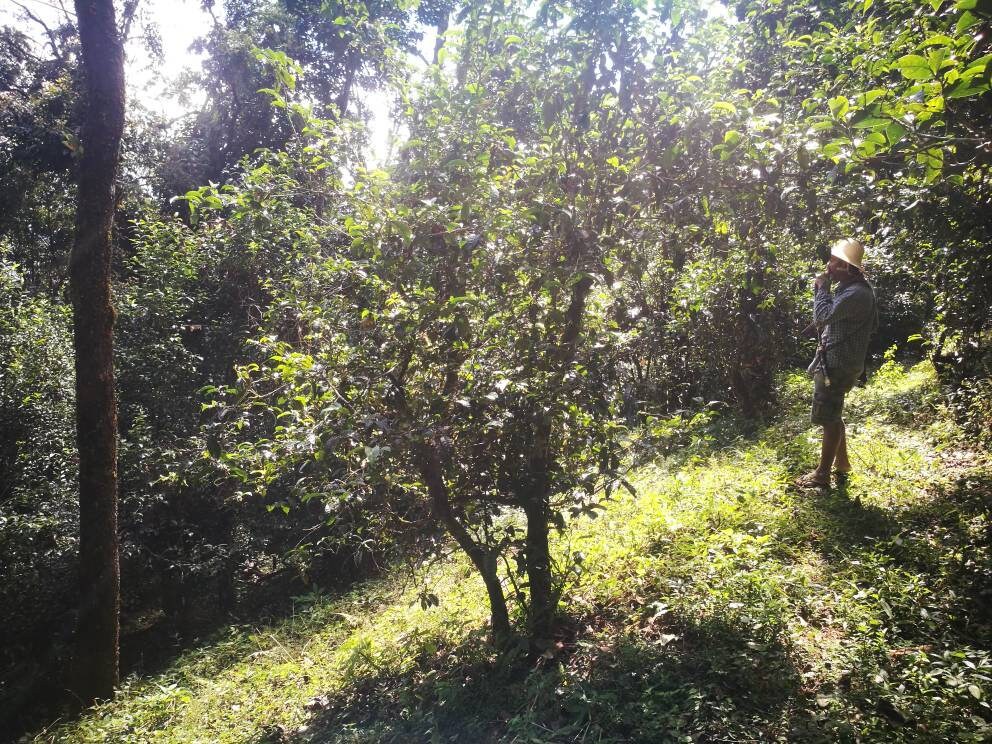
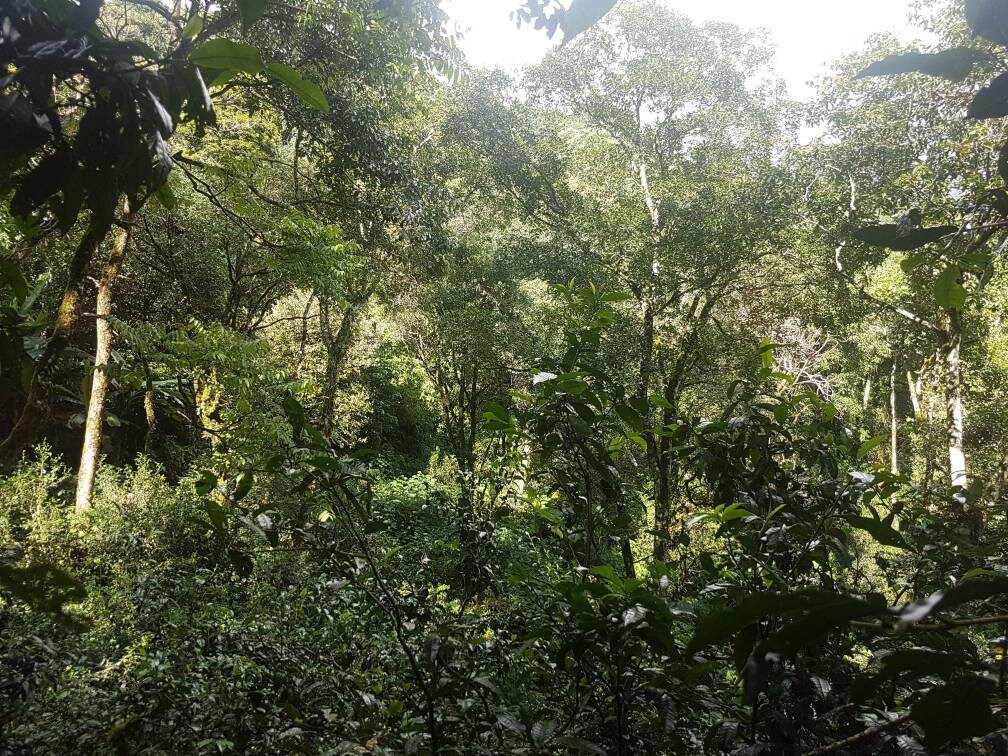
The tea gardens are his uncle's. They are in a heavily forested area of the mountain, on a steep slope at around 1800 metres.
Hua Zhu Liang Zi is the name of the mountain (liang zi means peak or ridge). It is one of the tea growing areas in 'Menghai Mengsong' and is the highest peak in Xishuangbanna.
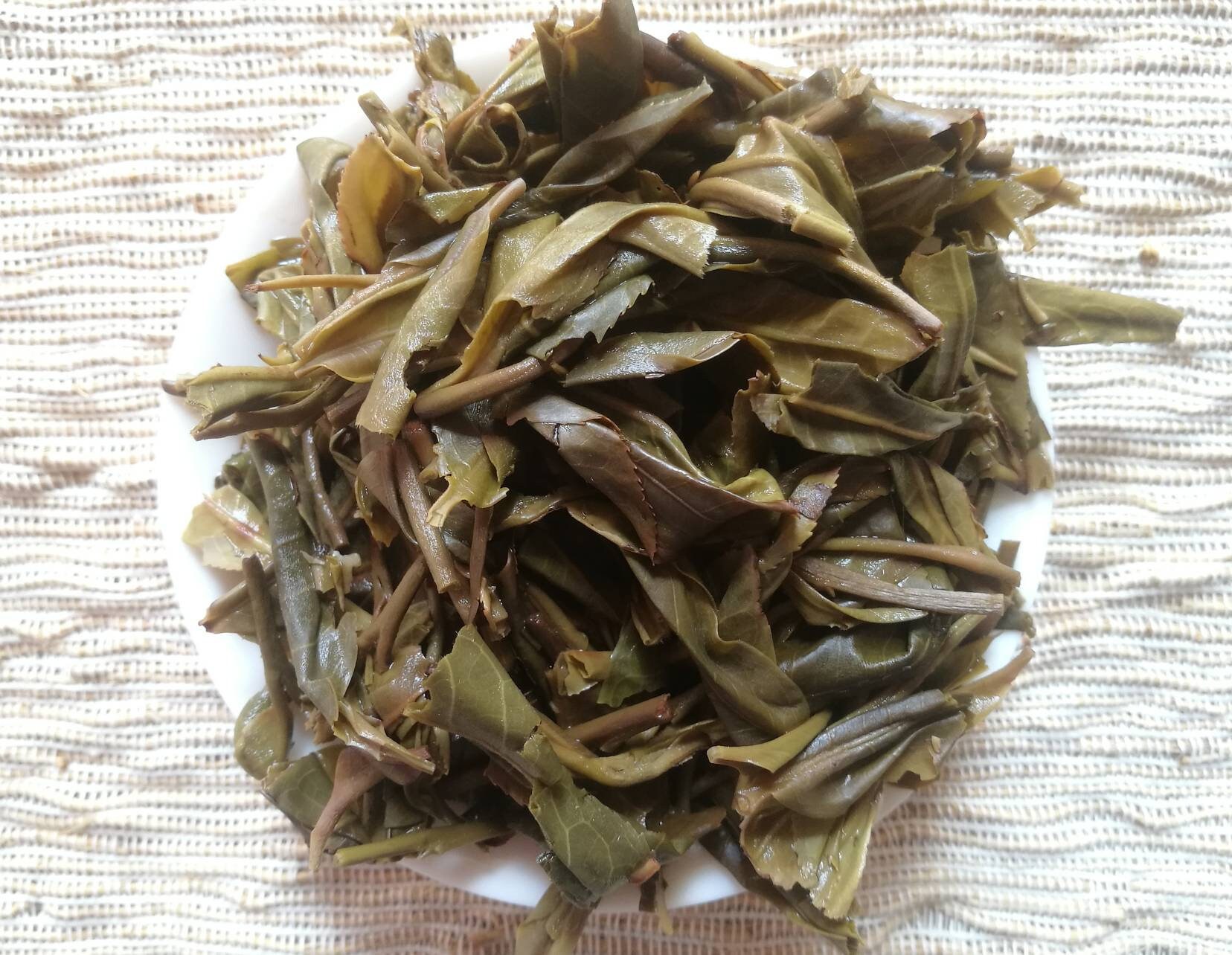
The wet leaves have a slight vegetal/beany aroma. The 'bei xiang' is a rather subdued floral/honey.
The 'ru kou' has some noticeable bitterness which lingers on the tongue before slowly turning sweet. The 'kou gan' is fairly smooth but with a little dryness.
Bitter/sweet/dry/sheng jin are all pretty well balanced and the tea seems to have enough thickness to be satisfying. The 'hui gan' is decent and there's some pleasant retro-olfactory fragrance that slowly appears.
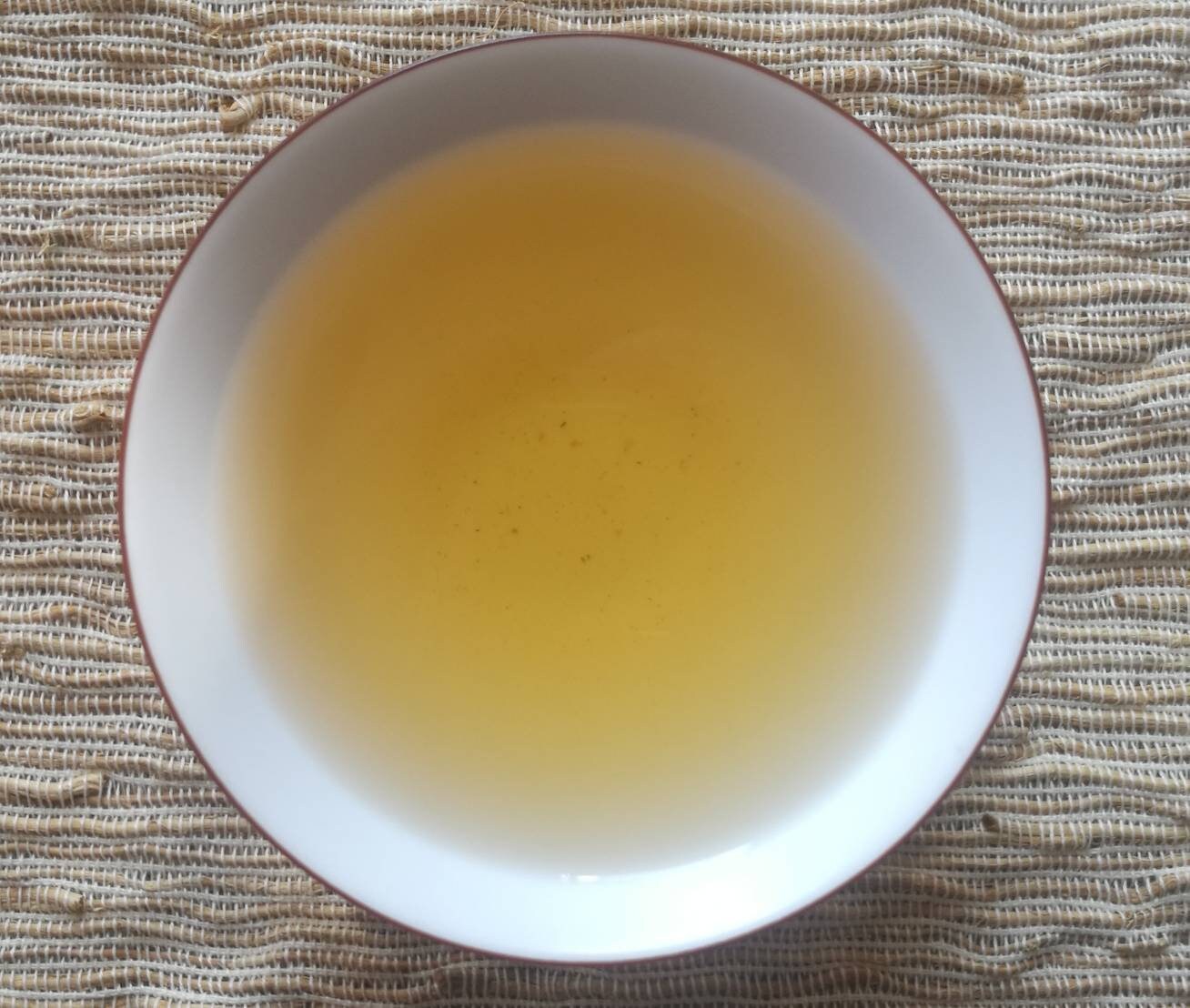
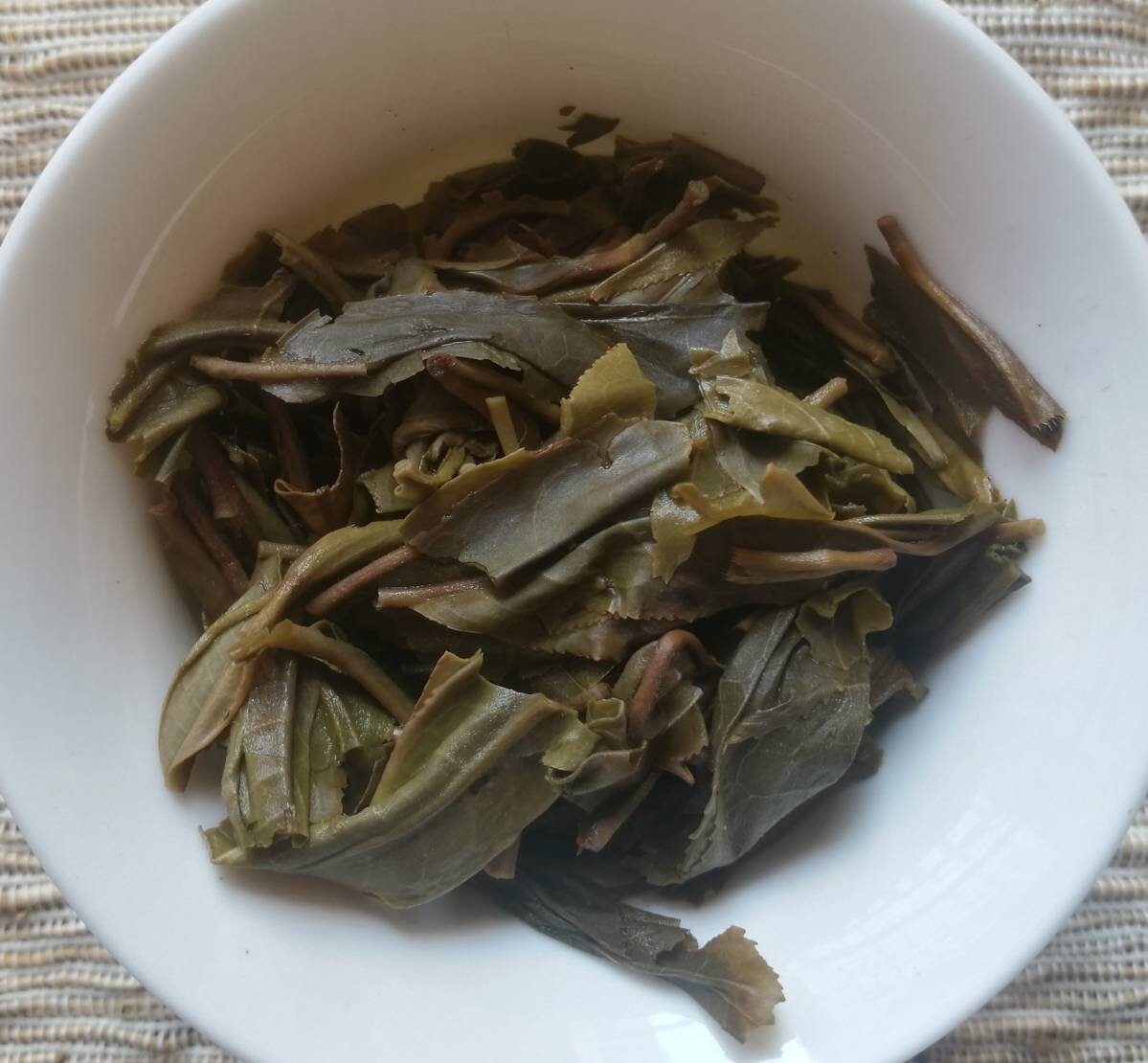
The broth colour and transparency are good and the spent leaves look pleasing.
All in all, a nicely made tea from a quality tea garden of ancient tea trees that should be a good candidate for ageing as well as drinking now.
All Puer teas are hand picked, fired and rolled, or sometimes machine rolled. They are sun dried. Cakes are stone pressed.
Please be aware that because raw Puer tea is a 'post-fermented' tea it is in a process of continual change: as it ages, but also from season to season and even day to day, so the description here is a snapshot of the tea's quality and character, which should not differ significantly, but which none-the-less can change.
$124.00
In stock
About Agrochemicals
I do not get all my teas routinely tested for agro-chemicals. I am extremely careful about which gardens I source from: tea gardens that are in a diverse, natural environment where there is no need for the use of agro-chemicals and which I am confident are all free of herbicide and pesticide traces.
In recent years anthraquinone in tea has become a talking point. I do not generally test tea for anthraquinone and, whilst I try my best to minimise the potential for it, I do not prioritise that over other factors. You can read more here.