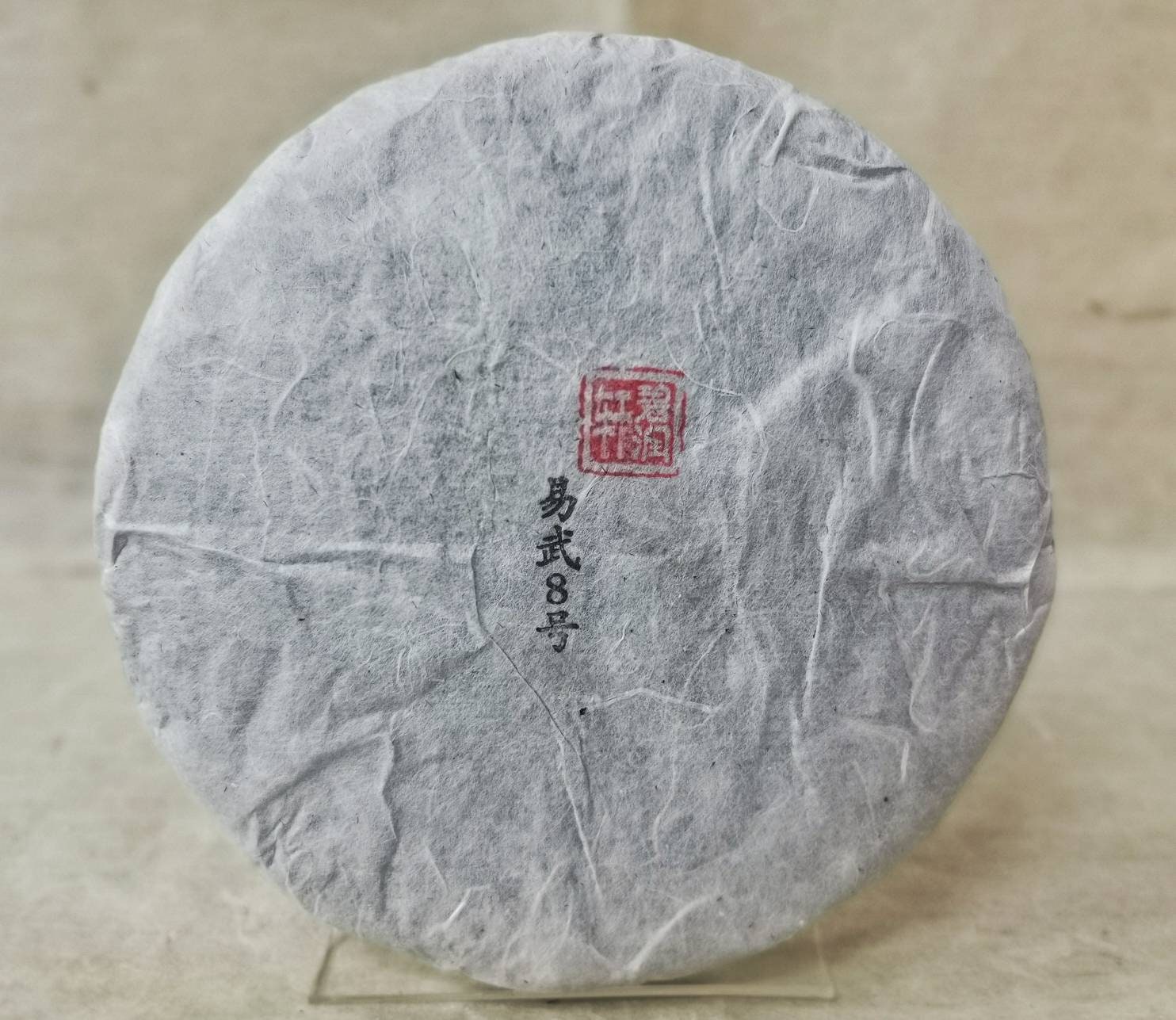
Yiwu No 8 Raw Puer Tea, Spring 2020, Old Tea Tree, 200g cake
One of the highlights of 2020. This tea comes from a tea garden which is surrounded by forest on the Yiwu-Lao border.
The wet leaves have a woody/herbal/floral/ aroma.
The 'gong dao bei' gives off a sweet, honey aroma with a light menthol note.
The 'ru kou' is smooth but quite bold. The tea has some bitterness which transforms almost immediately to sweetness and produces a good mouth-watering 'sheng jin'. The mouth-feel is smooth and dense. The flavour is fulsome yet very well balanced, tending more toward woody-herbal notes with only a slight astringence.
The broth is a clear mid-yellow.
The tea has a good amount of depth and a 'hui gan' that is good, without being overly sweet.
Overall a well balanced, rather intense drink that shows good stamina.
Please be aware that because raw Puer tea is a 'post-fermented' tea it is in a process of continual change: as it ages, but also from season to season and even day to day, so the description here is a snapshot of the tea's quality and character, which should not differ significantly, but which none-the-less can change.
All Puer teas are hand picked, fired and rolled unless it says otherwise, and sun dried. Cakes are pressed by hand using a stone or in a traditional hand press.
Please be aware that raw Puer tea is in a continual process of change - over time, with the seasons, and the weather, as it oxidised and ferments - so descriptions of teas (and the accompanying photos) are a snapshot of a certain moment in time. I try to make sure descriptions are simple yet accurate and give a feel for how the tea was experienced at the time of tasting.
$175.00
In stock
About Agrochemicals
I do not get all my teas routinely tested for agro-chemicals. I am extremely careful about which gardens I source from: tea gardens that are in a diverse, natural environment where there is no need for the use of agro-chemicals and which I am confident are all free of herbicide and pesticide traces.
In recent years anthraquinone in tea has become a talking point. I do not generally test tea for anthraquinone and, whilst I try my best to minimise the potential for it, I do not prioritise that over other factors. You can read more here.
Related products
-
Yi Bang Raw Puer Tea, Early Spring 2019, Qiao Mu, 200g cake
$48.00 -
You Le Shan Spring 2020, Tall Tree ‘Gao Gan’ Forest Tea Tree Raw 200g Cake
$145.00 -
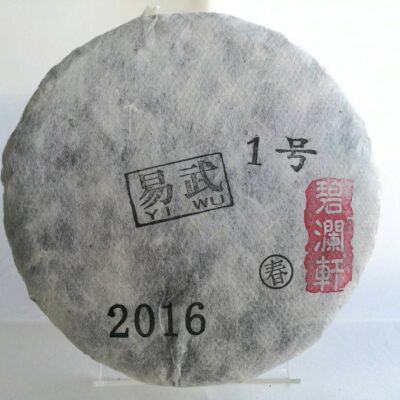
Yiwu No 1 (Man Sa), Raw Puer Tea, Spring 2016, Old Tea Tree, 200g cake
$93.00 -
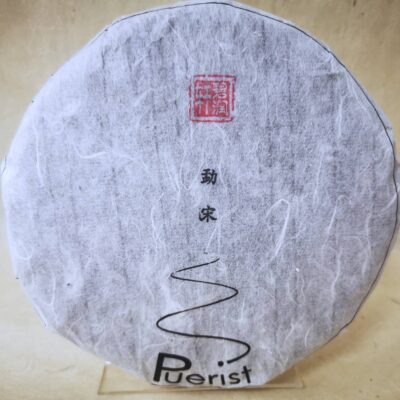
Meng Song, Early Spring 2021, Ancient Tree Raw Puer Tea, 200g cake
$88.00